Apr 23, 2026
How to Choose an Event Fabrication Company
How to evaluate and choose an event fabrication company. 10 criteria: in-house capabilities, portfolio, timeline, pricing, and references.
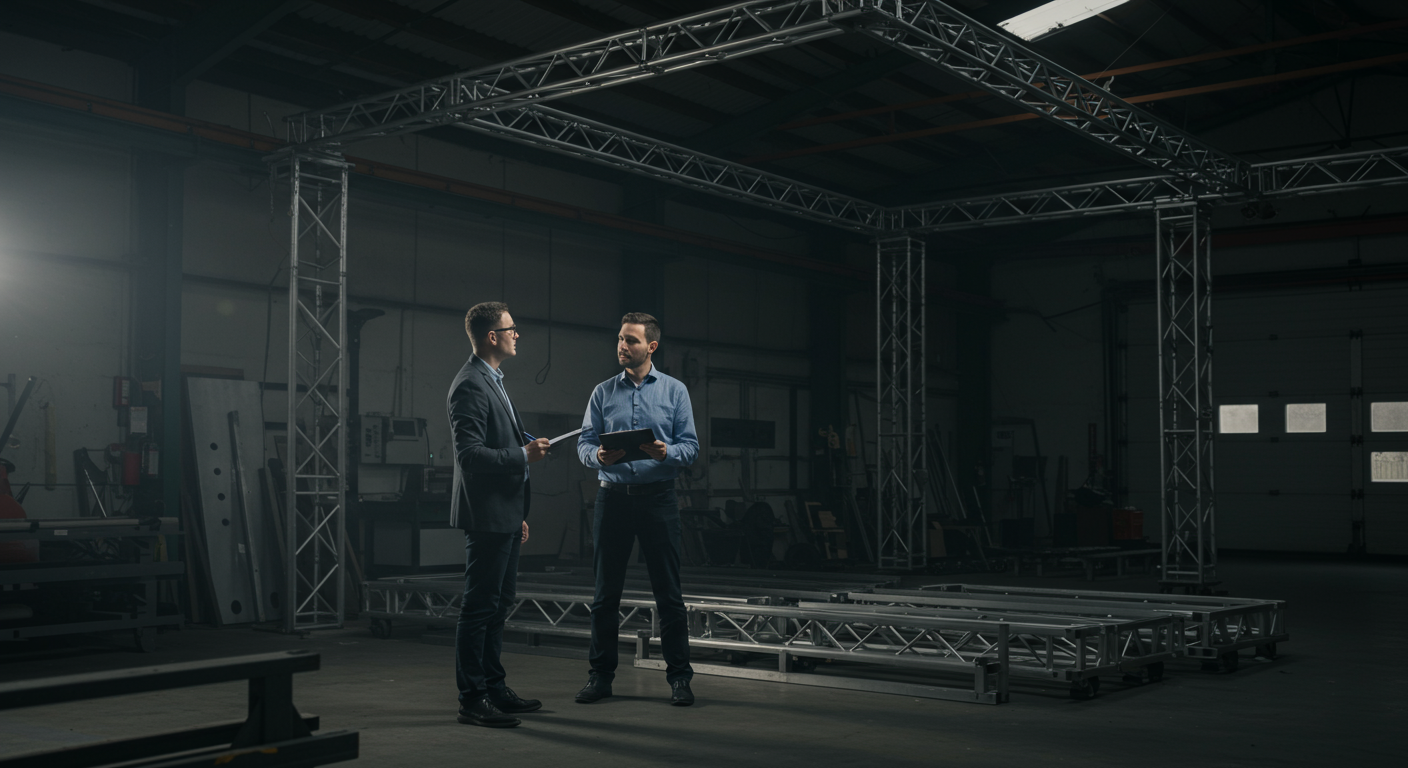
Choosing an event fabrication company requires evaluating in-house manufacturing capabilities, track record of on-time delivery, design collaboration skills, quote transparency, and installation experience. The fabrication partner controls the physical quality of every live brand experience — selecting the wrong one results in missed deadlines, budget overruns, and subpar execution that damages brand reputation.
This buyer’s guide provides a structured evaluation framework for comparing fabrication companies. It covers what to look for, what to ask, and how to distinguish genuine capabilities from marketing claims — based on the practical realities of how experiential fabrication projects succeed or fail.
The Single Most Important Question: What Do You Build In-House?
In-house fabrication capability is the most reliable predictor of project quality, timeline adherence, and cost control. Ask every fabrication company this specific question: “Which of these six disciplines do you perform in your own facility with your own employees — CNC routing, scenic carpentry, metal fabrication, scenic painting, large-format printing, and LED/lighting integration?”
The answer segments the market into three tiers:
Tier 1: Full In-House Fabrication (All 6 Disciplines)
These companies control every manufacturing phase under one roof. Benefits include:
- Schedule control: No dependency on subcontractor availability or priorities. The production manager controls the entire workflow.
- Quality control: One quality standard applied consistently across all disciplines. No finger-pointing between companies.
- Cost efficiency: No subcontractor markups. No schedule padding to buffer against subcontractor delays.
- Agility: Last-minute changes — an inevitability in event fabrication — can be implemented across any discipline without inter-company negotiation.
Pop Up Your Brand operates all six fabrication disciplines in-house from a New York City facility: CNC routing, scenic carpentry, metal fabrication and welding, scenic painting, large-format printing, and LED lighting integration. This full-pipeline control has enabled the delivery of 200+ projects with zero missed event open dates.
Tier 2: Partial In-House (2-4 Disciplines)
These companies handle some fabrication internally and subcontract the rest. The subcontracted disciplines introduce schedule risk and quality variability. A company that does carpentry and painting in-house but subcontracts CNC, metal, print, and LED is managing three external vendors — each with their own schedule, quality standard, and priorities.
Tier 3: Project Management Firms (0-1 In-House Disciplines)
Companies that subcontract nearly all fabrication function as project management firms. They add a management layer and margin but don’t control manufacturing. They rely on subcontractor relationships for quality and scheduling. If their preferred subcontractor is busy during peak season, the project may be assigned to a less experienced shop.
Track Record: Completed Projects, Not Renderings
Portfolio quality is the second-most important evaluation criterion. Review completed projects — not renderings, not concepts, not “projects in progress.”
What to Look For in a Portfolio
- Projects similar to yours: If you need a trade show exhibit, review trade show work. If you need a pop-up shop, review retail environments. Fabrication skills transfer across project types, but venue-specific experience (convention center logistics, retail lease requirements, outdoor engineering) matters.
- Finish quality: Zoom into photos. Look at seam lines, paint finishes, graphic alignment, lighting quality, and material detailing. Amateur fabrication reveals itself in visible fasteners, uneven paint, misaligned graphics, and inconsistent lighting.
- Scale consistency: Can the company deliver at your project’s scale? A shop that builds excellent 10×10 booths may lack the engineering depth and shop capacity for a 40×50 island exhibit.
- Photography quality: Professional project photography signals that the company values documentation and takes pride in completed work. A portfolio of poorly lit smartphone photos suggests a shop that finishes projects and moves on without documentation.
Questions to Ask About Track Record
- How many projects have you completed in the past 12 months?
- Can you provide 3 client references for projects similar to mine?
- Have you ever missed an event open date? If so, what happened?
- What is the largest project you have completed by budget and physical scale?
- Do you have experience installing at my specific venue or convention center?
Design Capability: Collaborator vs. Order Taker
The best fabrication companies are design collaborators, not just builders who execute someone else’s drawings. Evaluate design capability on two dimensions:
Concept Development
Can the company receive a brief, a sketch, or a verbal description and develop it into a fully realized concept with 3D renderings? Companies with in-house experiential design teams produce inherently buildable concepts because designers understand manufacturing constraints in real time. A rendering from an architect or agency designer may look stunning but require $50,000 in engineering changes to be actually buildable.
Buildability Feedback
Does the company proactively flag design elements that are impractical, unnecessarily expensive, or risky from a fabrication standpoint? The best partners say “here’s a better way to achieve that effect” rather than silently building exactly what was drawn — even when what was drawn will cost twice what a better-engineered solution would.
Quote Speed and Transparency
How a company quotes reveals how they operate.
Quote Turnaround Time
The industry norm for fabrication quotes is 1-3 weeks. Companies that take longer are either overloaded, disorganized, or using your RFP as design development (billing you later for design time embedded in the quote process). Pop Up Your Brand delivers detailed quotes within 48 hours — a turnaround that reflects operational discipline and deep fabrication estimating expertise refined over 200+ projects.
Quote Format and Detail
A professional fabrication quote should include line-item pricing broken into these categories:
- Design and engineering
- Materials (itemized by component)
- Fabrication labor (by discipline)
- Graphics production
- Technology and lighting
- Shipping and logistics
- Installation labor and equipment
- Strike and return logistics
- Project management
Lump-sum quotes without category breakdowns make it impossible to evaluate value, negotiate scope changes, or compare bids fairly. Insist on line-item detail — any company that refuses is hiding something.
Installation and Logistics Experience
Fabrication quality is irrelevant if installation fails. Evaluate installation capability carefully:
Own Crew vs. Third-Party Install
Ask whether the company sends its own fabrication crew to install or relies on third-party labor. Companies that install with their own team carry institutional knowledge of how the build was constructed. Third-party installers are assembling a structure they’ve never seen before, following instructions written by someone else.
Venue-Specific Experience
Convention centers, retail spaces, outdoor environments, hotels, and nightclubs each have unique access requirements, labor rules, and regulatory environments. A company that has installed at your specific venue understands the loading dock quirks, the freight elevator timing, and the fire marshal’s priorities. This experience prevents opening-day surprises.
Logistics Management
Shipping, drayage, crating, and freight coordination are unglamorous but critical. A build that arrives damaged, arrives late, or arrives at the wrong dock creates cascading schedule failures. Ask how the company manages logistics: in-house logistics coordinator, preferred freight partners, crating standards, and tracking systems.
Financial Stability and Insurance
Fabrication companies require significant working capital to purchase materials, employ skilled tradespeople, and maintain equipment. Evaluate financial stability indicators:
- Years in business: Longer track records indicate sustained financial viability, though newer companies with experienced leadership can be equally capable.
- Insurance coverage: Request certificates of insurance showing general liability ($1-2M minimum), professional liability, and workers’ compensation. Uninsured or underinsured fabricators create liability exposure for their clients.
- Payment terms: Standard payment structures include 40-50% deposit at contract signing, 30-40% at fabrication completion (pre-ship), and 10-20% after installation. Companies demanding 100% upfront may have cash flow issues.
Communication and Project Management
Fabrication projects involve dozens of decisions, changes, and approvals over 6-12 weeks. The quality of communication and project management determines whether the experience is collaborative or chaotic.
Evaluate Communication During the Sales Process
How a company communicates before the contract predicts how they will communicate after. Assess response times, proactive information sharing, organized presentations, and the clarity of their proposals. If the sales process feels disorganized, production will be worse.
Project Management Infrastructure
Ask about project management practices: dedicated project managers, regular status updates, shared project timelines, approval workflows, and change order procedures. Companies that invest in project management infrastructure deliver more predictable outcomes than companies that rely on informal communication.
Red Flags to Watch For
Several warning signs indicate potential problems with a fabrication partner:
- Vague capability claims: “We can do anything” usually means “we subcontract most things.” Press for specifics about in-house disciplines and capacity.
- No shop tour: A fabrication company that discourages facility visits may not have the capabilities they claim. Reputable shops welcome visits — they’re proud of their equipment and team.
- Portfolio gaps: A portfolio with only renderings and no completed project photos is a significant warning. Renderings prove design ability; photos prove fabrication ability.
- Aggressive low pricing: Fabrication quotes significantly below competitors often indicate hidden cost escalation through change orders, reduced material quality, or subcontracted labor that won’t be disclosed until mid-project.
- No client references: Established fabrication companies have satisfied clients willing to provide references. Refusal to provide references suggests a history of problematic projects.
- Unclear change order procedures: Every project encounters changes. Companies without documented change order procedures create billing surprises and scope disputes.
Evaluation Scorecard
Use this weighted scorecard to compare fabrication companies objectively:
- In-house capabilities (25%): How many of the six core disciplines are performed in-house?
- Track record (20%): Volume, quality, and relevance of completed projects. Client references.
- Quote quality (15%): Speed, transparency, and detail of the proposal.
- Design capability (15%): Concept development ability and buildability feedback.
- Installation experience (15%): Own crew, venue-specific experience, logistics management.
- Communication (10%): Responsiveness, organization, and project management infrastructure.
Rate each company on a 1-5 scale for each criterion, apply the weights, and compare total scores. This structured approach replaces gut feelings with data-informed decision-making.
Pop Up Your Brand scores at the top of this framework: six in-house fabrication disciplines, 200+ completed projects with zero missed opens, 48-hour quote turnaround, integrated experiential design, and own-crew installation. Request a quote to evaluate for yourself.
Choosing a Fabrication Company FAQs
The five most important evaluation criteria for event fabrication companies are: in-house manufacturing capabilities (all six disciplines under one roof), track record of on-time delivery with verified client references, design collaboration ability, quote transparency with line-item detail, and installation experience with own crews. Weight in-house capabilities highest because they determine schedule control, quality consistency, and cost efficiency for every project.
Fair quote comparison requires line-item breakdowns from each company covering the same scope: design, materials, labor, graphics, technology, shipping, installation, and strike. Lump-sum quotes cannot be meaningfully compared. When evaluating line-item quotes, compare material specifications (not just prices), labor rates by discipline, and what is included versus excluded. The lowest total price is not necessarily the best value — material quality, schedule reliability, and installation competence matter more than a 10% cost difference.
Proximity to the fabrication shop matters less than capability, track record, and installation experience. A New York-based shop that fabricates locally and ships nationwide offers the quality control of in-house production with national reach. The key question is whether the company installs with its own crew at your venue location. Companies that hire third-party installers in distant markets sacrifice the quality control advantage of in-house production at the most critical project phase.
Event fabrication costs range from $5,000 for simple branded elements to $300,000+ for large-scale custom exhibits and immersive environments. Common project ranges include: brand activations $25,000-$100,000, trade show exhibits $30,000-$200,000, pop-up shops $40,000-$150,000, and stage/scenic builds $15,000-$100,000. These ranges cover design, fabrication, graphics, shipping, and installation. Venue rental, staffing, and show services are additional costs not included in fabrication quotes.
Choose a fabrication partner that delivers.
All in-house. 48-hour quotes. 200+ projects. Zero missed opens.
Request a Quote