Feb 11, 2026
CNC Cutting for Events: What It Is and Why It Matters
CNC cutting uses computer-controlled routers to precision-cut materials for events. How it works, materials, costs, and applications.
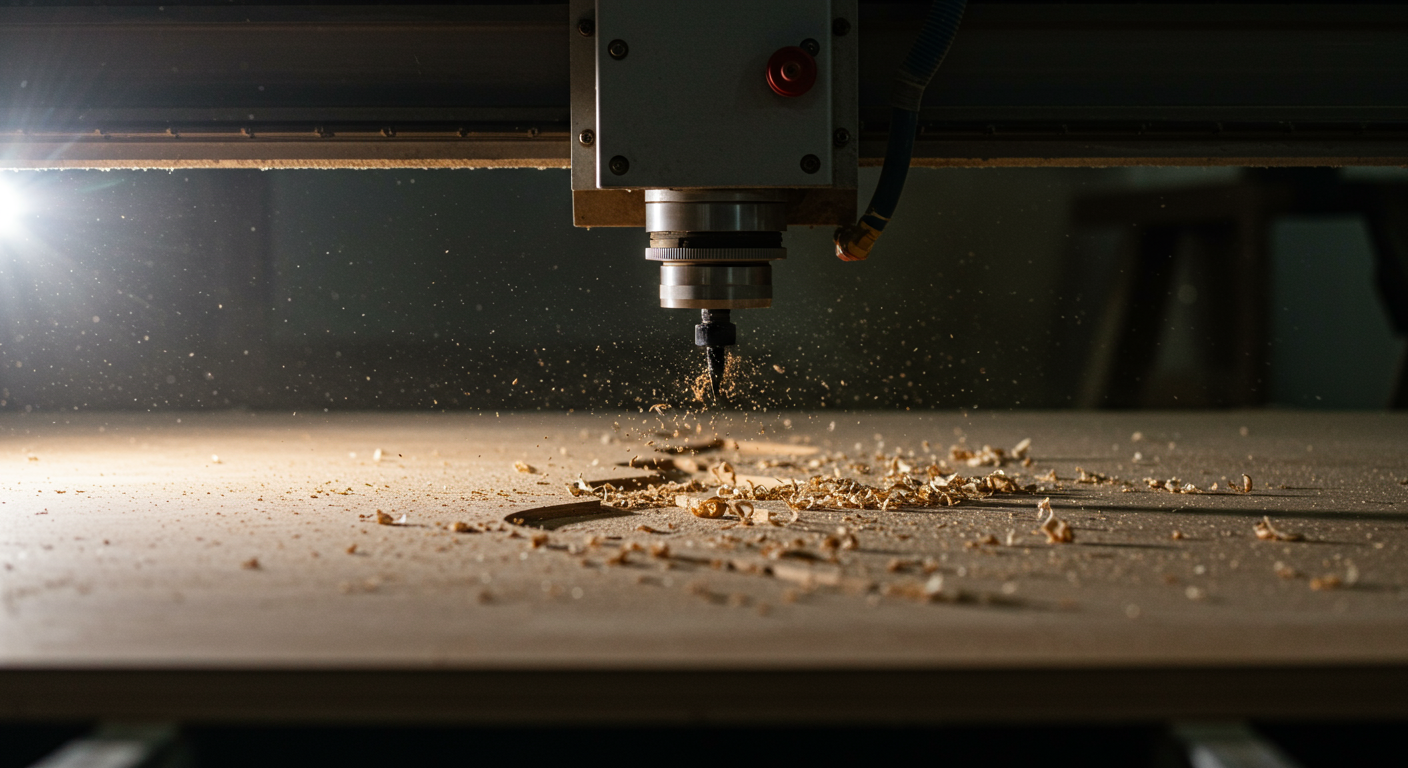
CNC cutting for events is the process of using computer-controlled routers to precision-cut wood, foam, acrylic, composites, and other materials into custom shapes for brand activations, trade show exhibits, scenic elements, and experiential installations. CNC (Computer Numerical Control) technology translates digital design files directly into physical cuts, enabling fabrication accuracy measured in thousandths of an inch.
How CNC Cutting Works
A CNC router follows toolpaths generated from CAD (Computer-Aided Design) files. The operator loads a material sheet onto the router bed, secures it, loads the program, and the machine cuts the designed shapes automatically. The process eliminates human error in cutting and enables complex geometries that would be impossible to achieve with hand tools.
Materials CNC Routers Cut
- Wood — plywood, MDF, hardwoods, Baltic birch
- Foam — EPS, polyurethane, high-density foam
- Acrylic — clear, colored, frosted
- Composites — Dibond, ACM (aluminum composite), phenolic
- PVC/Sintra — rigid foam board
- Aluminum — soft metals (with appropriate tooling)
Event Fabrication Applications
- Dimensional signage — cut-out logos and lettering from wood, acrylic, or foam
- Scenic panels — decorative wall elements with routed patterns and textures
- Structural components — precision-fit joints, brackets, and connection hardware
- Display fixtures — product shelving, counter components, and retail elements
- Props and sculptural elements — 3D shapes assembled from layered CNC-cut profiles
At Pop Up Your Brand, the CNC router runs alongside scenic carpentry and metal fabrication — meaning CNC-cut elements integrate directly into the build workflow with zero handoff delays.
CNC vs Laser Cutting vs Hand Cutting
- CNC routing — best for thick materials (up to 6″), wood, foam, composites. Larger parts. 3D profiling capability.
- Laser cutting — best for thin materials, acrylic, paper, fabric. Finer detail. Clean edges on acrylic.
- Hand cutting — for one-off adjustments and on-site modifications. No digital file required but limited precision.
Cost Factors
CNC cutting costs depend on material type, sheet size, cut complexity, and quantity:
- Simple signage cuts: $200-$800 per sheet
- Complex scenic panels: $500-$2,000 per panel
- Large dimensional sculptures (multi-layer): $2,000-$10,000
CNC costs are typically a small fraction of overall fabrication budgets but have an outsized impact on precision and visual quality. Projects like the Keurig x Nasdaq activation relied heavily on CNC-cut elements for dimensional branding throughout the space.
Recent work like the Celsius Pop-Up and the Monday.com MP Live exhibit reflects the in-house fabrication standards Pop Up Your Brand brings to every build.
Frequently Asked Questions
CNC cutting is the process of using computer-controlled routers to precision-cut materials into custom shapes for event fabrication. CNC machines follow digital toolpaths from CAD files, cutting wood, foam, acrylic, and composites with accuracy measured in thousandths of an inch — far beyond what hand cutting can achieve.
CNC routers cut wood (plywood, MDF, hardwoods), foam (EPS, polyurethane), acrylic, composites (Dibond, ACM), PVC/Sintra, and soft metals like aluminum. Material thickness up to 6 inches is standard for most event fabrication CNC equipment.
CNC cutting costs range from $200-$800 per sheet for simple signage cuts, $500-$2,000 for complex scenic panels, and $2,000-$10,000 for large multi-layer dimensional sculptures. Cost depends on material type, cut complexity, and quantity.
Let's build something worth talking about.
Quote in 48 hours. Zero missed open dates.
Start Your Project