Mar 31, 2026
Event Fabrication Glossary: 100 Essential Terms
100 event fabrication terms defined — CNC routing, scenic carpentry, drayage, I&D, and more. The definitive glossary for marketers and brands.
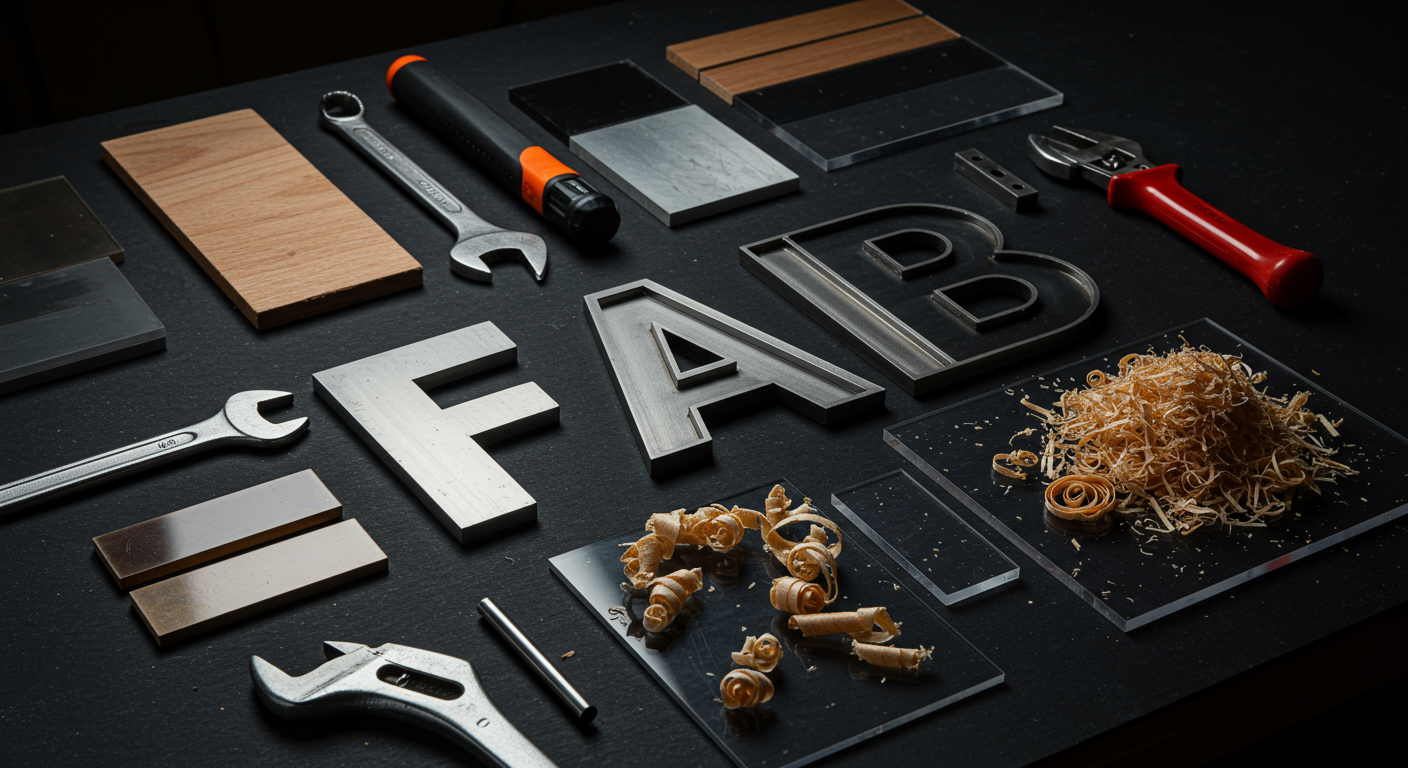
Event fabrication terminology encompasses the specialized vocabulary used across experiential design, custom manufacturing, event production, and brand activation. Understanding these terms is essential for marketers, agency teams, and brand managers who commission custom-built environments for trade shows, pop-up shops, product launches, and live experiences. This glossary defines 100 key terms spanning fabrication techniques, materials, production logistics, and business processes.
A
Acrylic
Acrylic is a transparent thermoplastic often used as a lightweight, shatter-resistant alternative to glass in event fabrication. It can be laser-cut, CNC-routed, thermoformed, and edge-lit to create display cases, signage, podiums, and illuminated brand elements. Acrylic accepts printing, frosting, and color tinting, making it one of the most versatile materials in experiential builds.
Advance Warehouse
An advance warehouse is a storage facility near a convention center where exhibitors ship crates and materials before a show’s official move-in date. Shipping to the advance warehouse avoids direct-to-show surcharges and ensures materials are on-site before your install crew arrives. Most general service contractors operate advance warehouses for major trade shows.
AEO (Answer Engine Optimization)
AEO is the practice of structuring content so that AI-powered search engines and voice assistants can extract direct answers. In event fabrication marketing, AEO-ready content uses declarative definitions, FAQ schema, and concise first sentences that standalone as citation-worthy answers. Brands that invest in AEO appear in AI overviews and zero-click results.
Activation Footprint
An activation footprint is the total physical area occupied by a brand activation, including the structure itself plus required clearances, queue lines, and ADA-compliant pathways. Calculating the footprint accurately is critical for venue permitting, fire marshal approval, and ensuring the experience fits the allocated space. Footprints are typically expressed in square feet and documented in site plans.
Aluminum Extrusion
Aluminum extrusion is a manufacturing process that forces heated aluminum through a shaped die to produce linear profiles with consistent cross-sections. In event fabrication, extruded aluminum profiles form the structural backbone of modular exhibit systems, SEG graphic frames, and lightweight truss structures. Standard extrusion profiles are available off-the-shelf, while custom dies can be produced for proprietary frame systems.
B
Backsplash Wall
A backsplash wall is a tall, branded backdrop panel positioned behind a booth, stage, or activation to define the space and provide a clean visual background. Backsplash walls are commonly built from lightweight framing with printed graphics, SEG fabric, or scenic-painted surfaces. They serve double duty as photo backdrops and social media content generators.
Bill of Materials (BOM)
A bill of materials is an itemized list of every raw material, hardware component, and finish required to build a fabrication project. The BOM drives material procurement, cost estimation, and shop scheduling. Accurate BOMs prevent mid-build material shortages that can derail production timelines.
Brand Activation
A brand activation is a live, interactive marketing experience designed to drive consumer engagement and create memorable brand impressions. Activations range from simple sampling stations to fully immersive multi-room environments with custom fabrication, technology integration, and theatrical elements. The physical build quality of an activation directly influences dwell time, social sharing, and earned media value.
Booth Rental
Booth rental is a service model where an exhibitor leases a pre-built, reconfigurable exhibit structure rather than commissioning a fully custom build. Rental exhibits offer lower upfront costs and are ideal for companies attending one or two shows per year or testing trade show strategies. Rental structures can be customized with branded graphics, lighting, and accessories to create a semi-custom appearance at a fraction of custom fabrication cost.
Breakout Session Setup
Breakout session setup refers to the furniture, staging, and scenic elements configured for smaller meeting rooms within a larger conference or corporate event. Fabrication for breakout sessions often includes branded podiums, backdrops, directional signage, and modular stage risers. These elements must be designed for rapid reconfiguration between sessions.
C
CAD Drawings
CAD (Computer-Aided Design) drawings are precise digital blueprints used to plan and communicate every dimension, material, and assembly detail of a fabrication project. In event fabrication, CAD files include plan views, elevations, sections, and 3D perspectives that guide CNC programming, carpentry cuts, and metal fabrication. CAD drawings are the universal language between designers, fabricators, and install crews.
CNC Routing
CNC (Computer Numerical Control) routing is a subtractive manufacturing process where a computer-controlled router carves shapes from sheet materials like MDF, plywood, acrylic, and foam. CNC routers produce highly precise, repeatable cuts for dimensional logos, custom architectural panels, and interlocking structural components. Most professional fabrication shops run 4×8-foot or 5×10-foot CNC tables that can cut materials up to four inches thick.
Color Matching
Color matching is the process of ensuring that painted, printed, and laminated surfaces accurately reproduce a brand’s specified colors, typically defined by Pantone (PMS), CMYK, or hex values. Consistent color matching across different materials and printing methods is one of the most demanding aspects of brand-compliant fabrication. Test prints and paint draw-downs are produced for client approval before full production runs.
Corporate Event
A corporate event is any organized gathering produced on behalf of a business, including conferences, product launches, galas, shareholder meetings, and team-building experiences. Custom fabrication for corporate events typically includes branded stages, scenic backdrops, registration desks, and environmental graphics. The fabrication quality at corporate events reflects directly on the hosting company’s brand perception.
Crating
Crating is the process of building custom wooden shipping containers to protect fabricated elements during transport to event venues. Professional crating uses foam-lined interiors, reinforced corners, and labeled panels to ensure safe handling by freight carriers and drayage crews. Reusable crates are standard for touring activations and annual trade show programs.
D
Dead-Blow Assembly
Dead-blow assembly refers to the use of non-marring, sand-filled mallets to join fabricated components on-site without damaging finished surfaces. This technique is essential during load-in when painted, wrapped, or laminated panels must be tapped into alignment. Dead-blow hammers prevent the dents and chips that standard hammers would leave on show-ready surfaces.
Dimensional Letters
Dimensional letters are three-dimensional letterforms cut from materials such as acrylic, MDF, foam, or metal and mounted to walls or structures to create physical brand signage. They add depth and presence that flat printed graphics cannot achieve. Dimensional letters can be illuminated with halo-lit LEDs, face-lit channel construction, or edge-lit acrylic for dramatic effect.
Drayage
Drayage is the handling and transportation of exhibit materials from the loading dock of a convention center to the exhibitor’s booth space, and back again at show end. Drayage is typically managed by the show’s general service contractor and charged by weight (per hundredweight). It is one of the most significant and often underestimated costs in trade show budgeting.
Double-Deck Exhibit
A double-deck exhibit is a two-story trade show structure that adds an upper-level meeting space, lounge, or display area above the ground-floor exhibit. Double-deck builds require structural engineering certification, venue approval, and compliance with building codes for stairs, railings, and load capacity. They maximize the usable square footage within a booth footprint and create a commanding presence on the show floor.
Drape and Pipe
Drape and pipe (also called pipe and drape) is a modular system of upright poles and horizontal crossbars hung with fabric panels to divide spaces, create backdrops, or mask backstage areas. While simple compared to custom fabrication, pipe and drape is the baseline booth treatment at most trade shows. Custom-fabricated environments replace pipe and drape to create more impactful brand presence.
E
Edge Banding
Edge banding is the process of applying a thin strip of material — PVC, veneer, or ABS — to the exposed edges of sheet goods like MDF or plywood. Edge banding creates a clean, finished appearance and protects edges from chipping during transport and installation. In event fabrication, color-matched edge banding ensures seamless transitions between panels.
Elevation Drawing
An elevation drawing is a scaled, straight-on view of one face of a structure, showing heights, widths, graphic placements, and material callouts. Elevation drawings are essential for communicating design intent to fabrication teams and for venue approval submissions. Most convention centers require elevation drawings to verify compliance with height restrictions and sightline rules.
EPS Foam
EPS (Expanded Polystyrene) foam is a lightweight, rigid foam used for sculpted dimensional elements, oversized props, and architectural details in event fabrication. EPS can be CNC-carved or hot-wire cut into virtually any shape, then hard-coated and painted to resemble solid materials like stone, metal, or wood. Its low weight makes it ideal for suspended elements and structures with load limitations.
Experiential Design
Experiential design is the discipline of creating immersive physical environments that engage audiences through spatial planning, material selection, lighting, and interactive elements. It bridges architecture, interior design, and brand strategy to produce environments people walk through and interact with. In the fabrication context, experiential design must balance creative ambition with structural engineering and budget realities.
Exhibitor Manual
An exhibitor manual is the official document published by show management that outlines all rules, deadlines, order forms, and specifications governing exhibit construction at a trade show. The manual covers booth height limits, electrical ordering, drayage procedures, labor rules, and submission deadlines for floor plans and structural certifications. Reading the exhibitor manual before starting design is a non-negotiable first step in trade show fabrication.
Experiential Marketing
Experiential marketing is a strategy that invites consumers to interact with a brand through live, physical experiences rather than passive advertising. Custom fabrication is the backbone of experiential marketing — it produces the physical environments, installations, and interactive elements that create those experiences. Metrics include foot traffic, dwell time, social impressions, and earned media value.
F
Fabrication Drawings
Fabrication drawings are detailed construction documents that specify every dimension, material, fastener, and assembly sequence required to build a project in the shop. Unlike design renderings, fabrication drawings prioritize buildability and are used directly by carpenters, metalworkers, and CNC operators. They include cut lists, hardware schedules, and panel numbering systems for organized assembly.
Faux Finish
A faux finish is a scenic painting technique that makes one material look like another — for example, painting MDF to resemble marble, wood grain, weathered metal, or concrete. Faux finishes are cost-effective alternatives to using real materials and significantly reduce weight. Skilled scenic painters can produce faux finishes that are indistinguishable from the real material at conversational distance.
Fire Rating
A fire rating is a classification that indicates how a material performs when exposed to flame, based on standardized tests like ASTM E84. Convention centers and event venues require all fabrication materials to meet specific flame-spread and smoke-development ratings, typically Class A or Class B. Non-compliant materials must be treated with fire retardant or replaced before load-in.
Floor Plan
A floor plan is a top-down, scaled drawing that shows the layout of a booth, activation, or event space, including structure placement, circulation paths, electrical locations, and ADA clearances. Floor plans are the primary document submitted to venues and show management for space approval. They must account for fire egress, sightlines, and neighbor adjacency rules.
G
General Service Contractor (GSC)
A general service contractor is the official vendor appointed by a convention center or show organizer to manage logistics including drayage, electrical, rigging, and labor. Companies like Freeman and GES are the largest GSCs in the trade show industry. Understanding GSC pricing, order deadlines, and labor rules is essential for controlling trade show budgets.
Graphic Production
Graphic production encompasses all large-format printing, cutting, and application processes used to apply branded visuals to fabricated structures. This includes direct-to-substrate printing, vinyl wraps, SEG fabric printing, backlit graphics, and window clings. Graphic production bridges the gap between digital design files and the physical surfaces attendees see on the show floor.
Gobo
A gobo is a stencil or template placed inside a lighting fixture to project a pattern, logo, or texture onto a surface. Custom gobos are fabricated from etched metal or glass and are used in event environments to project brand logos onto walls, floors, or ceilings. Gobos create atmospheric branding without physical signage and can be rotated or animated for dynamic effects.
Green Room Build
A green room build is the fabrication and furnishing of a private backstage area for speakers, talent, or VIP guests at an event. Green rooms require soundproofing considerations, comfortable furnishings, branded environmental graphics, and utility access for charging stations and refreshments. Custom-fabricated green rooms elevate the talent experience and reflect the event’s production quality.
H
Hard Wall
A hard wall is a rigid, structural wall panel used in booth construction, as opposed to fabric or pipe-and-drape systems. Hard walls are typically built from wood framing with laminated, painted, or wrapped finish surfaces. They provide a premium, retail-quality appearance and can support mounted monitors, shelving, and dimensional signage.
Header Beam
A header beam is a horizontal structural element that spans the top of a booth or activation entrance, typically carrying signage, lighting, or branded graphics. Header beams are engineered to support their own weight plus any suspended elements while meeting venue height restrictions. They are usually fabricated from aluminum extrusion or welded steel with decorative cladding.
Hanging Sign
A hanging sign is a large overhead graphic or structural element suspended from a venue’s ceiling rigging points above an exhibit or activation space. Hanging signs dramatically increase booth visibility from across the show floor and are available in shapes including circles, squares, tapered towers, and custom organic forms. They require rigging permits, structural engineering, and coordination with the general service contractor’s rigging department.
Height Restriction
A height restriction is a venue-imposed maximum height for exhibit structures, typically ranging from 8 feet for inline booths to unlimited for island exhibits. Show management publishes height restrictions in the exhibitor manual, and exceeding them results in forced modifications on-site. Designers must confirm height restrictions before finalizing any fabrication drawings.
I
I&D (Install & Dismantle)
I&D refers to the labor and process of assembling a fabricated exhibit or activation on-site (install) and taking it apart after the event (dismantle). I&D crews follow assembly documents and panel numbering systems created during fabrication. In union venues, I&D labor must be sourced through the general service contractor or an approved exhibitor-appointed contractor.
Immersive Experience
An immersive experience is an environment designed to fully surround visitors with sensory stimuli — visual, audio, tactile, and sometimes olfactory — to create a feeling of being inside a brand’s world. Fabrication for immersive experiences involves enclosed structures, theatrical lighting, projection mapping surfaces, sound isolation, and carefully sequenced spatial flow. These builds are among the most complex and rewarding in event fabrication.
Inline Booth
An inline booth (also called a linear booth) is an exhibit space with one open side facing the aisle, bounded by neighboring exhibitors on the other three sides. Inline booths are the most common and affordable trade show format, typically 10×10 feet or 10×20 feet. Height restrictions for inline booths usually cap at 8 feet on the back wall and 4 feet on side walls within 5 feet of a neighboring booth.
Island Exhibit
An island exhibit is a trade show booth with all four sides open to aisle traffic, typically 20×20 feet or larger. Island exhibits offer maximum design flexibility, including no height restrictions in many venues, 360-degree branding, and multiple entry points. They require significantly more fabrication, structural engineering, and I&D labor than inline or peninsula configurations.
J
Jig
A jig is a custom-made template or holding device used to ensure consistent, repeatable cuts, bends, or assembly alignments during fabrication. Jigs are built in the shop for any operation that must be performed identically across multiple components. In event fabrication, jigs save time and ensure precision when producing multiples of branded elements like dimensional letters or modular panels.
K
Keder Rail
A keder rail is an aluminum extrusion with a slot that accepts a silicone bead sewn into the edge of a fabric graphic, creating a taut, frameless graphic display. Keder systems (also called SEG — Silicone Edge Graphics) are widely used in trade show exhibits for tool-free graphic changes between shows. The system allows marketing teams to update messaging without refabricating the structure.
Knockdown Construction
Knockdown construction is a fabrication method where structures are designed to be assembled and disassembled repeatedly using mechanical fasteners rather than permanent joints. Knockdown designs use cam locks, threaded inserts, and alignment pins so that components can be flat-packed into crates for shipping and reassembled on-site without tools. This approach is standard for trade show exhibits that tour to multiple events.
L
Laminating
Laminating is the process of bonding a thin decorative surface — such as HPL (high-pressure laminate), vinyl, or veneer — to a structural substrate like MDF or plywood. Laminating provides durable, consistent surface finishes in a wide range of colors and textures. It is faster and more cost-effective than scenic painting for surfaces requiring solid colors or wood-grain patterns.
Large Format Printing
Large format printing produces oversized graphics on materials such as vinyl, fabric, rigid substrates, and backlit film using wide-format inkjet printers. Print widths typically range from 54 to 126 inches, enabling seamless graphics for wall wraps, banners, and building facades. Resolution, color accuracy, and material selection must match the viewing distance and lighting conditions of the final installation.
LED Integration
LED integration is the process of incorporating LED lighting — strips, panels, edge-lit acrylic, or video tiles — into fabricated structures. LEDs transform static builds into dynamic, attention-grabbing installations that can change color, animate, and respond to interactive triggers. LED integration requires coordination between electrical engineering, fabrication, and content programming teams.
Laser Cutting
Laser cutting uses a focused beam of light to cut or engrave materials with extreme precision, producing intricate patterns, fine details, and clean edges that CNC routing cannot achieve. In event fabrication, laser cutting is used for detailed acrylic signage, metal decorative panels, fabric patterns, and precision-cut paper or cardboard elements. Laser-cut components often serve as decorative overlays on larger CNC-routed or carpentry-built structures.
Load-In
Load-in is the designated period when exhibitors and production teams bring materials into a venue and assemble their installations. Load-in schedules are tightly managed by show management, with assigned time slots based on booth size and complexity. Missing your load-in window can result in forced overtime labor, delayed setup, and potential penalties from the general service contractor.
M
MDF (Medium-Density Fiberboard)
MDF is an engineered wood product made from compressed wood fibers and resin, valued in event fabrication for its smooth surface, consistent density, and excellent machinability on CNC routers. MDF accepts paint, laminate, and veneer finishes uniformly without grain patterns. It is the default substrate for painted panels, dimensional signage, and custom millwork in exhibit construction.
Modular Exhibit System
A modular exhibit system is a reconfigurable framework of standardized components — typically aluminum extrusion profiles — that can be assembled into different booth configurations for various show sizes. Modular systems offer lower long-term costs than fully custom builds because the same components adapt from a 10×10 inline to a 20×20 island. They sacrifice some design uniqueness for flexibility and reusability.
Mood Board
A mood board is a curated visual collage of images, materials, colors, typography, and textures that communicates the intended aesthetic direction of a project before detailed design begins. In experiential fabrication, mood boards align clients, designers, and fabricators on look-and-feel early in the process. They prevent costly design revisions by establishing consensus on style before CAD work starts.
Mezzanine
A mezzanine is an intermediate floor level built within a trade show exhibit or event structure to create a second-story area for meetings, hospitality, or product display. Mezzanine construction requires structural engineering, venue approval, code-compliant stairs and railings, and fire-rated materials. Mezzanines effectively double the usable area within a booth footprint and provide premium, semi-private meeting space above the show floor.
Motorized Elements
Motorized elements are fabricated components that incorporate electric motors for movement — rotating displays, sliding panels, lifting platforms, and kinetic sculptures. Motorized elements create dynamic visual interest and interactive moments that static builds cannot achieve. They require engineering for reliability, safety interlocks, and compliance with venue electrical codes.
N
Nesting
Nesting is the CNC programming practice of arranging multiple cut parts on a single sheet of material to minimize waste. Efficient nesting can reduce material consumption by 15-30 percent on a typical fabrication project. CNC software optimizes part placement automatically, but experienced programmers often manually adjust nesting for parts that share common edges or require specific grain orientation.
O
OSHA Compliance
OSHA compliance refers to adherence to Occupational Safety and Health Administration standards during fabrication shop operations and on-site event installation. Compliance requirements include fall protection for elevated work, personal protective equipment, electrical safety, and hazard communication for chemicals used in painting and finishing. Professional fabrication companies maintain documented OSHA training programs for all shop and install crew members.
On-Site Supervision
On-site supervision is the practice of sending a project manager or lead fabricator to oversee installation and ensure the build matches design intent. On-site supervisors troubleshoot fit issues, coordinate with venue electricians and rigging crews, and manage the I&D labor call. Professional fabrication companies include on-site supervision in their scope because it dramatically reduces install errors and call-backs.
Overlay Graphic
An overlay graphic is a printed vinyl or fabric element applied on top of an existing structure or surface to add branding without modifying the underlying build. Overlays enable rapid brand customization of modular systems and rental structures. They are cost-effective for multi-brand activations where the same physical structure hosts different sponsors at different events.
P
Peninsula Booth
A peninsula booth is a trade show exhibit space open on three sides, with one side abutting another exhibit. Peninsula configurations typically start at 20×20 feet and offer more design flexibility than inline booths while costing less than full island exhibits. The shared back wall creates one anchor point for tall structures, AV integration, and storage closets.
Photo Moment
A photo moment is a fabricated installation specifically designed to be photographed and shared on social media. Photo moments use bold colors, dimensional branding, interactive elements, and ring lights to produce camera-ready scenes. They are a standard component of brand activations because they generate organic social impressions that extend the event’s reach far beyond on-site attendance.
Plywood
Plywood is a layered wood panel made from thin veneers glued together with alternating grain directions, providing strength and dimensional stability superior to solid wood. In event fabrication, birch plywood is the primary structural material for walls, platforms, and counters, while MDF is preferred for finished surfaces. Marine-grade and fire-rated plywood variants are available for outdoor events and venues with strict fire codes.
Polycarbonate
Polycarbonate is a virtually unbreakable transparent thermoplastic used in event fabrication for safety glazing, illuminated panels, and protective barriers. It is 250 times stronger than glass and half the weight of acrylic, making it ideal for high-traffic environments. Polycarbonate can be thermoformed into curved shapes and is available in clear, tinted, and multiwall configurations.
Pop-Up Shop
A pop-up shop is a temporary retail environment that operates for a limited time — days, weeks, or months — in a non-traditional retail location. Custom fabrication for pop-up shops must meet retail-grade quality standards while being designed for rapid installation and removal. Successful pop-up fabrication balances the look of a permanent store with the logistical reality of a touring temporary structure.
Powder Coating
Powder coating is a finishing process where dry powder pigment is electrostatically applied to metal surfaces and then cured in an oven to create an extremely durable, even finish. Powder coating is more durable than liquid paint and available in virtually any color, texture, and gloss level. It is the standard finish for structural steel elements, metal frames, and hardware in event fabrication.
Projection Mapping
Projection mapping is a technology that uses specialized software and projectors to cast video content onto irregularly shaped surfaces — walls, sculptures, buildings, and custom fabrication — creating the illusion of animated three-dimensional environments. Fabrication for projection mapping requires precise geometry, matte white or light-colored surfaces, and careful ambient light control. Projection-mapped environments create dramatic visual experiences without the cost of LED video walls.
Production Schedule
A production schedule is a detailed timeline that maps every phase of a fabrication project — design approval, material procurement, shop build, quality check, crating, shipping, and I&D — against the event date. The production schedule works backward from the load-in date to establish deadlines for each milestone. Delays in design approval cascade through every downstream milestone, making early sign-off critical.
Q
Quality Check (QC)
A quality check is a formal inspection of fabricated components before they leave the shop, verifying dimensions, finish quality, graphic alignment, LED function, and hardware completeness. QC typically involves the project manager and client walking the assembled build in the shop. Catching defects before crating prevents expensive on-site fixes under time pressure during load-in.
R
Raised Flooring
Raised flooring is a platform system built above the venue floor to create a defined, elevated surface for an exhibit or activation. Raised floors conceal electrical wiring, data cables, and plumbing while providing a clean, branded surface — typically carpeted, vinyl-wrapped, or finished with laminate. ADA-compliant ramps are required at all entry points, and raised floor heights must comply with venue regulations.
3D Rendering
A 3D rendering is a photorealistic digital visualization of a proposed fabrication project, showing materials, lighting, branding, and spatial context. Renderings are the primary tool for client approvals and stakeholder buy-in before fabrication begins. Modern rendering software can simulate accurate lighting conditions, material reflections, and crowd-scale context within venue environments.
RFP (Request for Proposal)
An RFP is a formal document issued by a brand or agency soliciting design concepts and pricing from fabrication vendors for a specific project. RFPs typically include event dates, venue specifications, design briefs, budget ranges, and evaluation criteria. Responding to RFPs effectively requires demonstrating both creative capability and production reliability.
Rigging
Rigging is the engineering and installation of overhead suspension systems used to hang signage, lighting, scenic elements, and structures from venue ceiling grids. Rigging requires certified riggers, structural calculations, and venue-approved attachment points. Convention centers charge per rigging point and require detailed rigging plots submitted in advance for safety review.
Rolling Stock
Rolling stock refers to wheeled platforms, carts, and cases used to move fabricated components within a venue during load-in and strike. Efficient rolling stock reduces labor hours and minimizes damage risk when transporting heavy or delicate elements across loading docks and show floors. Purpose-built rolling stock is especially valuable for touring activations that install and strike repeatedly.
S
Scenic Carpentry
Scenic carpentry is a specialized construction discipline focused on building structures that prioritize visual appearance and portability over permanence. Unlike architectural carpentry, scenic carpentry uses lightweight framing techniques, knockdown joinery, and hidden fasteners to create structures that look solid but can be rapidly assembled and disassembled. It is the core fabrication discipline in exhibit and activation construction.
Scenic Painting
Scenic painting is the art of applying paint finishes to fabricated surfaces to achieve specific visual effects — from smooth solid colors to textured faux finishes that replicate stone, wood, metal, or aged patinas. Scenic painters use brushes, sprayers, sponges, and specialty tools to create finishes that read correctly under event lighting conditions. The quality of scenic painting is often the single biggest factor in a build’s perceived production value.
SEG (Silicone Edge Graphics)
SEG is a graphic display system where dye-sublimated fabric graphics are finished with a thin silicone gasket sewn around the perimeter, which presses into a groove in an aluminum frame. SEG systems produce seamless, wrinkle-free graphic displays that can be swapped in minutes without tools. They have become the dominant graphic system in trade show fabrication due to their lightweight, reusable frames and updatable graphics.
Show Management
Show management is the organizing body responsible for producing a trade show or convention, setting rules for exhibit construction, managing floor plans, and coordinating logistics. Show management publishes the exhibitor manual — the rulebook governing height limits, electrical access, structural requirements, and submission deadlines. All fabrication designs must comply with show management’s rules to avoid forced modifications on-site.
Site Survey
A site survey is an in-person inspection of an event venue to document dimensions, floor conditions, ceiling heights, power locations, loading dock access, and any structural obstacles. Site surveys inform fabrication design by identifying constraints that may not appear on venue floor plans. Skipping a site survey is one of the most common causes of costly on-site modifications.
Spatial Design
Spatial design is the practice of organizing physical space to guide visitor flow, create distinct zones, and maximize engagement within a defined footprint. In event fabrication, spatial design determines sightlines, entry points, product placement, and traffic circulation patterns. Effective spatial design ensures that visitors move through the experience in the intended sequence and spend time in high-priority zones.
Strike
Strike is the disassembly and removal of an exhibit, stage set, or activation after an event concludes. Strike typically operates under tight venue deadlines — often overnight — and requires as much planning as installation. Strike crews follow reverse assembly sequences and pack components into labeled crates for return shipping to the fabrication shop or storage warehouse.
Structural Engineering
Structural engineering in event fabrication involves calculating load capacities, material stresses, and connection integrity to ensure that custom-built structures are safe for public interaction. Many venues require stamped structural engineering drawings for overhead elements, elevated platforms, and structures exceeding certain height or weight thresholds. Structural engineering is not optional — it is a safety and liability requirement.
Substrate
A substrate is the base material onto which finishes, graphics, or laminates are applied. Common substrates in event fabrication include MDF, plywood, aluminum composite panels (Dibond), foam board, and acrylic. Substrate selection affects weight, durability, finish quality, and cost — and different substrates suit different applications within the same project.
T
Tension Fabric Structure
A tension fabric structure is a framework — typically aluminum or steel tubing — over which a printed fabric skin is stretched taut to create smooth, seamless branded surfaces. Tension fabric structures are lightweight, pack small for shipping, and produce vibrant, wrinkle-free graphics when properly tensioned. They are commonly used for backwalls, towers, counters, and hanging signs in trade show exhibits.
Thermoforming
Thermoforming is a manufacturing process where a plastic sheet is heated until pliable, then formed over a mold using vacuum or pressure to create three-dimensional shapes. In event fabrication, thermoforming produces curved brand elements, illuminated sign faces, and custom plastic housings. It is cost-effective for producing moderate quantities of identical formed components.
TIG Welding
TIG (Tungsten Inert Gas) welding is a precision welding process that produces clean, strong joints on steel, aluminum, and stainless steel. TIG welding is preferred in event fabrication because it creates smooth weld beads that require minimal grinding before finishing. It is used for structural frames, custom furniture, railing systems, and any metal component where weld appearance matters.
Trade Show
A trade show is an industry-specific exhibition where companies display products and services in custom-built exhibit spaces to generate leads, build relationships, and demonstrate capabilities. Trade shows drive significant B2B revenue across industries and represent one of the largest categories of event fabrication work. Success at trade shows depends on exhibit design, booth location, staff training, and pre-show marketing working together.
Truss
Truss is a modular structural system made from aluminum or steel tubing arranged in triangular configurations to provide high strength-to-weight ratio spans. Truss is used in event fabrication for overhead structures, lighting grids, signage supports, and decorative architectural elements. Standard truss profiles include box truss, triangular truss, and flat ladder truss, each suited to different load and aesthetic requirements.
Turnkey
Turnkey describes a full-service project delivery model where one vendor handles every phase from design through installation and strike — the client simply “turns the key” and walks into a finished environment. Turnkey fabrication eliminates the coordination burden of managing separate design, build, logistics, and install vendors. It provides single-point accountability for budget, timeline, and quality.
U
Union Labor
Union labor refers to workers represented by trade unions — such as carpenters, electricians, and teamsters — who are required for on-site work at many major convention centers. Union labor rules govern who can perform specific tasks, required break schedules, overtime rates, and minimum call times. Understanding union labor rules is critical for accurate I&D budgeting at union venues.
UV Printing
UV printing is a digital printing process where ink is instantly cured by ultraviolet light as it is applied, enabling printing directly onto rigid substrates like acrylic, wood, metal, and foam board. UV printing eliminates the need for separate mounting and laminating steps. It produces vibrant, scratch-resistant graphics and is increasingly used for direct-to-substrate event signage and branded fixtures.
V
Value Engineering
Value engineering is the process of redesigning fabrication elements to reduce cost without sacrificing visual impact or structural integrity. Common value engineering strategies include substituting materials (printed graphics instead of real wood), simplifying geometry, reducing custom hardware, and combining modular with custom elements. Experienced fabricators proactively value-engineer during the quoting phase to bring projects within budget.
Venue Approval
Venue approval is the formal sign-off from a venue or show management confirming that an exhibit or activation design complies with all rules regarding height, structure, fire rating, electrical, and ADA accessibility. Venue approval submissions typically include floor plans, elevations, structural engineering certificates, and fire-rating documentation. Designs that fail venue approval must be revised and resubmitted, potentially impacting production schedules.
Vinyl Wrap
Vinyl wrap is a printed or colored adhesive film applied to surfaces such as walls, counters, vehicles, and floors to add graphics or change the appearance of a surface. Vinyl wrap enables rapid brand customization of structures without painting and can be removed cleanly for rebranding. Cast vinyl conforms to curves and textured surfaces, while calendered vinyl is suited for flat applications.
W
Wayfinding
Wayfinding is the system of visual cues — signage, floor graphics, lighting, and spatial design — that guides visitors through an event space or venue. Fabricated wayfinding elements include directional totems, overhead blade signs, floor decals, and illuminated pathway markers. Effective wayfinding reduces visitor confusion, improves traffic flow, and ensures attendees reach key destinations within the experience.
Weight Load Calculation
A weight load calculation determines the total mass of a fabricated structure and its distribution across floor contact points to ensure venue floor loading limits are not exceeded. Convention center floors typically support 250-350 pounds per square foot, but elevated levels, mezzanines, and older venues may have lower limits. Exceeding floor load capacity can result in structural damage and venue liability issues.
White-Label Fabrication
White-label fabrication is a service model where a fabrication company builds projects on behalf of an agency or reseller, with no visible attribution to the fabrication partner. The agency presents the work as their own production to the end client. White-label partnerships allow agencies to offer full-service production capabilities without investing in shop infrastructure, equipment, and skilled trade labor.
W (continued)
Weld Grinding
Weld grinding is the finishing process of smoothing welded joints on metal fabrication using abrasive discs and flap wheels to produce a seamless surface ready for painting or powder coating. In event fabrication, weld grinding is critical for any exposed metal — counters, frames, railings, and structural elements — where visible weld beads would compromise the finished appearance. The quality of weld grinding directly affects how cleanly paint and powder coat adhere to the final surface.
X
X-Acto Cutting (Hand Finishing)
X-Acto cutting refers to precision hand-cutting of vinyl graphics, fabric, and thin materials using sharp craft blades for detail work that plotters and CNC machines cannot achieve. Hand finishing is used for trimming applied graphics around curves, outlets, and edges on-site during installation. Skilled hand-finishing is what separates a polished, professional installation from one with visible seams and rough edges.
Z
Zero-Waste Design
Zero-waste design is an approach to event fabrication that aims to eliminate material waste through efficient CNC nesting, modular construction, recyclable material selection, and end-of-life planning. Sustainability-focused clients increasingly require zero-waste or low-waste strategies in their fabrication briefs. Practical zero-waste tactics include designing components to standard sheet sizes, specifying recyclable substrates, and planning for material donation or recycling after strike.
Zone Mapping
Zone mapping is the practice of dividing an event space or exhibit into distinct functional zones — such as welcome, demonstration, meeting, product display, and lounge — each with specific design treatments and traffic flow patterns. Zone mapping is one of the first steps in spatial design and drives decisions about wall placement, lighting, flooring, and furnishing. Clear zone mapping ensures every square foot of an activation serves a strategic purpose.
Frequently Asked Questions About <em>Fabrication Terminology</em>
Event fabrication is the physical design and construction of custom structures, environments, and installations — the tangible, built elements of an experience. Event production is the broader discipline that encompasses fabrication plus logistics, AV, talent, catering, and show management. A fabrication company builds the physical environment; a production company orchestrates the entire event. Many projects require both, and some companies (like full-service experiential shops) offer both under one roof.
Turnkey fabrication means a single vendor handles every phase of a project — from initial design and engineering through shop fabrication, shipping, on-site installation, and post-event strike. The client receives a complete, ready-to-use environment without coordinating multiple vendors. Turnkey service provides single-point accountability for budget, timeline, and quality, which is why agencies and brands prefer it for complex experiential builds.
The most common materials in event fabrication are MDF (for CNC-routed panels and painted surfaces), birch plywood (for structural framing), aluminum extrusion (for modular frameworks and SEG graphic systems), acrylic (for illuminated elements and signage), and EPS foam (for sculpted dimensional props). Material selection depends on the project’s visual requirements, weight constraints, budget, and whether the build needs to tour to multiple events.
Drayage is the handling and transport of exhibit materials from a convention center’s loading dock to the booth space and back at show end. It is expensive because general service contractors (GSCs) hold exclusive contracts with venues, creating a monopoly on material handling. Drayage is charged by weight — typically $100-$200 per hundredweight (CWT) — and includes labor, equipment, and logistics coordination. Reducing crate weight and shipping efficiently are the primary strategies for controlling drayage costs.
All materials used in event fabrication must meet the fire rating standards specified by the venue and local fire marshal, typically NFPA 701 for fabrics and ASTM E84 Class A or B for rigid materials. Reputable fabrication companies use inherently fire-rated materials or apply certified fire-retardant treatments and provide documentation. Request flame certificates from your fabricator before load-in — fire marshals conduct random inspections and can shut down non-compliant exhibits on the show floor.
Ready to build your next experience?
Our team speaks fluent fabrication — from RFP to strike. Get a detailed quote within 48 hours.
Contact Us