Feb 13, 2026
The Experiential Design Process: From Brief to Build
The experiential design process spans concept development, 3D visualization, engineering, and fabrication-ready drawings. Full process guide.
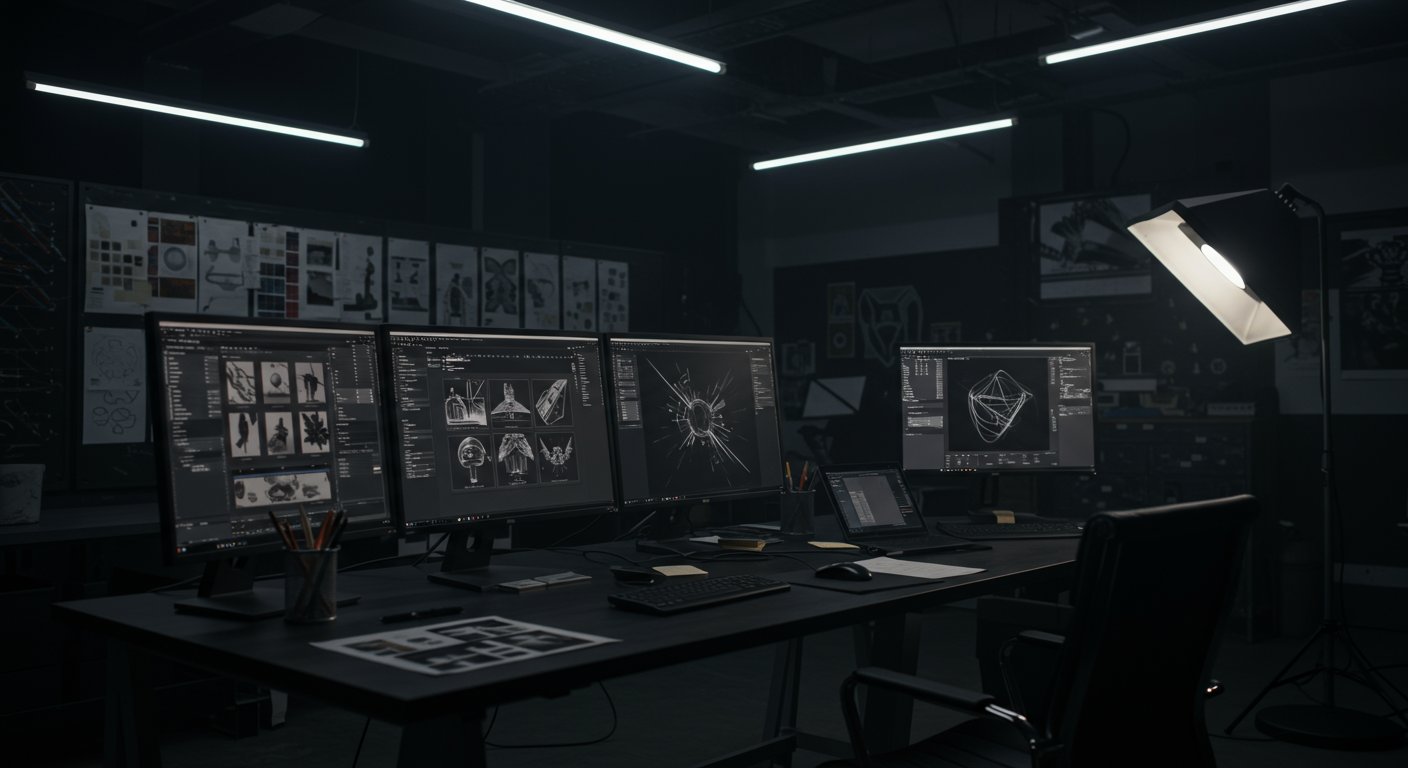
The experiential design process is the structured workflow of translating a brand brief into a buildable physical environment — spanning concept development, 3D visualization, spatial planning, material specification, and fabrication-ready engineering drawings. A well-executed design process eliminates the most expensive problems in event fabrication: scope creep, miscommunication, and the gap between what gets designed and what gets built.
Phase 1: Discovery & Brief
Every experiential design project begins with understanding the constraints and objectives:
- Brand goals — awareness, product trial, social impressions, lead capture, press coverage
- Audience — demographics, expected attendance, behavior patterns
- Venue — floor plan, ceiling height, load-in access, rigging points, power availability
- Budget — total budget and how it breaks down across design, fabrication, and production
- Timeline — event date, load-in window, and any hard deadlines
At Pop Up Your Brand, the discovery phase produces a documented brief that every team member — designers, engineers, fabricators — references throughout the project.
Phase 2: Concept Development
Designers develop 2-3 creative directions based on the brief:
- Mood boards — visual references for tone, materials, and aesthetic direction
- Rough layouts — spatial organization showing zones, flow, and key touchpoints
- Material palettes — initial material and finish recommendations
The concept phase is where creative vision meets practical buildability. Designers at fabrication-integrated shops think in materials and construction methods from the first sketch — not just aesthetics.
Phase 3: 3D Visualization
Approved concepts are developed into photorealistic 3D renders that show the experience from multiple angles:
- Perspective renders — eye-level views showing what guests will actually see
- Aerial views — spatial context showing the full footprint within the venue
- Detail renders — close-ups of signage, materials, lighting, and finish quality
- Walkthrough animations — for complex environments where spatial sequence matters
3D renders serve dual purposes: client approval and internal fabrication reference. What the client approves in the render is exactly what the shop builds.
Phase 4: Spatial Design & Engineering
Spatial design translates the approved 3D concept into technical documentation:
- Floor plans — dimensioned layouts with furniture, fixtures, and traffic flow
- Elevation drawings — front, side, and rear views with dimensions
- Structural calculations — load ratings, connection details, and safety engineering
- Material schedules — every material, finish, and hardware item specified
Phase 5: Fabrication Drawings
Fabrication drawings are the final deliverable — production-ready CAD files that go directly to the shop floor:
- Fully dimensioned construction drawings
- CNC toolpath files for routed elements
- Assembly sequences and connection details
- Hardware and fastener callouts
When the design team and fabrication team share the same facility — as they do at PUYB — drawings go from engineering desk to CNC router without a single email, file transfer, or interpretation step. The monday.com MP Live project at Pier 36 is an example of this integrated process at scale: 12,000 sq ft designed, engineered, fabricated, and installed by one team.
Why Integrated Design Matters
The experiential design process breaks down when design and fabrication are separate companies:
- Designs get created that cannot be built within budget
- Value engineering compromises the creative vision
- “That is not what we approved” conversations happen on-site
- Timeline slips from vendor coordination delays
Integrated design-to-fabrication eliminates all of these failure modes. Pop Up Your Brand handles the complete pipeline — brief through installation — with 200+ projects delivered and zero missed open dates.
Recent work like the Celsius Pop-Up and the Keurig × Nasdaq activation reflects the in-house fabrication standards Pop Up Your Brand brings to every build.
Frequently Asked Questions
The experiential design process is the structured workflow of translating a brand brief into a buildable physical environment. It spans discovery, concept development, 3D visualization, spatial planning, engineering, and fabrication-ready drawings — typically completed in 2-6 weeks depending on project complexity.
Experiential design timelines range from 1 week for simple single-element concepts to 4-6 weeks for complex multi-environment projects. Initial concepts are typically delivered within 48 hours of receiving a brief. The full design phase (concept through fabrication drawings) runs 2-3 weeks for most projects.
Standard experiential design deliverables include mood boards, concept sketches, photorealistic 3D renders, floor plans, elevation drawings, material schedules, structural calculations, and fabrication-ready CAD files. Walkthrough animations are available for complex environments where spatial sequence is important.
Experiential design fees typically run 10-20% of the total fabrication budget. For a $50,000 fabrication project, design costs $5,000-$10,000. Many integrated fabrication shops include design as part of the overall project scope rather than billing it separately.
Let's build something worth talking about.
Quote in 48 hours. Zero missed open dates.
Start Your Project