Feb 19, 2026
Large Format Printing for Events: Materials, Methods & Tips
A comprehensive guide to large format printing for events covering print technologies, substrate materials, finishing techniques, and production tips for brand activations and trade shows.
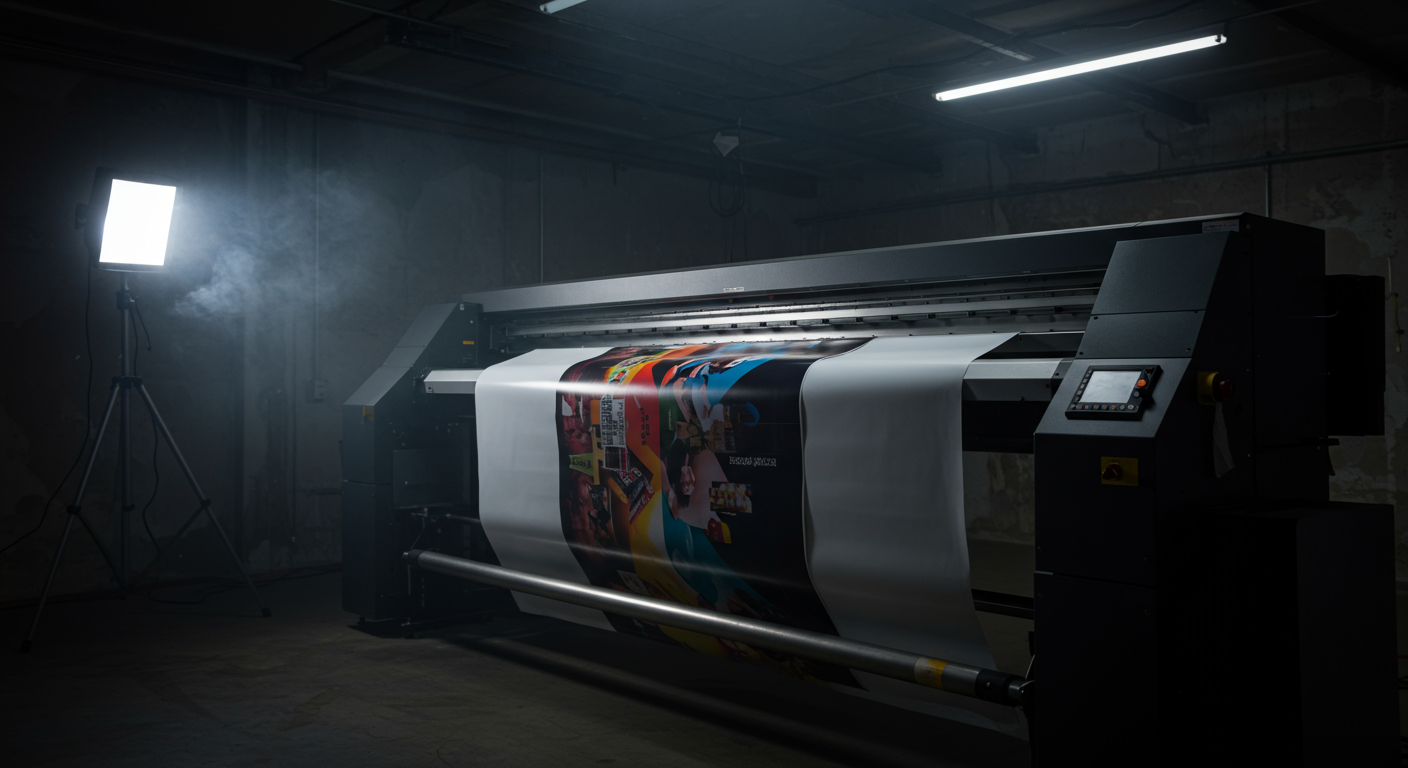
Large format printing for events is the production of oversized graphics, signage, backdrops, wall wraps, floor graphics, and branded environmental elements using wide-format digital printers capable of outputting widths from 42 inches to 16 feet or more. This technology enables event fabrication teams to apply photographic-quality branded imagery to virtually any surface within a built environment, transforming raw structural elements into fully branded experiential spaces.
Print Technologies for Event Graphics
Four primary print technologies serve the event fabrication industry, each with distinct strengths that make it best suited for specific applications. Understanding these technologies helps event producers and brand managers make informed decisions about which method delivers the best combination of quality, durability, and cost for their particular project requirements.
Dye-Sublimation Printing
Dye-sublimation printing uses heat to transfer dye directly into polyester fabric substrates, producing vibrant, wash-resistant graphics with a soft hand feel. The dye becomes part of the fabric rather than sitting on the surface, which means no cracking, peeling, or fading under normal event conditions. Dye-sub is the preferred technology for fabric backdrops, tension-fabric displays, hanging banners, and large format printed soft goods. The fabric output folds compactly for shipping, resists wrinkles with light steaming, and meets inherently flame-resistant (IFR) requirements when printed on certified IFR polyester. These properties make dye-sublimation the dominant print method for touring activations and repeat-use event graphics.
UV-Cured Printing
UV printing uses ultraviolet light to instantly cure ink as it is deposited, allowing printing on rigid substrates including acrylic, PVC foam board, aluminum composite, wood, and glass. This direct-to-substrate capability eliminates the need for lamination on many materials and enables same-day production of dimensional signage, wall panels, table wraps, and display graphics. UV inks resist scratching and fading, making them suitable for high-traffic event environments where guests will touch and interact with printed surfaces. UV flatbed printers can also print white ink and clear coat effects, enabling printing on transparent and colored substrates with full opacity and tactile texture layers.
Latex Printing
Latex printers use water-based ink that is heat-cured during printing, producing odorless output suitable for indoor environments. Latex technology handles both flexible roll media — vinyl, fabric, film, wallpaper — and some rigid substrates with optional flatbed configurations. Print quality rivals solvent output with the advantage of no off-gassing period, which means graphics can be finished, packed, and installed immediately after printing. For brand activations in enclosed retail spaces and hospitality venues where air quality matters, latex printing is the responsible choice.
Solvent and Eco-Solvent Printing
Solvent printers use inks that chemically bond with vinyl substrates, producing highly durable outdoor-rated graphics. While eco-solvent formulations have reduced the volatile organic compound output of these printers, the technology has been largely supplanted by latex for indoor event applications. Solvent printing remains relevant for long-term outdoor signage, vehicle wraps, and applications requiring maximum weather resistance over extended deployment periods. For short-duration event use, latex and UV technologies generally deliver equivalent durability with faster production advantages.
Substrate Materials for Event Graphics
The substrate — the material being printed on — determines the visual quality, durability, weight, mounting options, and fire-code compliance of finished event graphics. Selecting the right substrate for each application within a fabricated environment is as important as the print technology itself.
Fabric Substrates
Polyester knit fabrics in weights from 6 to 9 ounces per square yard are the standard for dye-sublimation event graphics. Backlit fabrics with specific opacity characteristics allow LED illumination to pass through evenly for lightbox applications. Blockout fabrics prevent light transmission for double-sided printed displays. Stretch fabrics with four-way spandex content wrap over dimensional frames for seamless, wrinkle-free presentations. Pop Up Your Brand specifies IFR-certified polyester fabrics for all indoor event applications, ensuring fire marshal approval without additional flame-retardant treatment.
Vinyl and Film Substrates
Adhesive vinyl remains the most common substrate for wall wraps, floor graphics, and window applications at events. Cast vinyl with air-release adhesive conforms to curved and textured surfaces. Calendered vinyl serves flat applications at lower cost. Floor graphic films include anti-slip overlaminate to meet safety requirements. Perforated window film allows one-way visibility for branded window applications. Clear and translucent films enable printed graphics on glass and acrylic surfaces without fully blocking light.
Rigid Substrates
For dimensional signage, display panels, and structural graphic elements, rigid substrates provide the necessary flatness and self-supporting structure. Expanded PVC foam board (Sintra) in thicknesses from 3mm to 25mm offers a lightweight, paintable, and printable substrate for virtually any flat graphic application. Aluminum composite panels (Dibond) provide a premium, rigid surface for high-end signage and architectural panels. Corrugated plastic (Coroplast) handles budget-conscious temporary signage. Gator board — a polystyrene foam core with wood-fiber face — bridges the gap between lightweight foam and rigid panel applications.
Finishing and Installation Methods
Raw printed output becomes event-ready through finishing processes that protect graphics, prepare mounting surfaces, and enable rapid installation within tight venue load-in windows.
Lamination and Protective Coatings
Overlamination applies a clear protective film to printed graphics, adding scratch resistance, UV protection, and specific surface finishes ranging from high gloss to matte to anti-glare. Liquid coating alternatives provide similar protection with less material waste. For floor graphics, textured anti-slip laminates are mandatory to prevent slip-and-fall hazards in public event spaces. UV-printed graphics on rigid substrates often skip lamination because the cured ink provides inherent surface durability.
Sewing and Finishing for Fabric Graphics
Fabric graphics require sewn or heat-welded edges, hemming, and the attachment of hanging hardware. Silicone edge graphics (SEG) feature a thin silicone bead sewn along the perimeter that presses into an aluminum frame channel, creating a taut, frameless presentation. Pole pockets, grommets, and hook-and-loop strips provide alternative hanging and mounting methods depending on the display system and venue requirements. Professional sewing and finishing ensure clean edges, consistent tension, and reliable attachment that survives the rigors of multiple installations.
Contour Cutting and Dimensional Applications
CNC routers, laser cutters, and flatbed cutting tables shape printed rigid substrates into custom contours, dimensional letters, and shaped signage elements. Printed acrylic can be laser-cut into intricate brand elements with polished edges. Printed PVC board routed into dimensional shapes and mounted with standoffs creates layered wall installations with depth and shadow. These techniques transform flat printed output into three-dimensional branded elements that integrate with fabricated event structures.
File Preparation for Large Format Output
Print file preparation for event graphics follows specific technical requirements that differ from standard commercial print. Source files should be built at final output size or at half-scale (50 percent) with all elements at 150 DPI at full size. This 150 DPI threshold — lower than the 300 DPI standard for offset print — reflects the viewing distances typical in event environments. A 10-foot-wide backdrop viewed from 6 feet away does not require the same resolution as a handheld brochure.
Color management is critical for brand-sensitive applications. Large format printers output in CMYK, and color profiles vary between print technologies, ink sets, and substrates. Providing Pantone references for brand colors and requesting printed color proofs before production prevents costly reprints. Files should include accurate bleed (typically 1 to 2 inches for event graphics), crop marks, and clear indication of safe areas where text and critical imagery must remain inside the trim line.
For multi-panel installations like wall wraps and environmental graphics, file preparation must account for panel overlap, seam placement, and pattern alignment across multiple printed sections. Experienced large format print producers plan seam locations to fall along natural visual break lines — corners, architectural transitions, and graphic element boundaries — minimizing visible seams in the finished installation.
Production Timelines and Planning
Large format print production timelines for events typically run three to ten business days from approved files to finished, installation-ready graphics. Simple banner and signage orders with standard materials can turn in two to three days. Complex multi-surface environmental graphics packages with custom substrates, specialty finishes, and contour cutting require seven to ten days. Rush production is available at premium cost, but even rush timelines require approved, print-ready files — file revisions during rush production are the most common cause of missed deadlines.
PUYB operates in-house large format printing capabilities alongside fabrication services, which eliminates the transit time and communication gaps inherent in outsourcing print production to a separate vendor. When the same team that builds the structure also prints and installs the graphics, dimensional accuracy between structural elements and applied graphics is verified at every stage of production.
Cost Factors for Event Graphics
Large format printing costs for events are driven by substrate material, print technology, total square footage, finishing requirements, and timeline. Fabric dye-sublimation graphics typically cost $8 to $20 per square foot including sewing and finishing. Vinyl wall wraps and floor graphics range from $10 to $30 per square foot including lamination and installation. UV-printed rigid signage costs $15 to $50 per square foot depending on substrate thickness and finishing. Volume discounts apply to large-quantity orders, and repeat orders from existing files reduce per-unit costs significantly.
The largest hidden cost in event graphics is reprinting due to file errors, color mismatches, or dimensional inaccuracies. Investing in proper file preparation, printed proofs, and dimensional verification against fabrication drawings before committing to full production runs saves far more than it costs. The Keurig x Nasdaq project demonstrates how precision coordination between printed graphics and fabricated structures produces a seamless branded environment where every panel, wrap, and graphic element aligns perfectly with the underlying build.
Sustainability Considerations
Environmental responsibility in large format printing has improved substantially with latex ink technology, recyclable substrates, and waste reduction through digital nesting and print optimization. PVC-free substrates, water-based inks, and recyclable fabric materials are available for most event applications. Designing graphics on reusable fabric panels that can be reprinted for refreshed branding or repurposed across multiple events reduces both cost and environmental impact over time.
Large format printing is the bridge between structural fabrication and finished branded environment. Getting the technology, substrate, and production process right ensures that every surface within an event space delivers the visual quality and brand accuracy that audiences notice — and that they photograph and share. Planning print production in parallel with fabrication, maintaining tight file preparation standards, and working with an integrated fabrication and print team delivers the best results on budget and on schedule.
Recent work like the IBS Trade Show build and the Celsius Pop-Up reflects the in-house fabrication standards Pop Up Your Brand brings to every build.