Feb 25, 2026
Experiential Fabrication vs Event Production: What’s the Difference?
A clear comparison of experiential fabrication and event production covering scope, deliverables, team skills, cost structures, and how the two disciplines work together on events.
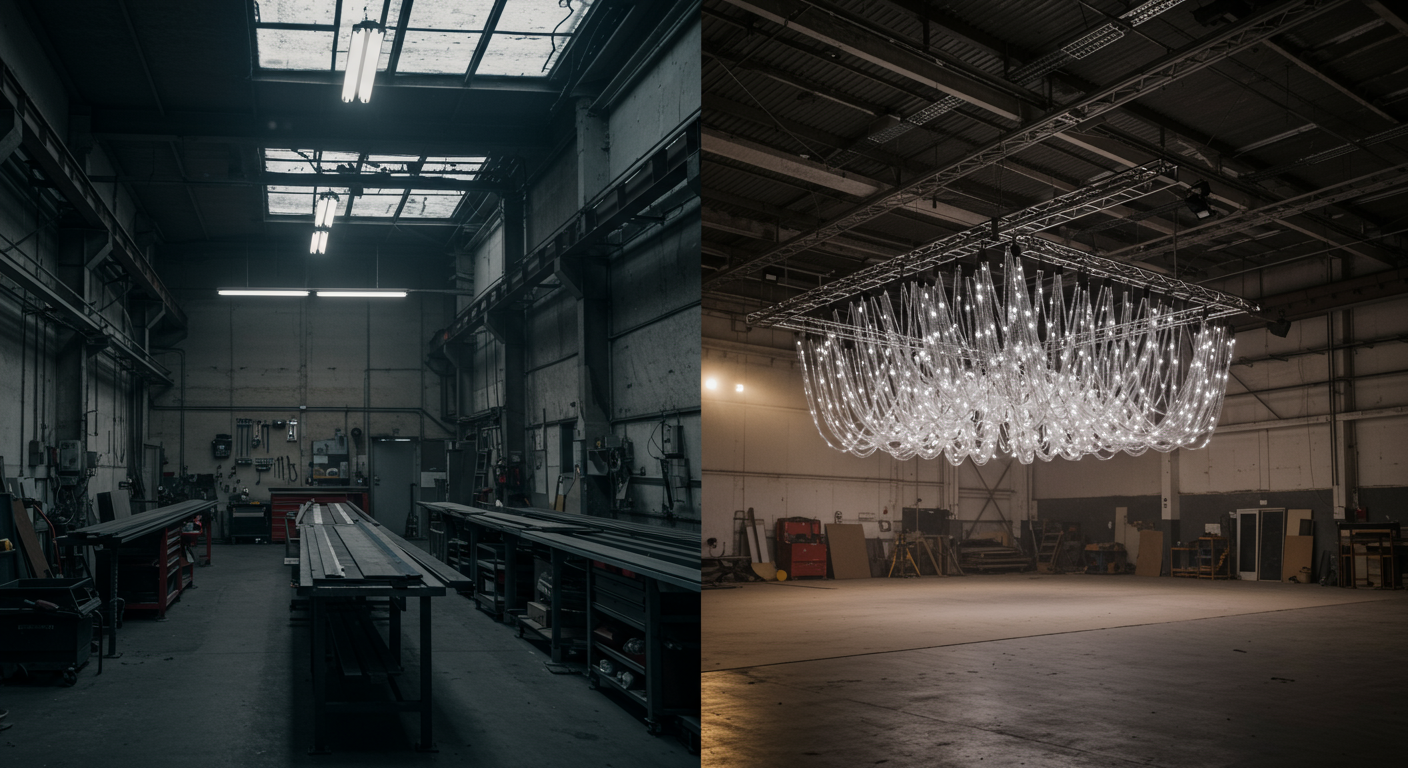
Experiential fabrication and event production are distinct but complementary disciplines within the live events industry that are frequently confused, conflated, or used interchangeably by clients, vendors, and even industry professionals. Experiential fabrication focuses specifically on the design, engineering, and physical construction of custom environments and structures, while event production encompasses the broader coordination of all logistical, technical, and operational elements required to execute a live event from concept through completion.
What Is Experiential Fabrication?
Experiential fabrication is the specialized practice of designing and building three-dimensional branded environments, custom structures, scenic elements, and interactive installations for live events, brand activations, trade shows, and immersive marketing experiences. The discipline combines industrial fabrication skills — carpentry, metalwork, CNC cutting, scenic painting, printing, and finishing — with creative design expertise to produce physical spaces that communicate brand narratives and create memorable audience experiences.
The output of experiential fabrication is tangible and physical: walls, structures, counters, displays, signage, lighting installations, interactive elements, and complete environments that attendees walk through, touch, photograph, and interact with. A fabrication team at a company like Pop Up Your Brand takes a creative concept expressed in renderings and drawings and transforms it into a real, built environment that meets structural, safety, aesthetic, and logistical requirements.
Key activities within experiential fabrication include concept design and 3D visualization, structural engineering and shop drawings, material selection and procurement, CNC cutting and routing of structural and decorative components, metal fabrication and welding, scenic carpentry and assembly, scenic painting and finishing, large format printing and graphic application, LED lighting integration, quality control and shop testing, and logistics coordination for delivery and installation.
What Is Event Production?
Event production is the comprehensive management and execution of all elements required to deliver a live event. This broader discipline encompasses venue selection and management, vendor coordination across all categories (catering, AV, entertainment, staffing, security, transportation), timeline and schedule management, technical production (audio, video, lighting, staging), talent management and entertainment booking, permitting and regulatory compliance, attendee registration and flow management, health and safety planning, and budget management across all line items.
An event producer functions as the general contractor of the event world, coordinating dozens of specialized vendors and disciplines into a cohesive experience that meets the client’s objectives on time and on budget. The producer’s deliverable is the event itself — a successfully executed experience — rather than any single physical component of it.
Where the Disciplines Overlap
The confusion between experiential fabrication and event production arises because both disciplines operate in the same environments and serve the same ultimate goal: creating compelling live experiences. Several areas of overlap contribute to the blurred lines.
On-site installation is the most visible overlap. Both fabrication crews and production teams are present during load-in, working in the same venue space under the same time pressures. The fabrication team installs physical structures while the production team coordinates AV, catering, staffing, and other elements. These activities happen simultaneously and must be sequenced carefully to avoid conflicts.
Technical production — specifically lighting, audio, and video — sits at the intersection of both disciplines. A fabrication team may integrate LED lighting into a built structure, while the event production team manages the house lighting, presentation audio, and video content. Determining which team owns which lighting fixture and which control system requires clear scope definition at the project outset.
Design is another overlap area. Experiential fabrication companies increasingly offer end-to-end experiential design services that extend beyond physical structures into spatial flow, audience journey mapping, and experience choreography — activities that also fall within the event production scope. Similarly, event production companies may employ designers who create environmental concepts that require fabrication to execute.
Key Differences
Scope and Deliverables
The fundamental difference is scope. Experiential fabrication delivers physical assets — built structures, environments, and installations. Event production delivers a coordinated experience that includes those physical assets along with every other element of the event. A fabrication company is responsible for the quality, structural integrity, and visual fidelity of what it builds. A production company is responsible for the overall event experience, including elements it does not build itself.
Team Composition and Skills
Fabrication teams are composed of skilled tradespeople: carpenters, welders, CNC operators, scenic painters, electricians, and finishing specialists, led by project managers with engineering and construction backgrounds. Production teams include event managers, technical directors, stage managers, AV engineers, logistics coordinators, and creative directors with backgrounds in live entertainment, corporate communications, or hospitality management. The skill sets are fundamentally different, with fabrication rooted in manufacturing and construction, and production rooted in logistics, coordination, and show management.
Facility and Equipment
Fabrication requires a physical production facility — a shop with industrial equipment including CNC routers, table saws, welding stations, paint booths, and assembly space. Production companies typically operate from office environments with no manufacturing capability, relying on vendor networks for all physical production needs. This facility distinction defines the business model: fabrication companies are capital-intensive manufacturing businesses; production companies are service businesses built on intellectual capital and vendor relationships.
Timeline and Engagement
Fabrication work begins weeks or months before the event during the design and production phase, continues through shop fabrication, and concludes with on-site installation and strike. The fabrication team’s most intensive work happens before the event. Production work spans the entire event lifecycle — planning, vendor coordination, rehearsal, show execution, and post-event wrap — with the most intensive work happening during the event itself. This timeline distinction means the two disciplines peak at different moments, which is why they complement each other effectively.
Cost Structure
Fabrication costs are primarily materials and labor tied to physical production — wood, metal, paint, printing, and the skilled labor to transform those materials into finished structures. Production costs are primarily service fees, vendor management, technical equipment rental, and staffing. Fabrication line items appear as tangible deliverables with material and labor breakdowns. Production line items appear as management fees, coordination charges, and pass-through costs for subcontracted services.
When You Need Fabrication, Production, or Both
Fabrication Only
Organizations with internal event management capability may engage a fabrication partner solely for physical production. A corporate events team that manages its own venue relationships, catering, AV, and staffing might hire a fabrication company to build a branded stage set, product display environment, or trade show booth. The fabrication scope includes design, engineering, build, delivery, installation, and strike of the physical elements, while all other event coordination remains with the client’s internal team.
Production Only
Events that use rental structures, existing venue infrastructure, or minimal custom physical elements may require production management without fabrication. A conference using hotel ballroom setups with rented AV equipment and standard staging needs production coordination but no custom fabrication. The production company manages the timeline, vendors, technical execution, and on-site show management.
Both Disciplines Integrated
Brand activations, immersive experiences, and premium trade show presences typically require both experiential fabrication and event production working in tight coordination. The Delilah x Hwood Group project exemplifies this integration — custom-fabricated environments combined with coordinated production elements including lighting programming, AV integration, and operational logistics to deliver a cohesive brand experience.
Choosing the Right Partners
The most effective approach for projects requiring both disciplines is to work with partners who understand the boundary between fabrication and production and communicate clearly across it. Some organizations prefer a single integrated partner that handles both fabrication and production coordination. Others prefer separate specialized partners for each discipline with clear scope boundaries defined in the project plan.
When evaluating fabrication partners specifically, look for demonstrated capability across the fabrication disciplines your project requires (structural, scenic, lighting, printing), a portfolio of completed projects at similar scale and complexity, in-house production facilities with the necessary equipment, engineering capability for structural and safety compliance, and a track record of on-time delivery and quality execution. Pop Up Your Brand operates as a dedicated immersive production and fabrication partner, handling the full fabrication scope from concept design through on-site installation while coordinating seamlessly with production teams managing the broader event.
Communication Between Disciplines
Successful events require clear communication protocols between fabrication and production teams. Critical coordination points include load-in sequencing (fabrication structures typically install before production elements), power distribution (fabricated lighting loads must be planned alongside production power requirements), rigging coordination (structural elements and production rigging share the same overhead space), fire safety compliance (both fabricated materials and production elements must meet venue fire codes), and schedule dependencies (production rehearsals cannot begin until fabrication installation is complete).
Establishing these coordination points in the planning phase — not on-site during load-in — prevents the conflicts, delays, and cost overruns that arise when two teams discover competing needs for the same space, power, or timeline at the worst possible moment.
Experiential fabrication and event production serve different functions within the same ecosystem. Understanding where each discipline starts and ends, what each contributes to the final result, and how they integrate on shared projects leads to better vendor selection, clearer contracts, smoother execution, and ultimately better experiences for the audiences these events serve.