Jun 06, 2026
Music Festival Brand Activations: A 2026 Fabrication Guide
Music festival activations are a different fabrication problem: outdoor, high-volume, short-duration, shared-tenant. A 2026 build guide for marketers and producers.
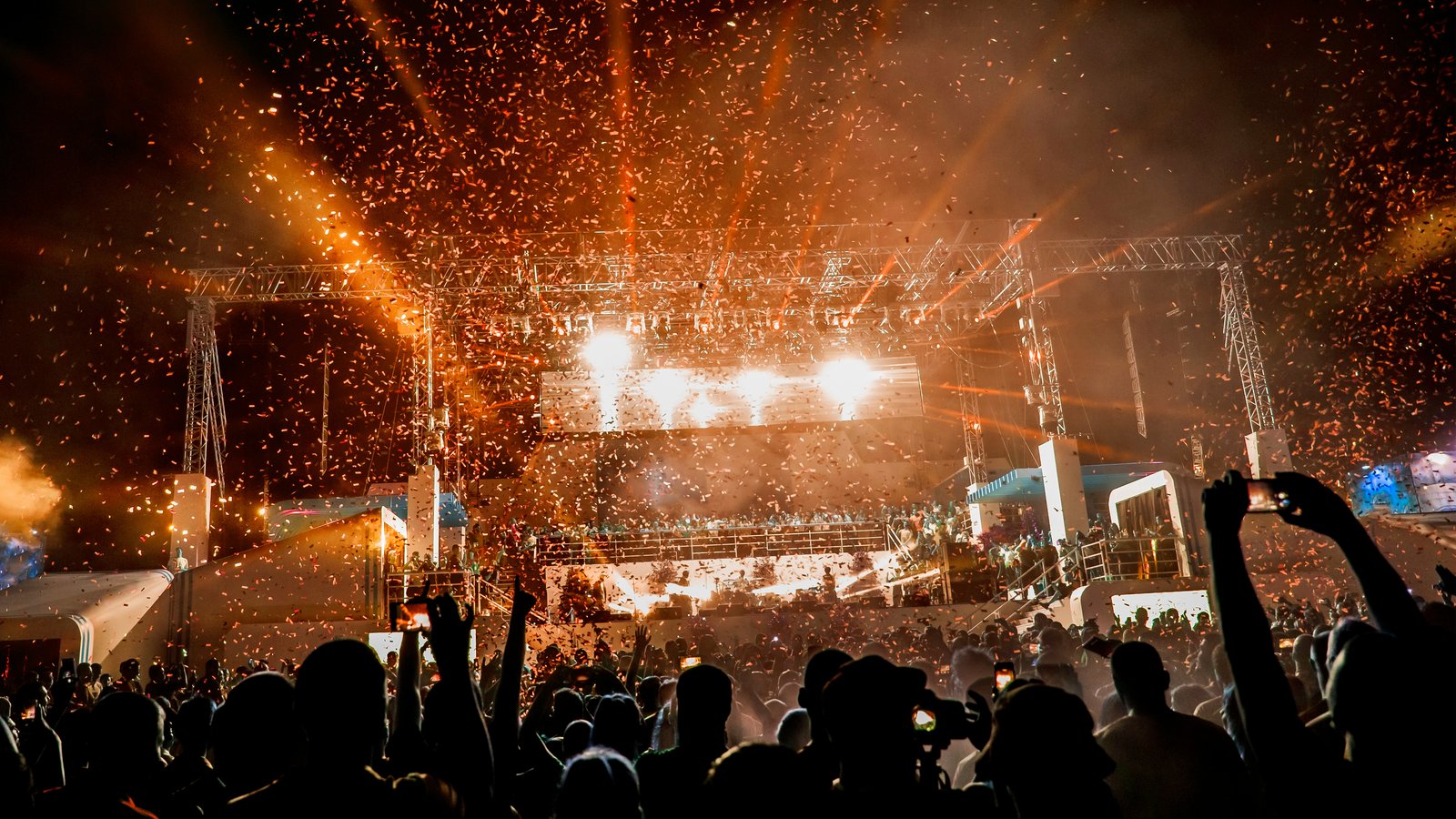
Music festivals are the most demanding fabrication context a brand can buy into. A trade show booth lives inside a climate-controlled hall with forklifts on call and a union steward at the dock. A festival activation lives in a field — wind-loaded, sun-baked, rained on, with 60,000 people running past it for ten hours a day, all anchored into dirt that was a parking lot two days ago. Everything you would normally rely on — flat floors, drop ceilings, hardwired power, predictable load-in windows — is gone. What replaces it is generators, ballast, ground-protection mats, and a build calendar measured against the headliner’s set time, not the office calendar.
This is a working guide to the fabrication side of festival activations: footprint planning, material selection, infrastructure, the build calendar, NYC-area specifics, and how to scope the work so the partner you hire — whether that is a full-service brand activations team or an internal producer renting trusses — can deliver a piece that survives the weekend and earns the post-event recap deck. It is written for marketers and producers who have already greenlit a budget and now need to ship something physical to Randall’s Island, Forest Hills, Citi Field, Gov Ball, EDC, Bonnaroo, Coachella, or a regional touring stop, and want to know what their fabrication vendor should be doing in the eight to twelve weeks before truck wheels roll.
Why festival builds are a different fabrication problem
A festival activation looks like an event piece and is built like one — same shop, same CAD, same crew — but the brief sits between four operating contexts that rarely combine elsewhere. It is outdoor, it is high-volume, it is short-duration, and it is shared-tenant. Together those four conditions change every material spec and every joinery decision on the print.
Outdoor means UV, wind load, rain, condensation, dust. High-volume means every touch surface gets a hand on it 8,000 times a day — soft goods, paint, vinyl wraps, foam props, all wear into a different look on Sunday than they had on Friday. Short-duration — usually three days plus one build day and one strike day — means the engineering target is not durability over a year, it is survival of one specific weekend with a known weather forecast. Shared-tenant means you are not the only build on site; you share generators, fence lines, FOH placement, and golf-cart traffic lanes with two dozen other activations, and the festival production company sets the rules.
The implication for fabrication is that festival builds reward modularity, weight-efficient structure, weather-resilient material choices, and ruthless cable management. Anything that requires a flat floor or a 110V wall outlet should be designed out of the piece before the prototype is cut. The shops that do this well — most of them developed those instincts doing concert touring or trade show work first — treat the activation like a road case: it goes out, it gets used hard, it comes back, and the next stop’s load-in is already on the schedule.
The festival activation footprint: what brands actually build
“Brand activation at a festival” can mean a $40,000 sampling tent or a $1.2M multi-zone footprint with talent green rooms and a content set. The catalog of common build types is shorter than it looks, and most paid programs are some combination of these:
| Build type | Typical footprint | Primary fabrication output |
|---|---|---|
| Sampling station | 10×10 to 20×20 | Branded counter, refrigeration cabinet, queue corral, overhead canopy |
| Photo-moment / hero set | 10×20 to 30×30 | Sculptural backdrop, lighting, vinyl floor mark, queue rope |
| Branded lounge / VIP | 20×40 to 40×60 | Decking, soft seating, bar build, perimeter scrim, shade canopy |
| Hospitality suite (talent) | 20×20 to 30×40 | Secured cabin or trailer, climate control, branded interior |
| Stage takeover / co-brand | 30×40 stage face + wings | LED frame, scenic flats, sponsor logo lockup, deck risers |
| Interactive / game zone | 20×20 to 40×40 | Mechanical or screen-based game, data-capture kiosk, prize racks |
| Mobile / touring trailer | 26 to 53 ft trailer | Hydraulic walls, interior fit-out, awning, generator bay |
Most successful festival programs combine two or three of these so the brand has both an experience layer (the photo set, the game) and a service layer (the sampling, the lounge, the shade). A standalone sampling tent generates volume but rarely produces the content that justifies the rest of the spend. A standalone photo moment generates content but no sampling data. The combo footprint is where the fabrication scope gets interesting — and where partnering with a shop that ships across an experiential design discipline rather than a pure build-to-print vendor starts paying for itself, because the spatial flow between zones (sample → play → photograph → exit) is engineered into the floor plan instead of being argued about during install.
Material decisions: what survives a festival weekend
The material spec is where most first-time festival activations go wrong, and the failure mode is almost always the same: someone reused a trade-show booth spec for an outdoor field. A trade show booth is a furniture-grade build — MDF, laminate, smooth painted surfaces, indoor-rated graphics. Drop that same build on grass in July and the MDF swells overnight, the laminate edges peel by Saturday, and the paint chalks under UV by Sunday afternoon. The recap photos look bad. The recap photos are the deliverable.
Substrates
For structural panels on an outdoor activation, the workhorse substrates are marine-grade plywood, ACM (aluminum composite material) panels, and powder-coated aluminum framing. Marine ply tolerates moisture cycling. ACM is light, holds paint and vinyl beautifully, and resists denting from cart traffic. Powder-coated aluminum extrusion — the same family of profiles used in modular trade show systems — gives you fast assembly and breakdown without sacrificing rigidity. Avoid raw MDF, hollow-core doors, untreated pine, and anything paper-faced. Save those for indoor booths.
Graphics and soft goods
For graphics, the print substrate matters more than the printer. Cast vinyl on smooth ACM with a UV laminate will hold color for the weekend and beyond. Adhesive perm vinyl on textured surfaces or in direct rain will lift. For soft goods — banners, scrims, flags, perimeter wraps — use blockout mesh or coated polyester rated for outdoor wind exposure, hemmed and grommeted at 12″ intervals, and zip-tie or bungee them to the frame. A 4×8 banner without proper venting in a 20-mph gust becomes a sail and takes the frame with it. Mesh banners shed wind load by design.
Finishes
Powder coat outperforms wet paint on metal in every outdoor application. For wood and ACM, use exterior-grade acrylic or two-part automotive paints, and clear-coat anything that will see direct sun. Matte finishes age better than gloss outdoors — gloss highlights every scuff and fingerprint, and there will be tens of thousands of fingerprints by Sunday.
A useful rule from the touring world: if a piece would not survive being loaded onto a truck, driven 300 miles, set up in a field, and torn down four days later, it should not be on the print. Festival builds are concert builds with a logo on them.
Infrastructure: power, water, ballast, ground protection
The infrastructure layer of a festival activation is invisible in the recap photos and is where most of the budget surprises live. It is also where festival production companies have the strictest rules, because infrastructure decisions are safety decisions.
Power. Most festival activations pull from a shared generator distribution managed by the festival’s power vendor. You will be asked to declare your peak amperage, your inrush characteristics, and your distribution panel — 30A vs 50A, single-phase vs three-phase. Underestimate and you will brown out the LED wall when the refrigerators cycle. Overestimate and you will pay for capacity you never use. Festival activations should be CAD’d with a one-line electrical diagram that the festival’s power vendor can sign off on, and every fixture should have an inline GFCI rated for damp locations.
Water. If the activation is sampling consumables, the festival’s potable water and gray water rules are non-negotiable. Most sampling tents bring NSF-rated holding tanks for fresh water and gray water, and the local health department will inspect on load-in day. Cold sampling — bottled water, canned beverages — is materially easier. Hot sampling — coffee, espresso, prepared food — adds a permit, a venting requirement, and usually a dedicated hand-wash sink.
Ballast and ground protection. Stakes are rarely allowed on festival grounds because the field is rented from a park or municipal entity that does not want holes in the turf. Ballast — concrete blocks, water barrels, or steel plates — holds tents, trusses, and signage in place. The ballast schedule is part of the engineering submission. Ground protection mats (interlocking HDPE panels) go under any traffic lane and any heavy footprint to prevent turf damage; deposit refunds depend on the field looking the way it did on load-in day.
Rigging. Any overhead element — signage, lighting, LED, drape — needs an engineering stamp. The festival production company will ask for it before they hand you a load-in pass. This is where having a fabrication partner with in-house rigging and structural review, the same discipline that supports stage and scenic fabrication, materially shortens the approval path; if the shop building the piece is also the shop calculating the load and signing the rigging plot, the festival’s safety lead has one phone number to call instead of three.
The build calendar: from RFP to load-out
A festival activation should be on a fabrication calendar at least eight weeks out, ideally twelve. The compressed version is possible — six weeks is doable for an experienced shop with capacity — but it eliminates the contingency window and tightens material lead times to a point where one missed PO can collapse the schedule.
| Weeks out | Phase | Key deliverables |
|---|---|---|
| 12–10 | Concept & design | Approved creative, dimensional renderings, materials direction |
| 10–8 | Engineering | CAD shop drawings, structural review, festival submission package |
| 8–6 | Procurement | Long-lead POs (steel, custom print, electronics) |
| 6–3 | Fabrication | Shop build, paint, vinyl application, first fit-up |
| 3–2 | Pre-build / shop preview | Full assembly in shop, brand walkthrough, punch list |
| 2–1 | Logistics | Crating, truck plan, crew call sheets, ground transport bookings |
| 0 | Festival week | Load-in, fit-up on site, brand approval, event run |
Two non-obvious things to negotiate into the contract early. First, a mandatory shop preview at week 2 or 3 — full assembly in the fabrication shop with the brand team walking it. This is the moment to find the punch list while there is still time to fix things; the same exercise on site at load-in is an emergency. Second, a clear ownership map for the activation after the festival — stored at the shop, broken down and recycled, or refurbished for the next stop on a tour. Festival sets that are designed for a single weekend often have a second life in retail, trade shows, or office activations if the modularity is engineered up front.
NYC-area festival considerations
New York is one of the densest festival markets in the country in any given summer — Gov Ball at Flushing Meadows, Electric Zoo on Randall’s Island, Forest Hills Stadium summer series, Rooftop at Pier 17, plus a roster of one-off branded festivals in Brooklyn Mirage, Knockdown Center, and dozens of pop-up parks. The fabrication implications are specific.
Bridge and tunnel logistics. Most NYC-area festival sites are on islands or in boroughs accessed by trucks that need to clear height restrictions and overnight parking limits. A 53-foot trailer cannot make every turn. Build pieces designed for NYC should be modularized into truck-friendly modules that can be cross-docked from a 53-footer to a 26-foot box if needed for the last mile.
Permits. NYC-specific permitting — particularly Parks Department, FDNY tents-and-structures, and DOT for any street-side load-in — adds two to four weeks to the front of the calendar. The same compliance framework that governs other large NYC builds applies here; the rules are summarized in our earlier guide to NYC event permits and fire code, which covers the FDNY thresholds for tent sizes, fire-retardant ratings, and crowd-flow plans that festival sites enforce stringently.
Load-in windows. Festival production companies issue load-in windows on a tight grid — often a two-hour slot, four days before show open, with a $1,500-per-hour penalty for overrun. Activations that miss their window get pushed to the back of the line and may not have site access until the day before doors. The fabrication shop’s logistics team should own the call sheet, the driver contact list, and the cross-dock plan, not the brand team.
Weather. NYC summer means thunderstorms; NYC fall means raw cold. Every NYC festival activation should be designed assuming a 40-degree temperature swing across the weekend and at least one named weather event. The weatherproofing principles in our outdoor brand activation weatherproofing guide are the floor, not the ceiling.
Photo moments and content engineering
A festival activation that does not generate sharable content is a failed activation, regardless of how many samples it pushed. The platform math is unforgiving — a single piece of organic content from a high-follower creator can outperform every dollar of paid impressions the brand bought into the festival sponsorship in the first place. Fabrication has to be designed to invite and serve that content.
The principles are not new — they show up across every category of activation, from immersive production sets to brand house takeovers — but they apply at festival scale with extra weight on durability and queue throughput. A photo moment that takes 90 seconds per group to capture will queue 200 people in an hour. A photo moment with a stepped backdrop, a vinyl floor mark, and a fixed phone holder cuts the cycle to 30 seconds and triples throughput. The fabrication decision — fixed phone mount with a Bluetooth shutter vs ambassador-operated camera vs DSLR booth — drives the queue plan.
Some hard-won notes from previous builds that translate well to the festival context. The Keurig x Nasdaq activation demonstrated how a single, well-lit hero wall can outproduce a multi-zone interactive build for raw shareable output when the queue is engineered into the floor plan. The Celsius pop-up showed the value of cold-storage integration into a sampling counter — having product at the right temperature is a fabrication decision, not a hospitality one. And the ONE LOVE Pride activation in NYC is a clean reference for elevated, outdoor brand experiences where the structural and aesthetic decisions had to land together. For the deeper toolkit on engineering the actual photo set, our earlier photo moment design playbook covers the design principles in detail.
Measurement: what to actually count
Festival activation measurement is rougher than trade show measurement — you do not have badge scanners, the audience did not register, and most of the meaningful outcomes are downstream of the weekend. The metrics that actually defend the spend are:
- Footfall: people through the activation, captured by manual counters at the queue entry or by overhead computer vision (more accurate, less common).
- Sample conversion: samples distributed divided by footfall — for beverage and CPG, a benchmark of 60–80% is reasonable.
- Data capture: opt-in emails or SMS captures per hour, the most defensible direct-attribution metric.
- Earned social impressions: creator and organic posts tagged with the activation hashtag — measured via social listening tools post-event.
- Press impressions: editorial coverage of the festival that names the brand — easier to source for hero builds with a distinct photo set.
- Direct sales lift: for CPG brands with retail distribution in the festival market, a controlled lift study across the festival weekend vs the prior four weekends.
The instrumentation for these metrics should be specified in the activation brief alongside the fabrication scope, not bolted on after. A photo moment with no tracked hashtag does not produce attributable social impressions. A sampling counter without a clipboard or tablet capture station does not produce data. Building these in costs almost nothing at the fabrication stage and is expensive to retrofit on site.
Working with the right fabrication partner
Festival activation work pulls from three competencies that do not always live in the same shop: experiential design (concept, narrative, visitor flow), structural fabrication (engineering, materials, rigging), and touring logistics (crating, transport, on-site crew). Vendors who are strong at one and weak at the other two will produce builds that need rescuing on load-in day. The shorter the festival’s load-in window, the higher the cost of that rescue.
The questions worth asking in an RFP for a festival activation:
- Do you have an in-house engineering team that can stamp the rigging plot, or do you sub it out?
- What is your shop’s outdoor-rated material catalog? (A short answer is a warning sign.)
- Have you built and shipped to this specific festival before? Who was your on-site contact?
- What is the contingency in your build calendar if material lead times slip?
- What is your strike plan, including pack-out condition and storage destination?
- Who owns the piece after the weekend — you, us, or a third-party warehouse?
For broader vendor diligence, the questions in our piece on 15 questions to ask before hiring a fabrication vendor apply here directly — festival work just adds the touring and outdoor dimensions on top.
Pulling it together
The festival activation that lands is the one that respects the operating context — outdoor, high-volume, short-duration, shared-tenant — at every step of the fabrication brief. Material specs come from the touring world, not the trade-show world. Infrastructure is engineered into the print before the prototype is cut. The build calendar runs eight to twelve weeks with a shop preview baked in. The photo moments are designed for queue throughput, not just for the camera. And the partner who ships the work is one that can hold all three of design, engineering, and logistics in the same shop.
If you are scoping a festival activation for the 2026 season and want to compare approaches or pressure-test a vendor’s plan, the team at Pop Up Your Brand fabricates festival, trade show, and brand activation work across NYC and nationally. Reach out through the event fabrication services page to start a conversation about scope, calendar, and feasibility for your build.