Apr 14, 2026
25 Trade Show Booth Design Ideas That Win (2026)
25 trade show booth design ideas that drive traffic and win awards. Custom exhibits, interactive elements, lighting, and layouts that dominate.
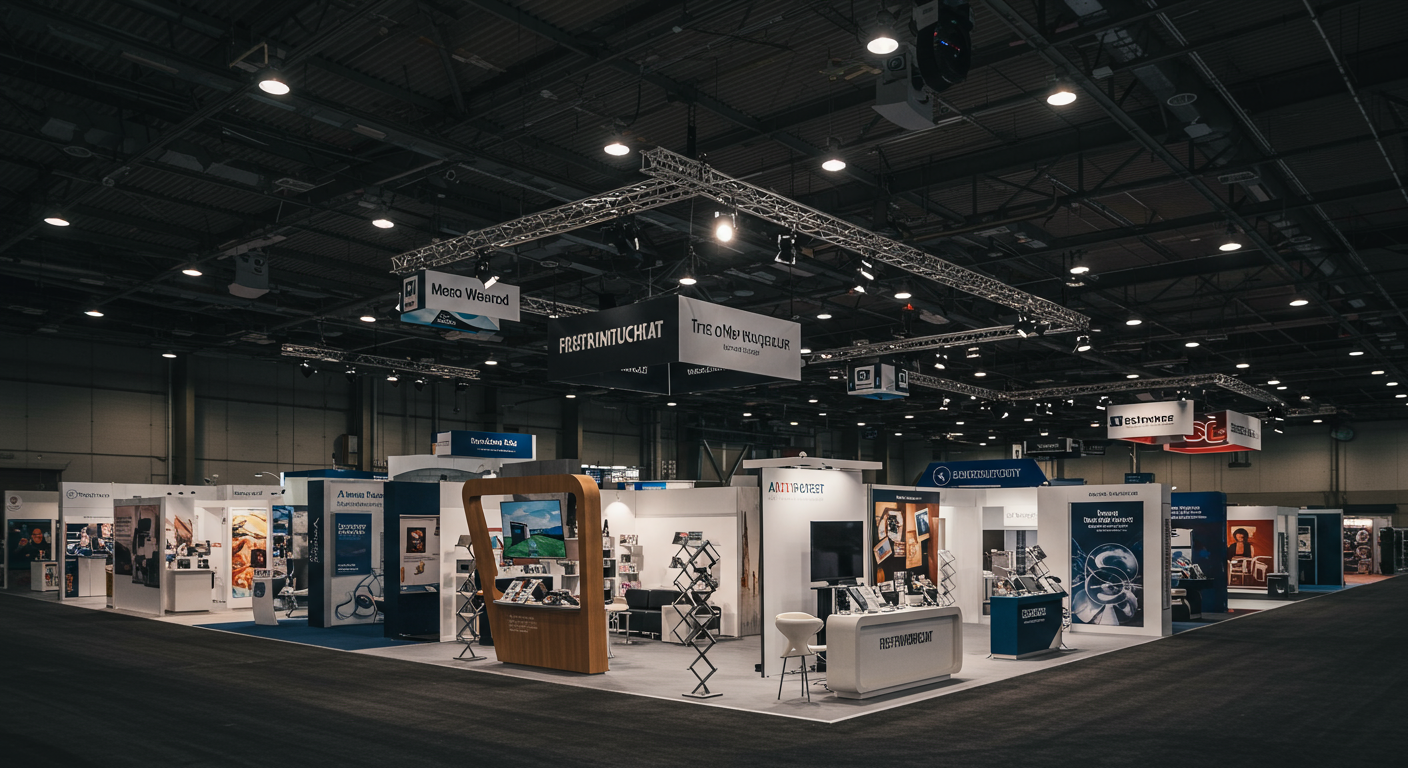
Trade show booth design determines whether attendees stop, engage, and remember a brand — or walk past without a second glance. The most effective booth designs combine architectural impact, strategic visitor flow, interactive engagement, and brand storytelling into environments that outperform competitors for attention, dwell time, and lead generation on the show floor.
This collection presents 25 proven trade show booth design ideas organized by strategy: structural impact, technology integration, engagement mechanics, and budget-smart approaches. Each idea includes practical implementation guidance and cost context so marketing teams and exhibit managers can evaluate feasibility before committing to a direction.
Structural Impact Ideas
Structural design creates the stopping power that draws attendees from the aisle into the booth. These ideas leverage architecture, height, and spatial design to dominate the show floor.
1. Double-Deck Exhibit with Rooftop Lounge
Two-story exhibits provide private meeting space on the upper level while maintaining open, inviting engagement areas at ground level. The vertical presence towers above neighboring inline booths, creating visibility from across the show floor. Budget range: $150,000-$400,000+ depending on size and finishes. Requires structural engineering and show management approval for overhead weight and occupancy. Best suited for 30×30 and larger island spaces.
2. Suspended Overhead Canopy or Cloud Structure
Hanging fabric, metal, or acrylic elements above the booth create a defined territory on the show floor without consuming floor space. Tension fabric canopies with internal LED backlighting create dramatic brand presence visible from 200+ feet. Budget range: $15,000-$60,000 for the overhead element alone. Requires rigging points in the convention center ceiling and compliance with show-specific weight limits.
3. Curved Wall Architecture
Curved walls break the visual monotony of rectangular booth designs that dominate most show floors. Curved elements create natural flow paths, eliminate harsh corners, and provide sweeping surfaces for branded graphics and video content. CNC-cut ribs with stretched fabric or bent aluminum composite panels achieve smooth curves at reasonable cost. Budget range: $20,000-$50,000 incremental over flat-wall construction for a 20×20 booth.
4. Industrial Open-Frame Structure
Exposed steel or aluminum tube framing creates an architectural statement that communicates innovation and transparency. The open structure maintains sight lines into the booth from all directions — critical for island exhibits where every face must attract traffic. Attach branded elements, monitors, product displays, and lighting to the frame while preserving the raw, industrial aesthetic. Budget range: $40,000-$100,000 for a 20×20 island.
5. Living Wall and Natural Element Integration
Preserved moss walls, living plant installations, and natural wood elements create visual warmth that contrasts dramatically with the metal-and-plastic convention center environment. Living walls are particularly effective for sustainability-focused brands and health/wellness categories. Preserved moss requires no irrigation and survives the full show cycle. Budget range: $8,000-$25,000 for a feature living wall; full-perimeter natural integration adds $20,000-$50,000.
6. Monolithic Brand Portal Entry
An oversized, architecturally significant entry portal creates a threshold moment — the psychological transition from “convention hall” to “brand space.” Effective portals are 12+ feet tall, dramatically lit, and materially distinctive from surrounding booths. The portal frames the interior experience and creates anticipation before attendees see the full booth. Budget range: $15,000-$40,000 for a custom-fabricated portal structure with integrated lighting and graphics.
7. Asymmetric Geometric Design
Angular, asymmetric structures create visual energy and a sense of forward motion. Angled walls, off-axis hanging elements, and faceted surfaces catch light differently throughout the day, creating an ever-changing visual experience. This approach works particularly well for technology, gaming, and entertainment brands. Budget range: $30,000-$80,000 incremental for complex geometry versus standard rectangular construction.
Technology Integration Ideas
Technology transforms passive displays into interactive experiences. These ideas leverage LED, interactive screens, and immersive media to create engagement that flat graphics cannot match.
8. Direct-View LED Video Wall Feature
A large-format LED video wall (typically 2.5mm pixel pitch or finer for close viewing) displays motion graphics, product demonstrations, live social feeds, and dynamic branded content. Unlike static graphics, video walls change throughout the show to highlight different products, showcase customer testimonials, or display real-time event content. Budget range: $25,000-$80,000 for a 10×8-foot LED wall including content creation, mounting, and show-duration rental.
9. Transparent LED Screen on Glass or Acrylic
Transparent LED film or mesh applied to glass or acrylic surfaces displays content while allowing visibility through the surface. This technology enables product displays that appear to float inside illuminated cases, or architectural elements that transition between transparent and opaque content. Budget range: $30,000-$75,000 for a feature-sized transparent display.
10. Interactive Touchscreen Product Explorer
Large-format touchscreens (55-85 inches) with custom software let attendees explore product catalogs, configure options, view 3D models, and request information at their own pace. Touchscreens extend engagement beyond what booth staff can serve simultaneously, capturing lead data from every interaction. Budget range: $8,000-$25,000 per station including hardware, software development, and show-duration technical support.
11. Augmented Reality Product Visualization
AR experiences using tablets, smartphones, or headsets overlay digital content onto physical products or the booth environment. Attendees can visualize products in context, explore internal components, or interact with 3D animations anchored to physical objects. AR excels for products too large, too complex, or too numerous to display physically. Budget range: $15,000-$50,000 for custom AR development and on-site hardware.
12. Projection Mapping on Dimensional Surfaces
Projecting animated content onto sculpted or dimensional surfaces creates dynamic displays that flat screens cannot replicate. A branded geometric structure becomes a canvas for product animations, storytelling sequences, and attention-grabbing light shows. Projection mapping is most effective in enclosed or dimly lit booth areas. Budget range: $20,000-$60,000 for custom content and projection hardware.
13. LED Floor Graphics
Interactive LED floor panels respond to foot traffic with branded animations, wayfinding cues, and gamified interactions. Attendees instinctively look down at illuminated floors, creating an engagement moment that most booths never trigger. Floor LEDs also create compelling overhead photography for social media and post-show marketing. Budget range: $15,000-$40,000 for a 10×10 interactive LED floor zone.
Engagement and Experience Ideas
Beyond structure and technology, these ideas create participatory experiences that extend dwell time and generate organic social content.
14. Branded Photo Booth with Instant Social Sharing
A custom-designed photo environment with professional lighting, branded backdrop, and instant social sharing capability generates user-created content with brand visibility. Modern photo activations include GIF capture, boomerang video, green screen compositing, and AI-powered effects. Budget range: $10,000-$30,000 for a custom-built photo environment with technology and event-duration staffing.
15. Live Product Demonstration Theater
A dedicated presentation area with seating, AV integration, and scheduled demonstrations draws crowds at predictable intervals. The theater format creates audience density that attracts additional attendees and enables structured product storytelling. Budget range: $15,000-$40,000 for custom seating, stage, AV integration, and branded surround. Works best in 20×20 and larger booths.
16. Gamified Challenge or Competition
Interactive games — physical or digital — that relate to the brand or product create excitement, competition, and social sharing. Leaderboards displayed prominently attract competitive attendees back to the booth. Games that require product knowledge to succeed educate while entertaining. Budget range: $10,000-$35,000 for custom game development, hardware, and branded physical integration.
17. Sensory Experience Zone
Multi-sensory environments engaging smell, touch, sound, and temperature create memorable brand associations beyond visual identity. A food brand might create a scent-infused tasting environment. A textile brand might invite tactile exploration of materials. An automotive brand might simulate driving vibration and sound. Budget range: $15,000-$50,000 for custom sensory environment design and fabrication.
18. Personalization or Customization Station
On-site customization — engraving, printing, embroidery, or digital configuration — gives attendees a unique, personalized takeaway tied to the brand experience. Personalized items have significantly higher retention rates than generic giveaways. Budget range: $8,000-$25,000 for equipment, supplies, and booth integration. Per-unit costs of $5-$25 add up across a multi-day show; budget accordingly.
19. Private Meeting Room with Premium Finishes
An enclosed meeting room within the booth provides private space for sales conversations, contract discussions, and VIP hospitality. Premium finishes — real wood, upholstered seating, integrated AV, and ambient lighting — signal brand quality and create an environment conducive to business decisions. Budget range: $20,000-$50,000 for a 10×10 enclosed room with premium finishes and integrated technology.
Budget-Smart Design Ideas
Effective trade show design does not require unlimited budgets. These ideas deliver maximum visual impact within moderate investment levels.
20. Tension Fabric Lightbox Architecture
Tension fabric systems — SEG (silicone edge graphics) frames with dye-sublimated fabric — create vibrant, backlit graphic surfaces at a fraction of the cost of rigid construction. Modern tension fabric systems achieve architectural forms including curves, angles, and dimensional shapes. The fabric graphics are replaceable between shows for brand refreshes without rebuilding the structure. Budget range: $15,000-$40,000 for a complete 20×20 tension fabric booth.
21. Modular System with Custom Graphic Identity
Modular aluminum extrusion systems reconfigure for different booth sizes and layouts across show seasons. Custom graphic panels, branded lighting, and strategic product display elevate modular systems well above the generic “pipe and drape” appearance. The upfront investment is higher than single-use fabrication, but per-show cost decreases rapidly. Budget range: $30,000-$70,000 for a modular system with custom graphics servicing a 20×20 footprint; $5,000-$15,000 per show for graphic refresh and reconfiguration.
22. Strategic Lighting Design
Professional lighting transforms ordinary structures into dramatic brand environments. Halo-lit logo signs, LED edge-lit shelving, color-wash ambient lighting, and programmed light sequences create premium perception at moderate cost. Lighting upgrades often deliver the highest visual impact per dollar invested. Budget range: $5,000-$20,000 for professional lighting design and hardware integrated into existing booth structures.
23. Hero Product Display with Minimalist Surround
Concentrate the fabrication budget on one spectacular product display — a museum-quality illuminated case, a kinetic rotating platform, or an exploded-view dimensional model — surrounded by clean, minimal architecture. This approach focuses audience attention and communicates product-first brand values. Budget range: $8,000-$25,000 for a custom hero display unit plus $15,000-$30,000 for supporting minimal booth architecture.
24. Bold Floor Graphic Statement
Custom printed flooring in the booth space creates a defined brand territory and overhead visual impact at lower cost than structural elements. Full-coverage floor graphics with anti-slip laminate turn the floor itself into a branding surface visible in every photo taken from the booth. Budget range: $3,000-$8,000 for custom printed flooring in a 20×20 space.
25. Hybrid Rental + Custom Approach
Combine rented structural elements (counters, storage, meeting furniture) with a custom-fabricated hero feature (branded entry, product display wall, or technology station). This approach delivers the visual punch of custom fabrication where it matters most while managing cost with rental inventory for supporting elements. Budget range: $20,000-$50,000 total for a hybrid 20×20 booth with one custom hero element. Explore custom trade show fabrication options to identify which elements deliver the highest impact for your budget.
Choosing the Right Design Direction
Selecting from 25 ideas requires filtering by three criteria:
- Booth size and configuration: Island booths support structural and overhead designs that inline booths cannot. Peninsula booths need three strong faces. Inline booths must maximize the single open aisle face.
- Budget reality: Allocate 60-70% of the booth budget to the top 2-3 ideas that will deliver the most impact. Resist the temptation to implement 10 ideas at 10% each — the result is mediocre everything rather than excellent something.
- Brand objectives: Lead generation prioritizes engagement mechanics and data capture. Brand awareness prioritizes structural impact and photo moments. Product education prioritizes demonstration theaters and interactive technology.
The best trade show exhibits combine ideas from multiple categories: a structural hero element for stopping power, a technology touchpoint for engagement depth, and a human interaction for relationship building. Pop Up Your Brand has designed and fabricated custom trade show exhibits across every booth size and configuration, including the IBS trade show exhibit that demonstrated multi-zone design within a single footprint.
Planning your next trade show booth? Pop Up Your Brand delivers concept design through fabrication under one roof with 48-hour quotes. Request a consultation to explore which design ideas best serve your brand objectives and budget.
Trade Show Booth Design FAQs
Custom trade show booth costs range from $15,000 for a 10×10 inline booth to $500,000+ for 40×50 flagship island exhibits. A 20×20 island booth with custom structure, graphics, lighting, and technology typically costs $60,000-$120,000 for fabrication. Additional costs for I&D labor ($5,000-$20,000), drayage, electrical, and show services add 15-25% to the fabrication budget. Modular systems that reconfigure across shows reduce per-event cost after the initial investment.
Custom-built booths are cost-effective for brands attending 3+ shows annually with the same booth, or when brand differentiation on the show floor is a primary objective. Rental booths serve brands with occasional trade show presence or limited budgets. A hybrid approach — custom hero elements with rental supporting structures — balances impact with cost. The break-even point between purchase and rental typically occurs at 2-3 uses for inline booths and 3-5 uses for larger exhibits.
Successful trade show booth design achieves three measurable outcomes: stopping power (attendees pause and enter the booth), dwell time (visitors stay and engage), and conversion (visitors complete a desired action such as scanning a badge, booking a meeting, or requesting a demo). Structural impact drives stopping power. Interactive technology and human engagement drive dwell time. Clear calls to action and streamlined data capture drive conversion. The best designs integrate all three layers.
Custom trade show exhibit planning should begin 12-16 weeks before the show date. This timeline allows 2-3 weeks for concept development, 2-3 weeks for design engineering and approval, 4-6 weeks for fabrication, and 1-2 weeks for shipping and pre-show preparation. Rush timelines of 6-8 weeks are possible but incur 15-30% premiums for overtime labor and expedited materials. Show management booth submission deadlines (typically 6-8 weeks before the show) create additional planning pressure.
Design a booth that wins the floor.
Custom trade show fabrication — designed, built, and installed by one team. 48-hour quotes.
Get a Quote