Jun 18, 2026
Projection Mapping for Brand Activations: NYC Build Guide
Projection mapping is a fabrication problem in disguise. How NYC brand activations get the surface, rigging, brightness, and content right.
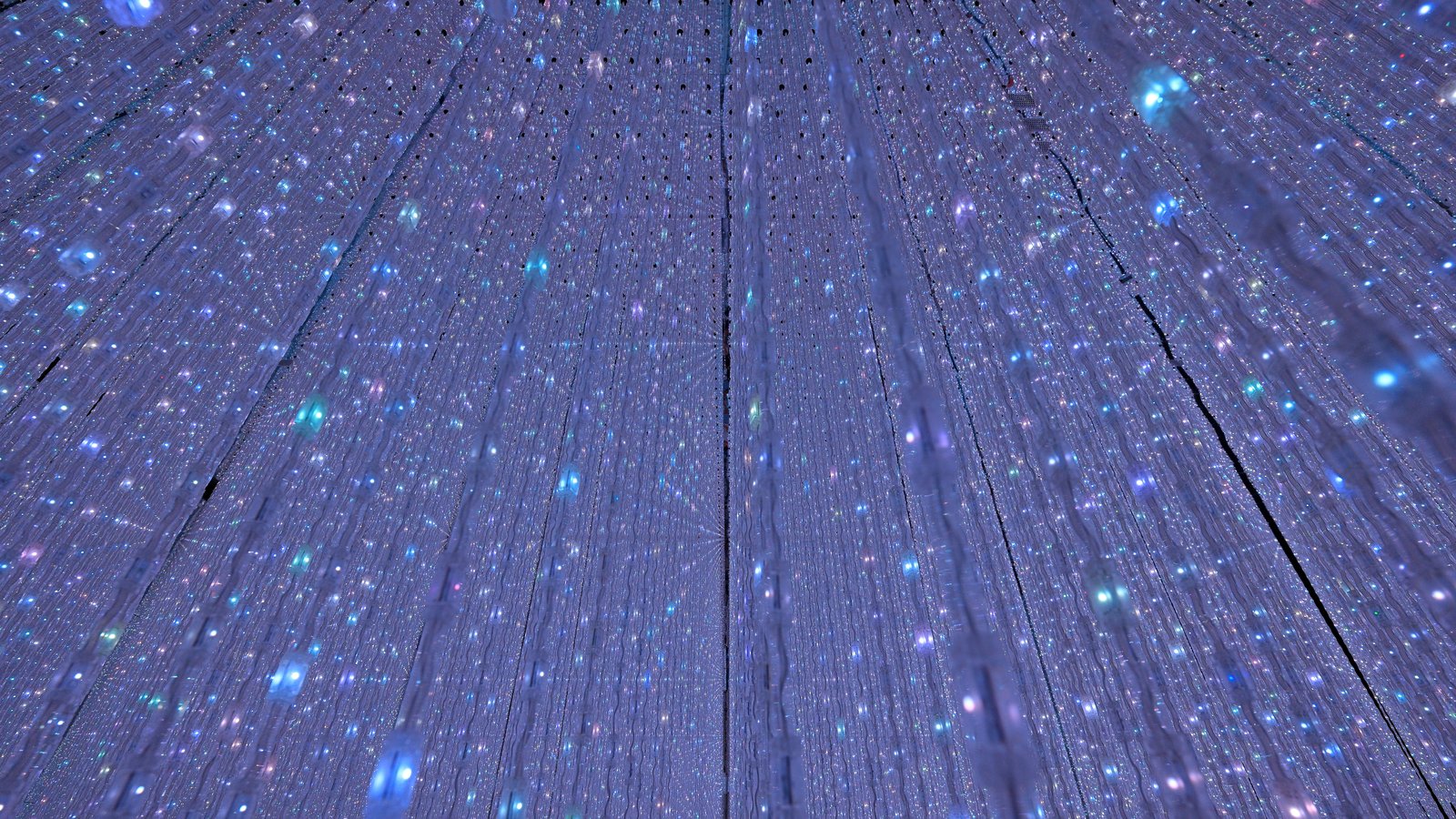
Projection mapping is the most misunderstood line item on an activation budget. Marketers see a glowing facade or a wall that appears to breathe and assume the magic lives in the projectors. It does not. The magic lives in the surface that gets built before a single lumen hits it — the flatness of the substrate, the seams that have to disappear, the rigging that holds a 60-pound projector dead steady for ten hours, and the content pipeline that has to be pixel-mapped to geometry that exists in the real world. Projection mapping is a fabrication problem wearing a software costume. Get the build wrong and no amount of media-server horsepower will save the show.
We build these systems for brands across New York City, where venue constraints, union load-in windows, and unforgiving sightlines make the discipline harder than it looks on a render. This guide walks through how projection-mapped activations actually get specified, fabricated, and commissioned — the parts a media reel never shows you. If you are scoping an immersive production and trying to understand where the money and the risk sit, start here.
What Projection Mapping Actually Is
Standard projection throws a rectangular image onto a flat screen. Projection mapping warps that image so it conforms precisely to a three-dimensional object — a sculpted wall, a product replica, a staircase, a car. Software like Resolume, Notch, MadMapper, or disguise builds a virtual model of the physical surface, then distorts the output frame so every pixel lands exactly where the artist intended. When it works, the object appears to dissolve, illuminate, or transform. When the physical object is even a quarter-inch off from the model, the illusion shears at the edges and the audience sees a slightly drunk light show instead of a seamless transformation.
That tolerance is why mapping belongs to fabricators, not just AV vendors. The content team models a perfect surface in software. Our job in experiential design and fabrication is to build a physical object that matches that model within the tolerance the throw distance allows. The further the projector sits from the surface, the more forgiving the geometry — but in NYC venues you rarely have the luxury of distance, so the build has to be tight.
The Surface Is the Whole Game
A projection surface has to do three things at once: hold its shape, take light evenly, and disappear as an object so the content reads instead of the substrate. Those goals fight each other, and resolving them is the core fabrication challenge.
Flatness and Seam Control
For a flat or gently curved mapping wall we typically build a torsion-box or steel-framed substrate skinned with MDF or a tensioned fabric face. Every panel joint is a potential shadow line, so seams get filled, sanded, and sometimes skim-coated until a raking flashlight reveals nothing. A seam you cannot feel with your fingertips will still show under a 20,000-lumen projector at a grazing angle. This is the level of finish that separates a build that photographs well from one that only looks good in the proposal.
Surface Gain and Color
Matte white is the default because it reflects light evenly in all directions and preserves color accuracy. But “white” is a decision, not a given. Too glossy and you get hotspots where the projector’s reflection burns through. Too gray and you lose brightness. For dark-themed activations we sometimes map onto a light-gray surface to deepen the blacks, accepting a brightness penalty in exchange for contrast. These trade-offs get locked during design, not discovered on site.
Sculpted and Dimensional Surfaces
The high-impact work maps onto dimensional geometry — faceted walls, product hero pieces, architectural replicas. These come off the CNC router and the foam shop, then get hard-coated, primed, and painted to a uniform matte. The fabrication file and the projection model derive from the same source geometry, which is the only way to guarantee they agree. When a brand wants a sculptural centerpiece that also serves as a projection canvas, that dual purpose has to be designed in from the first sketch, the same discipline we bring to stage and scenic fabrication.
Projectors, Lumens, and the Brightness Math
The single most common failure in projection-mapped activations is undershooting brightness. A render looks brilliant on a calibrated monitor in a dark studio. The activation happens in a venue with ambient light, and the content washes out to a gray ghost. Brightness is non-negotiable and it is expensive, so it has to be calculated, not guessed.
The working number is foot-lamberts — reflected brightness on the surface. You start from the projector’s lumen rating, divide by the surface area in square feet, and factor in screen gain and ambient light. As a rough field rule, a controlled-dark environment needs 16 foot-lamberts or so; a space with significant ambient light can demand four to six times that. That is why a single 20,000-lumen projector that looks heroic on paper can disappear across a large facade, and why we frequently stack or blend multiple projectors to hit the target.
Edge Blending
When one projector cannot cover the area or deliver the brightness, you overlap two or more and feather the overlap zone so the seam vanishes. Edge blending is part optics, part media-server processing, and part patience. The projectors must be matched for color and brightness, locked in position, and aligned to sub-pixel accuracy. A blended array that drifts even slightly over a long show day produces a visible bright band down the middle of the content — which is why the rigging matters as much as the optics.
Rigging: The Part Nobody Photographs
A projector that moves is a projector that breaks the illusion. Thermal expansion in a truss, a guest leaning on a rail, an HVAC vent kicking on — any of these can shift alignment by the fraction of a degree that turns a crisp map into a blurry overlay. Stable mounting is the unglamorous foundation of every successful mapped show.
We mount to independent structure wherever possible — dead-hung from building steel, flown on motorized truss, or set on a ballasted ground-supported tower that is mechanically isolated from foot traffic. In NYC venues this collides immediately with rigging rules, point loads, and union jurisdiction, so the structural plan and the projection plan have to be designed together. Loose projector placement is a decision you pay for at 11 p.m. during alignment, when the show opens at 9 a.m. The structural engineering behind a mapped activation is the same rigor we apply across all of our event fabrication services.
Content, Media Servers, and the Pixel Pipeline
Once the surface is built and the projectors are locked, the content has to be mapped to the real-world geometry. This is where the media server earns its keep. A disguise, Resolume Arena, or Watchout system holds the show file, warps each output to the surface, manages edge blends, and triggers playback on cue. For interactive or generative work, a Notch block can render content in real time and react to sensors, cameras, or audience input.
The pipeline only works when the content team builds to the exact dimensions of the fabricated object. We provide the content studio with accurate templates and physical reference — the same CAD geometry the surface was built from, plus dimensioned photos of the finished piece. Hand a motion designer a template that is off by two inches and they will animate to the wrong canvas, and you will discover it during the load-in window when there is no time to re-render. Tight coordination between the fabrication shop and the content studio is the difference between a one-night alignment and a three-day scramble.
Interactivity
Mapping becomes a true experience, not just décor, when the audience can affect it. Touch walls, motion-triggered reveals, camera-driven effects, and phone-controlled content turn spectators into participants and dramatically extend dwell time. Interactive layers add sensors, calibration, and failure modes to the build, so they need to be prototyped early rather than bolted on. The reward is the kind of engagement that defines a strong brand activation — guests stay longer, share more, and remember the brand because they touched it.
Where Projection Mapping Earns Its Budget
Mapping is not the right tool for every activation. It shines in specific scenarios where its strengths — transformation, scale, and surprise — justify the spend.
- Product reveals. A mapped hero object can shift from teaser graphics to a full reveal in seconds, giving a launch its single most shareable moment.
- Architectural takeovers. Mapping an entire facade or interior surface turns a venue into the brand for the night without permanent construction.
- Repeatable transformation. One physical set can become many environments across a multi-day program by swapping content rather than rebuilding.
- Photo and social moments. A well-lit mapped surface is engineered to be filmed, extending the activation’s reach far beyond the guest list.
We have used these principles across rooftop and hospitality builds where light and surface carry the entire experience, including the Magic Hour Mountain Lodge at Moxy NYC and the immersive Pride takeover we produced for ONE LOVE above New York City. In both cases the fabricated environment and the lighting were designed as one system rather than a set with effects added afterward.
The NYC Reality: Venues, Permits, and Load-In
New York compresses every one of these challenges. Ceiling heights cap throw distance. Ambient light from windows and house systems fights your brightness budget. Rigging points are limited and governed by venue and union rules. Load-in windows are short, freight elevators are small, and the street outside is not yours to stage on. A projection rig that assembles comfortably in a suburban warehouse can be nearly impossible to fly in a landmarked Manhattan ballroom without a plan built around the building’s specific constraints.
The answer is to design the build for the venue from day one. We modularize surfaces so they fit the freight elevator and reassemble with hidden seams. We pre-rig and pre-cable projectors on the shop floor so on-site time is alignment, not assembly. And we engineer the structure to the venue’s actual load limits rather than an idealized plan. This is the same venue-first discipline that governs our trade show fabrication work, where load-in windows and structural rules are equally unforgiving — the booth we built for Netflix at the Meadowlands lived or died on exactly that planning.
Timeline and Budget Realities
A mapped activation has two parallel critical paths — the physical build and the content production — and they have to converge on a single technical rehearsal date with margin to spare. Surfaces that come off the CNC and foam shop need lead time for hard-coating, priming, and painting. Content production runs weeks regardless of how fast the surface is built. The most common timeline mistake is treating content as something that starts after the build is done; in reality both clocks start the day the geometry is locked.
| Cost driver | Why it moves the number |
|---|---|
| Surface complexity | Sculpted and faceted geometry costs more to fabricate and finish than flat walls. |
| Brightness requirement | Ambient light forces higher lumen counts or projector stacking — often the largest line item. |
| Projector count and blending | Each added unit adds rental, rigging, cabling, and alignment labor. |
| Content runtime and interactivity | Longer loops, custom animation, and real-time interaction multiply content hours. |
| Venue and rigging constraints | Tight load-in, limited points, and union labor add time and cost on site. |
Two levers control the budget more than any other: brightness and content runtime. A brand that needs a bright image in an ambient room and a long, custom, interactive content loop should expect a number that reflects both. A brand that can control the room’s light and live with a tight, looping reveal can spend dramatically less for an effect that still stops traffic.
Avoiding the Five Classic Failures
After enough builds, the failure modes become predictable — which means they are preventable. The recurring ones are worth naming plainly.
- Underbudgeting brightness. The render lies. Calculate foot-lamberts against real ambient conditions and spec projectors to the math, not the proposal photo.
- Loose rigging. Any movement breaks the map. Mount to independent, isolated structure and lock alignment after thermal settling.
- Surface seams. A seam you can feel is a seam the projector will find. Finish to a flashlight-raking standard.
- Template drift. Build content from the same geometry the surface was fabricated from, and verify against the finished piece before final render.
- No rehearsal margin. Alignment, blending, and content fixes take longer than anyone plans. Protect a real technical rehearsal window.
Projection mapping rewards brands that treat the surface, the structure, and the content as one engineered system — and punishes everyone who treats it as a light show added to a set.
How We Approach a Mapped Build
Our process starts with the experience, not the equipment. We define the moment the brand wants the audience to have, then work backward through content, surface, brightness, and rigging to a build that delivers it inside the venue’s real constraints. The fabrication shop, the AV team, and the content studio work from a single source of geometry so nothing drifts between the model and the object. We prototype interactivity early, pre-rig on the shop floor, and protect rehearsal time on the schedule. The result is a system that comes up clean on load-in instead of fighting for alignment until doors. This is the same end-to-end discipline behind hospitality transformations like the Tao Group activation at the Moxy Hotel and high-energy beverage builds like the Celsius pop-up, where the environment and the experience had to feel inseparable.
Bring Us the Moment, Not the Spec Sheet
The best projection-mapped activations do not start with a projector count. They start with a single sentence — the thing you want the audience to feel when the surface comes alive. From there, the fabrication and production decisions fall into place: how flat the wall has to be, how bright the image has to land, how steady the rig has to hold, and how the content has to move. If you are planning a launch, a takeover, or a flagship moment in New York and you want it to actually work when the doors open, talk to our immersive production team early — while the idea is still a sentence and the build is still a sketch. That is when the smart, cost-saving decisions are still on the table.
Projection Mapping Activations — FAQ
Projection mapping warps video so it conforms precisely to a three-dimensional object — a sculpted wall, a product replica, a staircase, a car — instead of a flat rectangular screen. Software builds a virtual model of the physical surface and distorts the output so every pixel lands where intended. The effect depends as much on the fabricated surface as on the projector.
Because the software maps content to exact geometry, the physical object must match the digital model. Substrate flatness, invisible seams, matte finish and rigid mounting all determine whether the illusion holds; a surface that is even slightly off produces visible misalignment. The surface is built, hard-coated, primed and painted before any content is tested against it.
Undershooting brightness is the most common failure. The working number is foot-lamberts — reflected brightness on the surface — calculated from projector lumens divided by surface area and adjusted for ambient light and surface gain. A render that looks brilliant in a dark studio washes out to a gray ghost in a venue with windows and house lighting, so brightness is calculated, not guessed.
A mapped activation runs two parallel critical paths: the physical build and the content production. Both clocks start the day the geometry is locked, and they must converge on a single technical rehearsal date with margin. Fabricated surfaces need lead time for coating and paint; content runs for weeks regardless of how fast the surface is built. Treating content as a post-build step is the classic timeline mistake.
Planning a build like this? Get a quote in 48 hours.
Send us the brief, the renders, or a napkin sketch. Line-item pricing from the team that will actually build it.
Request a Quote