May 22, 2026
Event Rigging & Structural Engineering: A 2026 Guide
How event rigging and structural engineering keep brand builds safe and on schedule: loads, truss, venue rules, and NYC constraints.
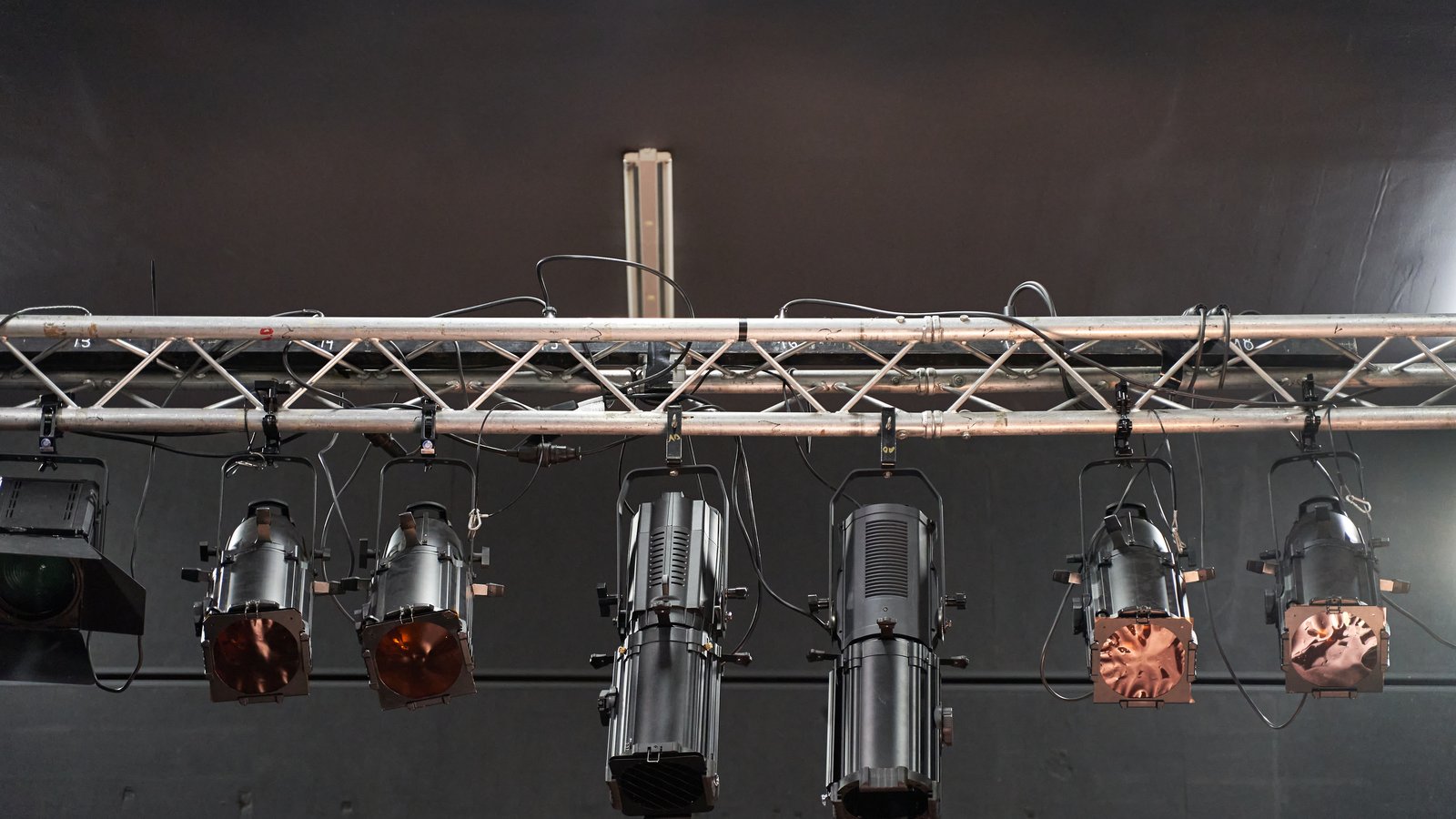
A brand activation lives or dies on two questions that have nothing to do with the creative deck: will it stand up, and will it stay up? Every overhead banner, every cantilevered shelf, every two-story booth tower carries load — and load is unforgiving. It does not care how good the renders looked. Structural engineering and rigging are the disciplines that translate a designer’s ambition into something a venue will actually let through the door, and something a crowd can stand under without a second thought.
At Pop Up Your Brand we treat structure as a first-class part of fabrication, not a box checked at the end. Whether the build is a stage and scenic environment with flown scenery or a retail footprint with heavy merchandising walls, the math comes first. This guide walks through how event rigging and structural engineering actually work in 2026 — the load systems, the hardware, the safety factors, and the venue rules that quietly govern what you can and cannot hang in New York City.
Why Structural Engineering Belongs in Every Event Build
It is tempting to think of engineering as something reserved for the tallest, heaviest builds. In practice, the failures that shut a show down are rarely the obvious ones. A 16-foot archway tips because nobody calculated the wind load on an outdoor site. A graphic header tears a truss loose because the rated capacity of the hanging hardware was guessed, not specified. A merchandising wall pulls away from its base because the floor plate was sized for the wall — not for the forty pounds of product hung off it.
Structure is where creative ambition meets physics, and physics always collects. Bringing engineering in during design — not after — is what lets a build look weightless while remaining demonstrably safe. That is also where good experiential design earns its keep: the most striking concepts are usually the ones that hide their structure, and hiding structure well requires knowing exactly where every pound is going.
Design tells you what it should look like. Engineering tells you whether it can exist. The best builds are the ones where you cannot tell the two apart.
The Two Load Systems: Ground-Supported vs Suspended
Almost everything in event fabrication resolves into one of two structural strategies. Ground-supported structures carry their load down to the floor through legs, bases, and ballast. Suspended — or flown — structures hang their load from the ceiling through rigging points, motors, and truss. Most ambitious builds use both at once, and the line between them is where engineering gets interesting.
Ground-supported structures
Ground support is the default for trade show booths, retail fixtures, and most freestanding scenic elements. The load path is straightforward in principle: weight travels from the top of the structure down through vertical members into base plates that spread it across the floor. The engineering questions are about overturning (will it tip?), bearing (is the floor rated for the point load?), and deflection (will the shelf sag under product?). Outdoor builds add wind, which turns a stable wall into a sail and frequently doubles the ballast you need.
Suspended (flown) structures
Flown elements — banners, lighting grids, projection surfaces, scenic ceilings — transfer their weight up into the building. That makes the venue’s roof structure part of your design, and it introduces a whole second discipline: rigging. Flown work is common in immersive production environments where the ceiling is as much a canvas as the floor. The catch is that you are now borrowing someone else’s structure, and they have rules about exactly how much you may borrow and where.
| Factor | Ground-supported | Suspended / flown |
|---|---|---|
| Load path | Down to floor via base plates | Up to roof via rigging points |
| Primary risk | Overturning, floor bearing | Point overload, hardware failure |
| Who signs off | Your engineer + venue | Venue rigger + house electrician |
| Typical hardware | Steel base, ballast, leveling feet | Truss, motors, slings, shackles |
| Lead-time driver | Welding + finishing | Rigging plot + venue approval |
Materials and Hardware: What Carries the Load
Structure is only as trustworthy as the parts it is built from, and in event fabrication those parts are specified in numbers, not adjectives. A vendor who quotes you a build without referencing rated capacities is guessing. On a trade show fabrication project, the difference between a clean load-in and a red-tagged booth is usually a spec sheet that someone did or did not read. The Netflix booth we built at the Meadowlands is a good example: a structure that reads as effortless on the floor is, underneath the skin, a deliberately over-built frame sized to shrug off the abuse of repeated load-ins.
Aluminum truss
Box and triangular aluminum truss is the workhorse of flown and tall ground-supported structures. It is light, predictable, and comes with published load tables that tell you exactly how much a given span can carry at a given point. The two numbers that matter are the uniformly distributed load (UDL) for evenly spread weight and the center-point load for a single hang. Exceed the center-point rating with a heavy fixture and the span can fail long before the UDL number would suggest.
Steel substructure and welded frames
When a build needs to carry serious weight or resist serious force — a two-story deck, a heavy kinetic element, an outdoor structure in wind — welded steel does the work aluminum cannot. Steel is heavier and slower to fabricate, but its strength-to-cost ratio for high loads is unmatched, and a properly welded and gusseted frame behaves predictably. The trade-off is weight, which feeds straight back into floor-loading and rigging-capacity calculations.
Rated rigging hardware
Every shackle, sling, span set, and motor in a flown system carries a working load limit (WLL) stamped or tagged on the part. The rule is simple and absolute: the WLL of the weakest component sets the capacity of the entire point. Mixing a high-rated motor with an under-rated shackle does not give you an average — it gives you the shackle’s number. Reputable shops keep certification and inspection records for every piece of load-bearing hardware, and any venue worth working in will ask to see them.
- Working Load Limit (WLL): the maximum load a component is rated to carry in service.
- Safety factor: the ratio between a part’s breaking strength and its WLL — commonly 5:1 to 10:1 for overhead rigging.
- Dynamic vs static load: moving or shock loads can multiply the effective weight a point sees; rig for the dynamic case.
- Span and point ratings: truss has separate limits for distributed weight and single-point hangs — never read one as the other.
Engineering the Build: Loads, Safety Factors, and Stamped Drawings
Once materials are chosen, engineering is mostly bookkeeping done honestly. You sum the dead load (the weight of the structure itself), add the live load (people, product, anything that moves or gets added), account for environmental loads (wind outdoors, occasionally snow on temporary roofs), and then apply a safety factor so the structure is rated well beyond what it will ever actually carry. The numbers are not glamorous, but they are the entire job.
For builds above a certain height or load, or for anything flown over the public, venues and jurisdictions increasingly require engineered, stamped drawings — calculations signed by a licensed professional engineer who is putting their license behind the math. This is not bureaucratic friction; it is the mechanism that keeps a crowd safe and keeps your show from being shut down at load-in. When we engineer a brand activation, the stamped package is treated as a deliverable on the same timeline as the build itself, because a structure you cannot document is a structure you cannot install. On the IBS trade show build, the engineered drawings were what turned an ambitious footprint into a structure the show floor would actually approve.
A safety factor is not pessimism. It is the acknowledgment that materials have flaws, crews make mistakes, and crowds do unpredictable things — and that the structure should survive all three.
Rigging in NYC Venues: Unions, House Rules, and Real Constraints
New York is one of the most demanding rigging environments in the country, and not because the physics is different — it is the venue rules. Major convention and event spaces operate with house rigging crews, union labor jurisdictions, and approval processes that you cannot route around. Trying to fly your own points with your own crew at a venue that reserves that work for its house rigging team is the fastest way to lose a load-in window. Knowing this going in is part of why working with a fabricator who handles full-service event fabrication in the city saves you from learning it the hard way on show day.
Hotels and non-purpose-built venues bring the opposite problem: they often have no rated rigging points at all, which means everything flies from ground-supported truss towers instead of the ceiling. That changes the engineering, the footprint, and the floor-loading math. The Keurig x Nasdaq activation demanded a structure that respected the realities of its venue rather than fighting them — the kind of constraint you want to design around early, not discover during install.
Practical NYC rigging considerations
- Confirm house vs outside labor jurisdiction before you plot a single point — it dictates who can touch your rigging.
- Get the venue’s rigging point ratings and grid drawings in writing; never assume a ceiling is rated to hang from.
- Check freight elevator and door dimensions — a structure that is sound but won’t fit in the lift is still a problem.
- Budget time for engineered-drawing approval, which in NYC can gate your install date by days, not hours.
- Plan ballast and floor protection for ground-supported towers in venues with no rigging points.
A Pre-Build Structural Checklist
Before any fabrication starts, the structural questions should already be answered. This is the short list we run on every build, regardless of size — because the cheapest time to find a structural problem is in the drawing, not on the floor.
- What is the total dead load, and where does it land on the floor?
- What live loads will the structure carry — people, product, interaction — and have they been added with margin?
- Is the build indoor or outdoor, and if outdoor, what wind speed are we engineering for?
- Are any elements flown, and if so, does the venue have rated points or do we need towers?
- What is the venue’s floor-loading limit, and do our base plates stay under it?
- Do we need stamped engineered drawings, and is that on the production timeline?
- Is every piece of load-bearing hardware rated, tagged, and inspected?
- What is the safety factor on each load path, and is it documented?
When to Bring Engineering in Early
The honest answer is: always, but especially when a concept is doing something structurally ambitious. A multi-level environment, a heavy hanging feature, an outdoor footprint, or a build that has to survive multiple installs all benefit enormously from engineering input at the sketch stage. The Magic Hour Mountain Lodge at Moxy NYC is a case where the environment’s ambition only worked because the structure was solved early — the experience reads as immersive precisely because none of the supporting steel is fighting for attention.
The same logic applied to the Tao Group build at the Moxy Hotel: a hospitality-grade finish over a structure engineered to take real crowd traffic. When engineering enters late, the design gets compromised to fit the structure that is left. When it enters early, the structure gets designed to serve the experience. That sequencing is the entire difference between a build that feels considered and one that feels like a series of compromises.
Build It Right the First Time
Rigging and structural engineering are not the parts of a project anyone puts on the mood board, but they are the parts that decide whether the mood board ever becomes real. A fabricator who treats structure as an afterthought will hand you a beautiful render and a red tag at load-in. A fabricator who treats it as foundational will hand you a build that goes up clean, stands up safely, and comes down without drama.
If you are planning a build — a booth, an activation, a scenic environment, or a retail footprint — the structure should be solved before the budget is locked, not after. To start that conversation, explore our pop-up and retail fabrication services or reach out to the Pop Up Your Brand team to scope your project. We quote lead times in business days and load ratings in pounds, because the only build worth doing is one you can stand under.