May 19, 2026
Trade Show Drayage, Crating & Logistics: The Hidden Costs (2026)
Drayage, crating, and freight surprises can absorb 8–22% of a trade show budget. A 2026 vendor guide to taming the post-show invoice.
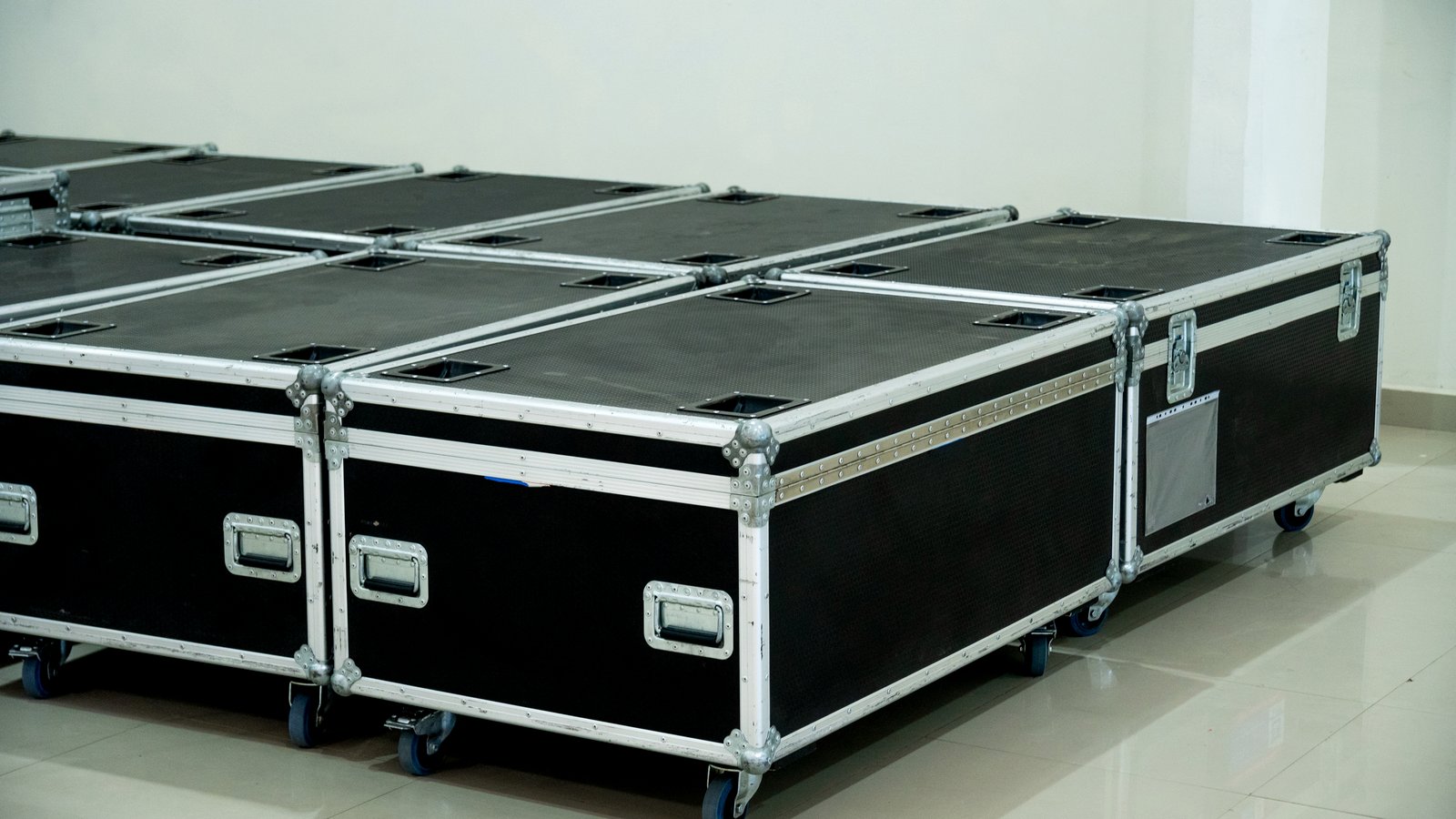
Every brand manager who has ever shipped a trade show booth has a story about the invoice that arrived after the show. Not the fabrication invoice — that one was negotiated, scoped, and signed off months earlier. The other invoice. The freight invoice. The one that broke down material handling, drayage rounds, hand-load fees, after-hours rates, and a few lines that read like the carrier had simply made them up. For a 20×30 island booth shipping into a top-tier U.S. convention center, that second invoice can land somewhere between $4,500 and $18,000. Sometimes more. And almost none of it was on the original quote that won the program. This guide breaks down the freight and logistics layer of trade show fabrication — what drayage actually is, how crating decisions ripple downstream, where the surprises hide, and how to design your build (and your contracts) so the freight invoice doesn’t sandbag the ROI of the entire show.
The hidden invoice line that surprises every first-time exhibitor
Trade show logistics is the part of exhibiting that lives between two well-understood line items — the booth itself, and the staffing that runs it during show days. In the middle sits a stack of costs that, depending on the venue, the union jurisdiction, the carrier, the timing of arrival, and the weight of the freight, can quietly absorb 8% to 22% of the total program budget. First-time exhibitors typically discover this stack only after their show ships, when the show contractor’s “material handling” charges arrive separately from the freight carrier’s bill, and the in-out trucking is invoiced a third time by yet another vendor. By the second show, most teams stop treating freight as a back-office detail and start treating it as a design constraint. By the third, they’ve usually renegotiated who owns the crates, who owns the storage, and who owns the relationship with the show contractor.
The single most important thing to understand is that the freight invoice is not one number. It is a sequence of charges that compound. Get any one of them wrong — wrong crate dimensions, wrong arrival window, wrong target-day designation, wrong density calculation — and the rest cascade. Done well, this whole layer is invisible. Done poorly, it can eat the back-end of your show ROI in a single weekend.
What is drayage, exactly?
Drayage — sometimes called material handling — is the charge for moving freight between the loading dock of the venue and your booth space on the show floor. That is the entire service. It does not include over-the-road trucking. It does not include forklift drivers at your shop in Brooklyn. It is strictly the labor and equipment that take your crate from the truck, store it during the show in the marshaling yard, deliver it to your booth, return your empties, and reload them onto the outbound carrier at end-of-show.
Drayage is almost always priced per 100 pounds — quoted as a “CWT” rate — with a per-shipment minimum that typically lands between 200 and 300 pounds. CWT rates at major U.S. convention centers in 2026 range from roughly $115 to $235 per hundredweight for standard advance shipments, with steep penalties (often a 25% to 50% surcharge) layered on top for direct-to-show deliveries, off-target arrivals, special handling, or anything that requires a hand-carry around an inconvenient column. A 2,400-pound booth crate at a $175 CWT rate is already a $4,200 line before any surcharge applies. Two crates plus a pallet of literature and a road case of AV easily doubles it.
The reason CWT is the unit of measure is partly historical and partly union jurisdictional. At unionized venues, the labor doing the lifting is exclusive, the dock is exclusive, and the show contractor is sole vendor for any in-hall movement. Skipping drayage by carrying crates in yourself is not a strategy that survives contact with reality.
Crating: the science of getting your booth there alive
A crate is not a packing material. A crate is an engineering deliverable. Built correctly, it protects the booth across truck vibration, forklift impact, dock drops, marshaling-yard storage in any season, and the inevitable wrong-way-up handling that happens somewhere between Long Island City and Las Vegas. Built poorly, it does the opposite of all of that, and it shows up as scuffed panels, cracked plex, snapped LED strips, and an entire team standing in front of a booth during set-up wondering whether the show is salvageable.
The right crate strategy depends on the booth. Soft-sided fabric kits ride well in ATA-spec road cases. Painted MDF and CNC scenic pieces want plywood crates with internal foam dunnage cut to the asset. LED tiles, video walls, and rigging hardware need anti-static foam plus shock indicators applied to the exterior so anyone receiving the freight can immediately see whether it was dropped. Pop-up displays and pull-up banners can ride in modified shipping cases, but their hardware — bases, magnetic strips, lighting fixtures — should be packed separately so a single mishandled case doesn’t take the whole signage package out of commission. Our team builds and stencils crates as part of every event fabrication project precisely because the freight outcome of a show is largely decided at the moment the booth leaves the shop.
A crate built once should ship a dozen times
The math on custom crates only works if they are designed to be reused. A reusable crate amortizes its build cost over the entire show season — sometimes over multiple seasons — and dramatically reduces the per-show repack labor. The trick is dimensional discipline. Crates that are 80% air ship at the same CWT rate as crates that are fully packed, and a poorly engineered crate that is one inch too tall for a standard dock door will trigger handling surcharges that exceed the entire crate’s build cost. Smart fabricators design crates that nest, stack, and palletize cleanly, with documented internal foam layouts that any roadie can re-pack without guessing.
The four cost drivers nobody warns you about
Once you understand drayage and crating in principle, the next step is understanding which decisions early in the program quietly compound into freight cost months later. There are four big ones, and they almost always come up too late.
1. Weight per square foot. Heavier per-square-foot booths get expensive fast. A 2-inch solid hardwood plinth looks beautiful in a 3D render and weighs four times what the same form in laminated honeycomb would. For a touring booth that ships eight times a year, swapping in honeycomb can save more in CWT charges over the year than the entire fabrication line for the plinth in the first place. This is one of the reasons the in-house experiential design conversation needs to include the logistics lead, not just the creative.
2. Number of crates. Drayage minimums are per shipment, and inside that, per crate. Five small crates almost always cost more than two larger crates carrying the same total weight, because each crate triggers minimums, handling fees, and labor steps. Smart packing collapses booth, signage, lighting, AV, and giveaways into the smallest viable crate count.
3. Arrival timing. Show contractors publish a “target date” — the window during which advance freight can arrive at the marshaling warehouse without a surcharge. Miss it by a day in either direction and the per-CWT rate jumps. Show direct-to-show after the target window has closed and the rate can double. The carrier doesn’t price this risk into their quote; the show contractor charges it after the fact.
4. Outbound on the wrong evening. The last freight to leave a convention center pays a tear-down surcharge. If your booth is the last one being broken down because the staff worked the show floor until 6 p.m. on the final day and your tear-down crew arrived at 7 p.m., you are not getting onto the priority outbound trucks. Outbound logistics is decided on the inbound side: stage your tear-down crew, your bills of lading, and your carrier confirmations before the show opens, not after it ends.
Carrier types and when to use each
The carrier choice — who actually trucks the booth from your shop to the venue — has a direct impact on cost, timing, and risk. There are four reasonable options, and most large programs use a combination.
| Carrier type | Best for | Cost profile | Risk profile |
|---|---|---|---|
| Dedicated van line (specialty) | Custom builds, high-value AV, single-shipper trucks | Highest per-mile, lowest handling damage | Lowest |
| Show carrier (official) | Default for first-time exhibitors, consolidated freight | Mid-range, target-window pricing | Low (single accountability) |
| LTL freight | Smaller shipments, secondary assets, swag pallets | Lowest per-mile, highest handling exposure | Medium-high |
| Cargo van / sprinter | Last-minute, regional, emergency | Premium per-mile, fastest | Low (door-to-door) |
For a New York-based brand activating at NYC venues — Javits, the Meadowlands, Brooklyn EXPO, the Manhattan Center — the dedicated-van-or-show-carrier choice is the right starting point. For shows across the country, the calculus shifts: the show carrier wins on consolidation, the specialty carrier wins on protecting custom assets, and LTL becomes attractive only for the swag and literature pallet that can travel separately. Programs that operate at the scale of our brand activation clients usually end up running two carriers per show in parallel, and the savings come from triaging which assets travel with which.
The freight timeline: 12 weeks out to load-in
Trade show freight is not a one-week problem. The decisions that determine the freight invoice are made between week 12 and week 4 before the show. The closer to load-in you are when you start solving freight, the more it costs. Here is the cadence experienced exhibitor services teams run.
| Weeks out | Action | Owner |
|---|---|---|
| 12 | Confirm booth dimensions, weight estimate, crate count target | Fabricator + brand |
| 10 | Book inbound carrier, target-window slot, insurance certificates | Logistics lead |
| 8 | Lock crate engineering, finalize dunnage and labeling specs | Fabricator |
| 6 | Submit Material Handling Authorization (MHA) to show contractor | Brand exhibitor services |
| 4 | Confirm advance warehouse delivery date inside target window | Logistics lead |
| 2 | Pre-stage outbound BOLs, carrier confirmations, return labels | Logistics lead |
| 1 | Ship to advance warehouse; reconcile any damage from in-transit | Fabricator |
| Load-in | Booth arrives in-hall on the morning crew can install | Show contractor |
The most expensive mistake in this timeline is compressing weeks 12 through 8 into a single week. When booth scope is still being argued in week 6, crate engineering gets rushed, weights get estimated rather than measured, and freight invoices end up exceeding their estimates by 30% to 60%. The cost of slowing down and locking the design earlier is almost always smaller than the cost of speeding it up.
Materials and modularity: how design decisions ripple into shipping costs
Every material choice has a freight signature. Solid hardwoods, terrazzo, real stone, and thick laminates are dense, beautiful, and expensive to move. Lightweight aluminum extrusion frames with stretch-fabric graphics, by contrast, can fold into a fraction of the shipping volume. Honeycomb panel cores, sintra, foamcore over MDF backing, and tensioned fabric all carry significantly less weight per square foot than solid alternatives, and on a recurring exhibit program the savings compound.
Modularity is the second lever. A booth built as a single monumental structure ships once and breaks down into one configuration. A booth built as a kit of modular panels, magnetic graphics, and standardized lighting fixtures can be reconfigured for a 20×20 inline, a 20×30 island, or a 30×40 multi-storey at different shows during the same year — without re-fabricating. The unit economics of modularity favor any brand running more than three shows per year, and the freight savings alone tend to pay for the modular tooling within the second activation. Even outside trade shows, the same modular discipline informs how we approach pop-up shop design for retail tours that play multiple cities in a single quarter.
The case for over-engineering the connectors
The fastest reconfiguration in the world is undone by a single failed connector on the show floor at 2 a.m. We spec aluminum t-slot extrusions, threaded inserts in plywood, and captive hardware over loose hardware as a matter of policy. The freight argument is direct: a structure that goes up faster and comes down cleaner spends less time on the show floor, requires less overtime labor at tear-down, and stays in better shape across shipping cycles. The same connector philosophy carries into our stage and scenic fabrication work, where a botched connection on load-in can delay an entire production schedule.
Lessons from the floor: a short-haul timing play
The principles above are easier to defend in the abstract than in the heat of a real production. For the Netflix trade show booth at the Meadowlands, the freight challenge was less about distance — it was a short regional haul — and more about timing. Load-in windows at the Meadowlands stack tightly against other ongoing events, and the inbound trucking had to land within a precise four-hour window or wait out the rest of the day in a marshaling yard. We crated for fastest in-hall deployment rather than for cheapest haul, and the result was a deployment that hit the show floor before any of the surrounding exhibitors — and meant our crew was off the clock by lunch on tear-down day. The takeaway: when distance is short, crate engineering should optimize for in-hall speed, not for road economy.
Lessons from the floor: a cross-country split-freight strategy
The Café de Colombia activation at the San Diego Convention Center went the other direction — a cross-country freight haul with a build that mixed heavier scenic elements with lighter fabric facades. The crate strategy carried the scenic pieces in dense, foam-dunnaged plywood crates while the fabric components rode in lighter ATA-spec cases. By splitting the freight signature across asset types, the show contractor’s CWT rate applied differently to each shipment and the overall invoice came in roughly 18% under what a single consolidated crate strategy would have produced. The takeaway: on long hauls with mixed material density, splitting the freight into purpose-built crates almost always beats consolidating into one large crate.
Lessons from the floor: modularity at IBS
The IBS Trade Show build was a case study in modularity. The same booth had to play two configurations within the same show week — a daytime exhibit posture and an evening hospitality posture — without reverting to a hard tear-down between them. The booth shipped as a kit of panels and connectors that the on-site crew reconfigured during a 90-minute window on the second evening, with no additional drayage and no off-floor storage. Designing for that single transition saved roughly a full day of crew labor and avoided a second handling round entirely. The takeaway: when a booth has to do more than one job during a show, design the transition into the crate plan, not into the tear-down plan.
Working with a fabricator who handles logistics
Some fabricators build the booth and hand it off to the brand’s logistics team at the shop door. Others handle the entire chain end-to-end — engineering the crates, booking the carrier, submitting the Material Handling Authorization, coordinating with the show contractor, and meeting the outbound truck at tear-down. Both models can work. The decision should be driven by where the in-house expertise actually sits, not by sticker price on the line items.
For brands without a dedicated exhibitor services lead, an integrated fabricator that owns the logistics stack tends to come out ahead in total cost — even when the fabrication line item looks higher than a bare-bones quote — because the savings on freight, drayage, and tear-down labor are captured rather than absorbed. For brands with mature in-house exhibitor services, a fabricator that hands off cleanly with documented crate specs, weight certifications, and labeled dunnage is usually the better fit. The right question to ask any vendor early is not “what does the booth cost” but “show me the crate engineering and the freight plan that produced last year’s invoices.”
The fabrication line on the invoice is what you negotiate. The freight line is what you inherit. The first is a number on a quote. The second is the consequence of design decisions you made twelve weeks earlier.
The exhibitor’s pre-show logistics checklist
A short, working checklist that consolidates the logic above. The first time through a major show, it will feel like overkill. By the third show, every item on it will have already paid for itself.
- Confirm crate count, dimensions, and certified weights at least 8 weeks pre-show. Never estimate.
- Book the advance warehouse target-window slot before locking the inbound carrier.
- Engineer crates to be reusable, dimensionally disciplined, and clearly stenciled with brand, show, and booth number.
- Map every asset to a specific crate, with a printed pack list inside the lid of each crate.
- Submit the Material Handling Authorization to the show contractor at least 6 weeks pre-show.
- Pre-stage outbound bills of lading and carrier confirmations at least 2 weeks pre-show, not on tear-down day.
- Pre-purchase shrink wrap, ratchet straps, and shock indicators for the outbound shipment — not on-site at union rates.
- Walk the show floor on day one with your crew to confirm clear access for the outbound forklift route.
- Re-cap freight invoices within 30 days of every show; the surcharge patterns become predictable after three programs.
Where to go from here
The freight and logistics layer of a trade show program rewards exactly the discipline that good fabrication already rewards: design that respects constraints, materials chosen with the full lifecycle in mind, and a vendor relationship that treats the post-show invoice as part of the deliverable rather than as someone else’s problem. The brands that get this right tend to be the ones who treat their first show as a learning lab — capturing weights, photographing damage, recording target-window timing — and then bring that institutional memory into every subsequent program. The same logic governs single-venue activations like the Keurig x Nasdaq activation: even when freight is a short Manhattan haul, the upstream decisions on crating, weight, and modularity decide whether the build crew is set up to win on load-in day.
If you’re scoping a trade show program, an experiential build, or a multi-city activation tour and want a vendor who treats the freight invoice as a designable outcome rather than an inherited surprise, our team at Pop Up Your Brand handles the build, the crating, and the freight strategy end-to-end. Reach out and we’ll walk you through a recent program — fabrication scope, freight plan, and final invoice — so you can see exactly how the numbers come together before you commit.