Apr 30, 2026
Experiential Marketing Trends 2026
10 experiential marketing trends for 2026 — AI-powered design, sustainable fabrication, hybrid experiences, and immersive technology.
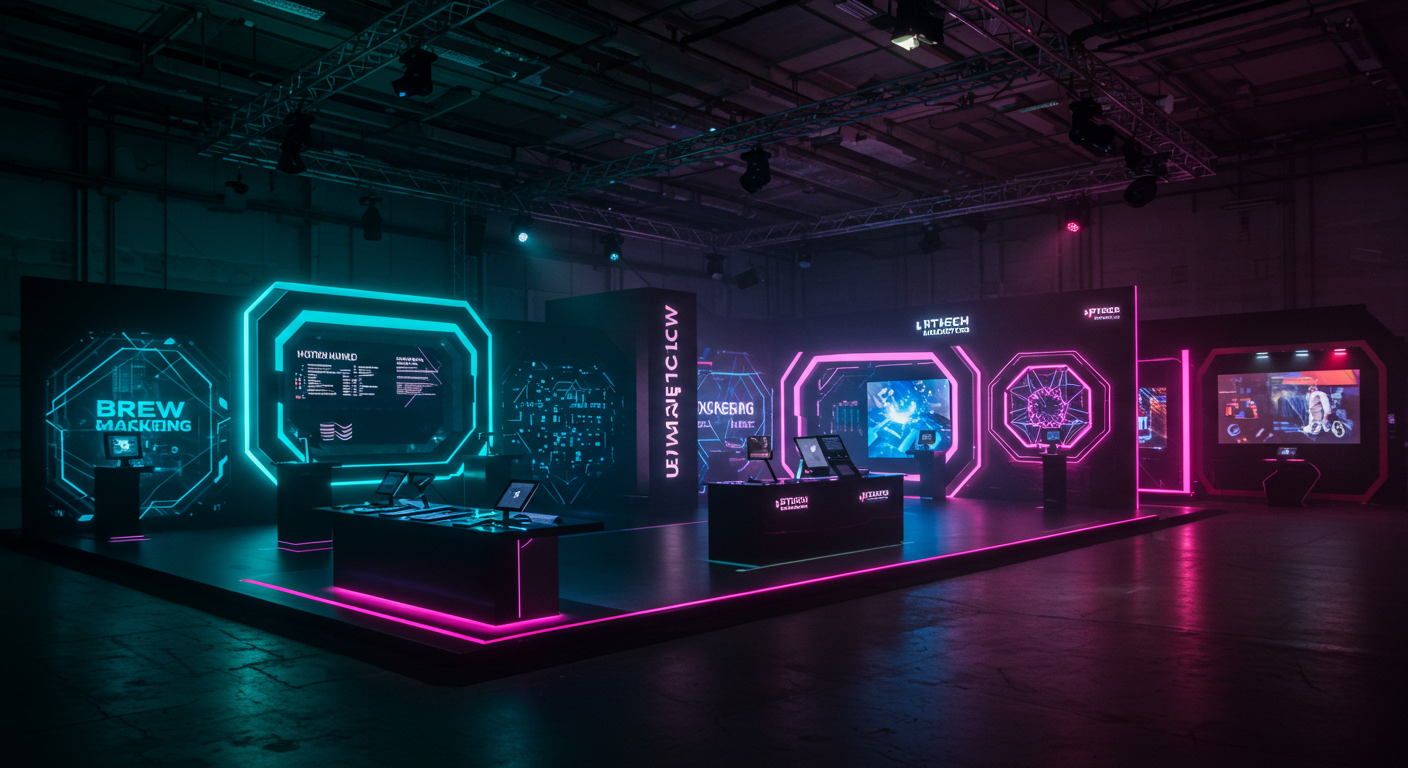
Experiential marketing trends in 2026 center on AI-personalized activations, sustainable fabrication practices, hybrid physical-digital experiences, community-driven programming, and data-informed spatial design. Brands are investing more in live experiences than at any point in the past decade, driven by digital advertising saturation and consumer demand for authentic, sensory engagement.
This trend report analyzes the forces shaping experiential marketing in 2026, with specific implications for how brands, agencies, and fabrication partners approach design, production, and measurement. Each trend includes practical application guidance — not just predictions, but actionable strategies for brands planning activations, trade shows, pop-ups, and immersive experiences this year.
Trend 1: AI-Personalized Experiential Activations
Artificial intelligence is transforming experiential marketing from one-size-fits-all environments into dynamically personalized experiences. In 2026, AI personalization has moved from experimental novelty to operational standard for mid-scale and large-scale activations.
How AI Personalization Works in Experiential
AI-powered activations use visitor data — collected through registration, social profiles, on-site sensors, or real-time interaction — to customize the experience for each individual. Applications include:
- Dynamic content displays: LED walls and screens that change content based on who is standing in front of them. Product recommendations, language selection, and visual themes adjust in real time.
- Personalized product recommendations: Interactive kiosks that guide visitors to products matching their preferences, skin type, lifestyle, or purchase history. AI processes the inputs and generates recommendations with human-level accuracy.
- Adaptive spatial experiences: Lighting color, music selection, scent diffusion, and even room configuration that respond to audience composition. A room that shifts from energetic to calm as visitor demographics change throughout the day.
- Custom takeaway generation: AI-generated personalized artwork, product configurations, or content packages that give every visitor a unique branded asset.
Fabrication Implications
AI-personalized activations require fabrication that integrates technology seamlessly. Wiring channels, sensor mounting points, screen housing, data infrastructure, and thermal management must be engineered into the physical structure from the design phase. Fabrication shops that treat technology integration as an afterthought produce environments where cables are visible, screens feel bolted on, and the “magic” of personalization is undermined by visible mechanics.
Trend 2: Sustainable Fabrication and Circular Event Design
Sustainability in experiential has evolved from a marketing differentiator to a procurement requirement. Major brands now include sustainability criteria in fabrication RFPs, and venues are implementing waste reduction mandates that affect construction methods and materials.
Sustainable Fabrication Practices Gaining Traction
- Material lifecycle planning: Designing builds with end-of-life in mind. Materials are selected for recyclability, and disassembly procedures separate recyclable components from non-recyclable ones. Fabrication partners provide waste diversion reports documenting what percentage of materials were recycled, reused, or responsibly disposed.
- Bio-based and recycled substrates: Mycelium-based structural panels, recycled HDPE, reclaimed wood, and recycled aluminum are replacing virgin materials without sacrificing structural performance or aesthetic quality.
- CNC nesting optimization: Advanced CNC programming minimizes material waste by optimizing how parts are nested on sheet goods. Best-in-class shops achieve 85-92% material utilization versus the industry average of 65-75%.
- Modular reuse systems: Structural frameworks designed for 10+ event cycles with interchangeable graphic and surface panels. The permanent structure eliminates repeated manufacturing; only the visual identity changes between deployments.
- Local fabrication priority: Shipping fabricated structures across the country generates significant carbon emissions. Brands are increasingly specifying regional fabrication partners to reduce transportation impact. NYC-based brands working with NYC-based fabrication shops like Pop Up Your Brand eliminate cross-country freight for East Coast events.
Implementation Strategy
Start by requesting sustainability options in the fabrication RFP. Ask for material sourcing documentation, waste diversion reporting, and reuse engineering capabilities. Many sustainable practices — CNC optimization, modular design, local fabrication — actually reduce cost while reducing environmental impact.
Trend 3: Hybrid Physical-Digital Experiences
The boundary between physical events and digital experiences continues to blur. In 2026, hybrid activations are designed to engage both in-person and remote audiences simultaneously, extending reach and ROI.
Hybrid Activation Models
- Live-streamed activations: Dedicated broadcast-quality cameras, professional lighting, and streaming infrastructure enable remote audiences to experience activations in real time. The fabricated environment is designed to photograph and stream as well as it performs in person.
- Digital twin experiences: Virtual replicas of physical activations accessible via browser or VR headset. Visitors who cannot attend in person explore a digital version with interactive product information, video content, and e-commerce integration.
- Social-amplified physical moments: Physical activations designed specifically to generate digital content — with built-in sharing mechanisms, hashtag integration, and influencer-optimized photo environments. The physical event is the content production engine for a digital campaign.
- Phygital product interactions: Physical products or displays that trigger digital content via NFC, QR codes, or AR markers. Picking up a product in the physical space unlocks extended content, reviews, and purchasing options on the visitor’s smartphone.
Fabrication Implications
Hybrid activations require environments that look as good on camera as they do in person. Camera angles, lighting for video, sound isolation, and data connectivity must be designed into the fabrication. Structures need clean backgrounds without visible seams, cords, or branding placement that reads backward on camera. Experiential design for hybrid events is a specialized skill that integrates broadcast production knowledge with spatial design.
Trend 4: Community-Driven Experiential Programming
Brands are shifting from broadcast-style activations (“look at us”) to community-building activations (“join us”). This trend reflects consumer desire for belonging, shared values, and authentic connection over passive brand consumption.
Community Activation Formats
- Recurring brand-owned events: Monthly or quarterly gatherings — fitness classes, workshops, panel discussions, cultural events — hosted in branded environments. The recurring format builds community loyalty beyond single-event impressions.
- Co-creation platforms: Activations where the audience contributes to the final output — collaborative murals, crowd-sourced playlists, community recipe books, or collective art installations. Participation creates emotional ownership of the brand experience.
- Cause-aligned activations: Events that connect brand engagement with charitable impact — “for every product tried, we donate X” or experiential fundraising formats that make giving social and celebratory.
- Micro-community targeting: Small-format activations designed for 50-200 person communities — niche hobbyists, professional groups, neighborhood communities — rather than mass-audience events. Smaller scale enables deeper engagement and higher per-person impact.
Fabrication Implications
Community-focused activations require flexible, reconfigurable environments that adapt to different programming throughout the event duration. Modular brand activation fabrication with interchangeable elements — swappable graphic panels, movable partition walls, configurable seating — enables single-build environments to support multiple programming formats.
Trend 5: Data-Informed Spatial Design
Post-event analytics are evolving from “nice to have” reporting into design input that shapes future activations. In 2026, leading brands use data from previous events to optimize the spatial design of subsequent ones.
Data Points Informing Design
- Heat mapping: Foot traffic visualization showing where visitors spend the most and least time. Underperforming zones get redesigned or relocated. High-traffic zones get premium brand messaging.
- Dwell time by zone: Time-stamped engagement data by activation zone reveals which experiences hold attention and which visitors skip. Design investment follows attention data.
- Conversion path analysis: Mapping the sequence of touchpoints visitors experience before completing a desired action (lead capture, purchase, social share). The highest-converting paths are amplified; low-performing paths are redesigned.
- Social content analysis: Which photo moments generate the most social posts? What angles, backgrounds, and lighting conditions produce the most-shared content? Design the next activation’s photo moments based on what actually performed, not what the design team assumed would perform.
Implementation Strategy
Install measurement infrastructure during the current activation: door counters, zone-specific sensors, and social media tracking. Document everything. Then share this data with the fabrication partner during the design phase of the next activation. Pop Up Your Brand incorporates client performance data into the design process, adjusting spatial layouts, engagement zone placement, and photo moment design based on measured results from previous activations.
Trend 6: Multisensory Experience Design
Experiential marketing is expanding beyond visual design to engage all five senses — creating deeper memories and stronger brand associations through multi-sensory environments.
Sensory Design Elements
- Scent integration: Branded scent diffusion systems deliver consistent fragrance throughout the activation or zone-specific scents that change as visitors move through the experience. Scent is the sense most directly linked to memory formation.
- Tactile material design: Surface textures, temperature variation, and interactive physical elements invite touch and create sensory engagement beyond visual observation. Soft-touch coatings, natural wood grain, cool metal, and textured fabrics each trigger distinct sensory responses.
- Spatial audio: Directional speakers and spatial audio systems create zone-specific soundscapes without bleeding between areas. Music, ambient sound, and narration can change as visitors move through the experience.
- Climate control: Deliberate temperature, humidity, and air movement design creates environmental sensations — warmth for hospitality brands, crispness for outdoor brands, tropical warmth for resort brands.
Fabrication Implications
Multisensory fabrication requires coordination between traditional construction and sensory technology systems. Scent diffusion hardware must be concealed within structures. Acoustic panels and directional speakers need engineered mounting and wiring. Climate control systems require ventilation integration. All-in-house fabrication shops have a structural advantage for multisensory builds because they can coordinate all these systems without inter-vendor dependencies.
Trend 7: Speed-to-Market Pressure
Marketing timelines continue to compress in 2026. Brands that once planned activations 16-20 weeks ahead now expect 6-10 week turnarounds from brief to event day. This compression is driven by social media’s real-time content cycle, competitive response needs, and organizational decision-making that delays creative approval until late in the process.
How the Industry Is Responding
- Faster quoting processes: Fabrication shops that return quotes in 48 hours instead of 2-3 weeks give brands more time for the actual build. Pop Up Your Brand’s 48-hour quote turnaround was an early response to this trend that has become a competitive necessity.
- Pre-engineered component libraries: Fabrication shops maintaining libraries of pre-engineered structural modules — wall systems, counter units, display platforms — that can be customized with brand-specific graphics and finishes. This eliminates 2-3 weeks of engineering for standard elements.
- In-house pipeline control: Shops with all fabrication disciplines in-house eliminate 1-2 weeks of subcontractor coordination and scheduling. When every discipline shares one production manager and one shop floor, workflow optimization is immediate.
- Concurrent design-fabrication workflows: Starting fabrication on long-lead structural elements while finalizing graphic design and technology specifications. This overlap requires tight project management but can compress timelines by 2-3 weeks.
Trend 8: Experiential Retail Convergence
The line between temporary activations and permanent retail is disappearing. Brands are using experiential fabrication techniques — immersive environments, interactive technology, and event-style energy — in permanent retail spaces. Simultaneously, pop-up shops are achieving permanent-store quality that makes them indistinguishable from full-lease retail locations.
Convergence Indicators
- Flagship stores as activations: Permanent retail locations incorporating rotating installation zones, event programming, and experiential elements that change monthly.
- Pop-ups as market entry: Brands using 3-6 month pop-up programs as proof-of-concept for permanent locations, with fabrication quality that supports either a temporary or permanent commitment.
- Touring retail as brand building: Multi-market pop-up shop programs functioning as traveling brand showrooms that support wholesale distribution and e-commerce, not just direct sales.
This convergence demands fabrication partners who understand both temporary and permanent construction methods. The Delilah x Hwood Group project exemplifies the hospitality-experiential convergence where fabrication serves permanent venue environments with event-caliber creative ambition.
Trend 9: Micro-Event and Small-Format Activations
Not every activation needs to be large-scale. In 2026, brands are investing in high-frequency small-format activations — pop-up carts, mobile units, sampling stations, and intimate branded environments — that can be deployed rapidly and repeatedly at lower per-event cost.
Small-Format Advantages
- Lower barrier to execution: $10,000-$30,000 per activation enables higher frequency than $100,000+ flagship events.
- Geographic reach: Small-format activations can visit 10-20 markets versus 2-3 for large-format programs with the same total budget.
- Testing and iteration: Each deployment provides performance data that informs the next iteration. Rapid testing cycles identify the most effective concepts before scaling up.
- Talent accessibility: Smaller activations require fewer staff and simpler logistics, making them feasible for brands without dedicated experiential teams.
Trend 10: Measurability and Attribution
Experiential marketing’s historic weakness — difficulty proving ROI compared to digital channels — is being addressed by improved measurement technology and methodology in 2026.
Emerging Measurement Approaches
- Closed-loop attribution: Connecting on-site engagement data (badge scans, email captures, QR codes) with post-event purchase data through CRM integration. Proves direct revenue impact from experiential investment.
- Earned media value calculation: Standardized methodologies for calculating the advertising-equivalent value of social posts, press coverage, and influencer content generated by activations.
- Brand lift studies: Pre/post surveys measuring awareness, consideration, and purchase intent changes among activation attendees versus control groups.
- Foot traffic analytics: Mobile device tracking (anonymized) that measures visit rates to retail locations among consumers who attended an activation versus those who did not.
Key Takeaways for 2026
The experiential marketing trends of 2026 converge on a central theme: live experiences are becoming more personalized, more measurable, more sustainable, and faster to execute. Brands that succeed in this environment need fabrication partners who can integrate technology from the design phase, deliver on compressed timelines, engineer for sustainability and reuse, and adapt to data-informed design iteration.
Pop Up Your Brand’s all-in-house fabrication model — spanning CNC, carpentry, metal, paint, print, and LED in one NYC facility — positions the company to respond to every trend identified in this report. The 48-hour quote turnaround, 200+ project track record with zero missed opens, and integrated design-fabrication pipeline address the industry’s demand for speed, reliability, and creative integration.
Ready to apply these trends to your 2026 experiential strategy? Contact Pop Up Your Brand for a consultation.
Experiential Marketing Trends FAQs
AI-personalized activations represent the most transformative experiential marketing trend in 2026. Artificial intelligence enables dynamic content displays, personalized product recommendations, adaptive spatial experiences, and custom takeaway generation that make every visitor’s experience unique. This shift from uniform environments to individually tailored experiences dramatically improves engagement metrics and creates higher-value data for post-event marketing.
Sustainability has evolved from a marketing differentiator to a procurement requirement in experiential marketing. Major brands now include sustainability criteria in fabrication RFPs. Practical changes include bio-based and recycled material substitution, CNC nesting optimization for waste reduction, modular reuse systems designed for 10+ event cycles, and waste diversion reporting. Many sustainable practices — optimized material usage, modular design, local fabrication — simultaneously reduce cost and environmental impact.
Hybrid events are extending in-person activations, not replacing them. Physical attendance delivers sensory engagement, social connection, and brand immersion that digital channels cannot replicate. Hybrid models add live-streaming, digital twin experiences, and social amplification tools that extend the reach and ROI of physical events to remote audiences. The fabricated physical environment remains the anchor — the digital layer amplifies its impact beyond the venue walls.
Four strategies compress experiential execution timelines: (1) partner with fabrication shops that return quotes in 48 hours instead of 2-3 weeks; (2) work with all-in-house fabrication partners that eliminate subcontractor coordination delays; (3) leverage pre-engineered structural component libraries for standard elements while customizing graphics and finishes; (4) overlap design finalization and fabrication start by beginning structural work while graphics and technology specifications are completed. These approaches can reduce total timelines by 3-5 weeks.
Experiential marketing ROI measurement in 2026 combines multiple data streams: closed-loop attribution connecting on-site engagement with post-event purchases, earned media value calculations for social and press coverage, brand lift studies measuring awareness and consideration changes, and foot traffic analytics tracking retail visit rates among activation attendees. The most rigorous approaches integrate CRM data, social analytics, and survey research to calculate cost-per-engagement and cost-per-acquisition metrics comparable to digital advertising benchmarks.
Stay ahead of the trends — build with PUYB.
In-house fabrication. Integrated technology. Sustainable practices. 48-hour quotes.
Start Your Project