May 15, 2026
Trade Show Booth Storage and Reuse: A 2026 Strategy Guide
Trade show booth storage costs, climate specs, reuse design principles, and the lifecycle calls — refresh, rebuild, retire — that decide ROI in 2026.
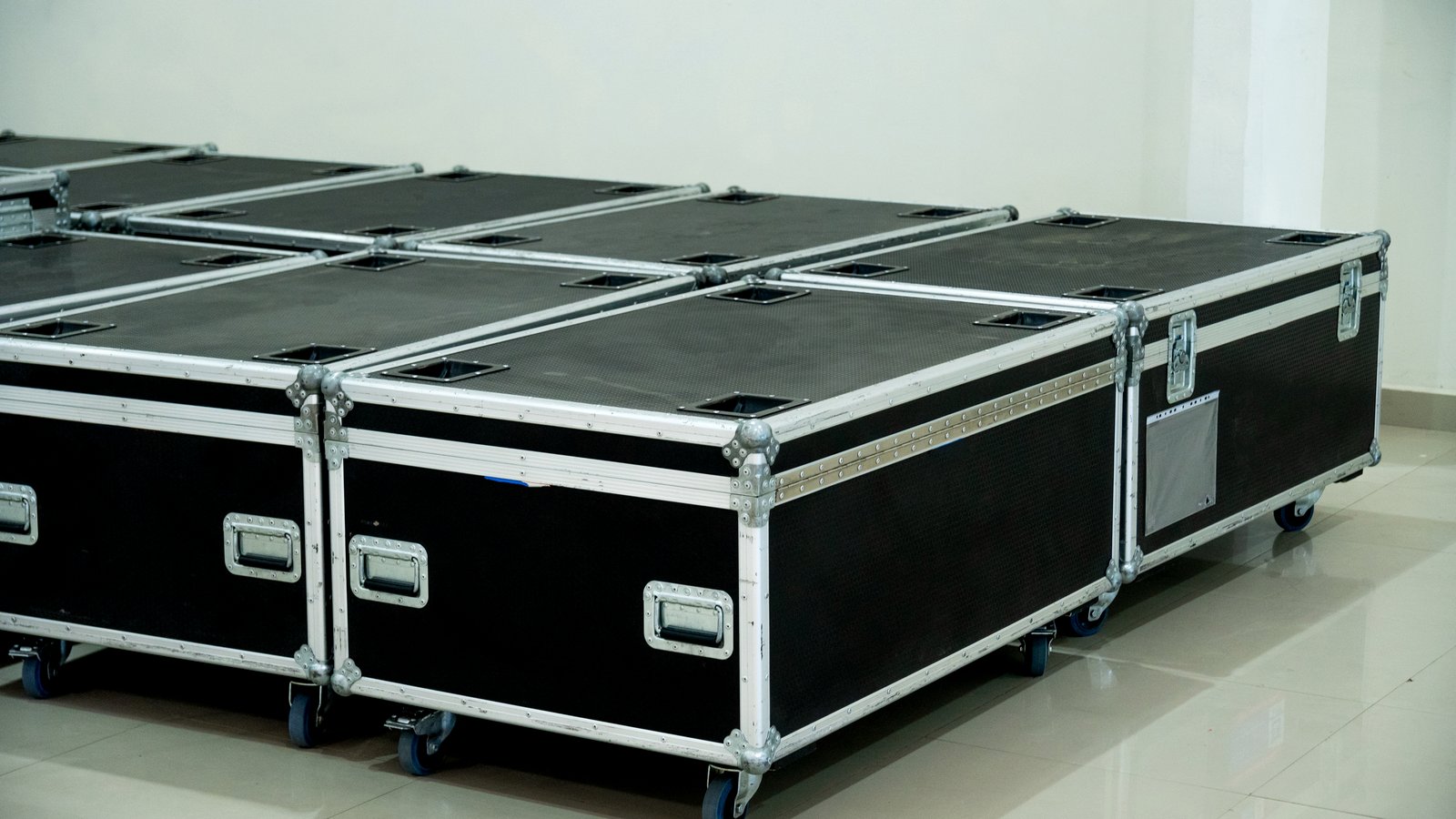
A trade show booth is a capital asset, not a one-show prop. The custom hardwall structures, modular truss kits, integrated AV, and graphic skins that go into a serious exhibit add up to a six-figure investment for most B2B programs — and yet the average exhibit gets used five to eight times before it is quietly written off, replaced, or thrown away. The difference between a booth that earns its keep across a three-year program and one that becomes a depreciating problem in a warehouse comes down to two decisions made before the build even ships: how it will be stored, and how it will be reused.
This guide walks through what trade show booth storage actually costs in 2026, what should live in the crate versus the dumpster after each show, how to structure a reuse plan with your fabrication partner, and the specific operational details that separate brands paying $400 a month to babysit a dying booth from brands extracting another two seasons out of a smart modular kit. It is written for marketing leaders, brand managers, and event producers who have either inherited a warehouse problem or are about to commission a build and want to make the right decisions up front. If you are scoping a new program, pair this with our trade show fabrication overview before signing off on the budget.
Why Booth Storage Is a Strategic Decision, Not a Warehouse Line Item
Most brands treat post-show storage as an afterthought. The booth comes off the floor in San Diego or Las Vegas, a third-party logistics company crates it, and a monthly invoice starts showing up from a warehouse 90 miles outside the next show city. The booth sits. Graphics fade. Foam blocks compress. LED strips loosen in transit. By the next show, a $180,000 build needs $40,000 in refurbishment before it can stand up again — and someone on the marketing team is the first to find out, the week before load-in.
The storage decision is strategic because it determines four things: how many shows your booth can do per year (turnaround time on prep), how many graphic skins or product swap-outs you can support without rebuilding, how much you will spend on refurbishment over the booth’s lifecycle, and whether your booth can be repurposed for adjacent activations like sponsorships, brand activations, or roadshow stops. A booth designed to be stored well is also a booth designed to be reused — and the converse is true.
What Is Actually Inside a Trade Show Booth Crate
Before talking about storage costs, it helps to know what is actually being stored. A medium-format custom hardwall booth (roughly 20’×20′, two stories, integrated counters and AV) typically breaks down into the following crated components:
- Structural wall panels — CNC-cut MDF or birch ply skinned with laminate or printed vinyl, banded in foam, stacked in custom crates.
- Truss and rigging — aluminum box truss or modular extrusion, broken to its smallest transportable lengths.
- Flooring — interlocking rubber, raised access platform, or printed carpet rolled and tubed.
- Graphics and signage — large-format prints on Sintra, PVC, or fabric; stored flat in graphic-grade crates.
- AV hardware — monitors, media players, mounts, LED video walls, and the cable bundles that connect them.
- Lighting — LED bars, gobos, dimmer packs, and DMX controllers, often in foam-lined road cases.
- Soft goods — fabric ceilings, drapery, branded scrim, vacuum-packed when possible.
- Furniture and fixtures — counters, podiums, retail-style displays, sometimes assembled from a modular kit.
- Hardware kit — bolt bags, hex keys, replacement screws, gaffer tape, magnetic latches.
- Documentation — assembly manual, electrical diagrams, asset list with photographs, often laminated and crated separately.
The crating itself is part of the asset. A good fabrication partner will spec ATA-rated road cases for the AV and lighting, custom wooden crates for the structural panels, and graphic tubes or flat crates with edge protection for printed surfaces. Cheap crating fails first — and when a crate fails, the contents fail with it. This is one of the line items it is hardest to push back on during a budget review and one of the easiest to regret cutting.
The Real Cost of Booth Storage in 2026
Storage pricing varies wildly by region, facility type, and how much handling is bundled. In the New York metro, where most of our clients store assets between East Coast shows, current 2026 ranges look like this:
| Booth footprint | Crated volume | Monthly storage (NYC metro) | Annual storage |
|---|---|---|---|
| 10’×10′ modular | ~80 cu ft | $120–$220 | $1,440–$2,640 |
| 10’×20′ hybrid | ~180 cu ft | $240–$420 | $2,880–$5,040 |
| 20’×20′ custom hardwall | ~450 cu ft | $525–$900 | $6,300–$10,800 |
| 20’×30′ two-story | ~750 cu ft | $875–$1,500 | $10,500–$18,000 |
| 30’×40′ island | ~1,400 cu ft | $1,650–$2,800 | $19,800–$33,600 |
These ranges assume conditioned warehouse space, palletized access, and basic inventory tracking. The wider variation comes from three add-ons that most brands underestimate when first signing a storage contract: handling fees (in/out moves), prep services (unpacking, condition reports, repairs), and graphic refresh storage (where new printed panels are received and held until the next deployment). A booth that ships to four shows a year can easily double its base storage cost in handling fees alone.
The other cost to plan for is what happens between shows when the booth lives in storage for more than 90 days. Long dwell times compound humidity damage, foam compression, and adhesive failure on graphic skins. Brands with long gaps between shows — say, a year between a January industry event and the next May activation — should budget for a quarterly condition check rather than discovering issues during the next pre-show prep.
Climate, Security, and Accessibility: The Storage Spec That Matters
Not all warehouse space is equal. A booth stored in unconditioned space through a New Jersey winter and a Florida summer will not perform like one stored in a climate-controlled facility. The spec brands should be asking for includes the following:
- Temperature range: 60°F–80°F year-round, ideally 65°F–75°F.
- Humidity range: 35%–55% relative humidity. Higher than 65% warps wood and lifts laminate; lower than 30% cracks adhesives.
- Pest control: active rodent and insect program, with documented inspection logs.
- Fire suppression: sprinkler-equipped warehouse rated for storage occupancy.
- Security: 24/7 monitored access, no shared dock with unrelated tenants, asset tagging on every crate.
- Insurance: warehouse legal liability coverage at minimum, and a path to schedule the booth on the brand’s own inland marine policy.
- Accessibility: palletized storage with forklift access, not stacked behind other clients’ goods. A booth that takes two hours to dig out is a booth that misses load-in windows.
For New York shows specifically, the location of the warehouse matters more than for other markets. Manhattan storage is expensive and access-limited; Brooklyn and Queens get you close to the Javits Center but pay premium real-estate rates. Most fabrication partners — ourselves included — base their warehouse operations on Long Island or in New Jersey, where you get conditioned space, forklift access, and a one-hour drive to Javits at a fraction of Manhattan square-foot pricing. We operate from a Manhattan HQ but run the warehouse and prep floor out of Hicksville, New York, which puts our crates 35 miles from Javits and inside a controlled climate envelope year-round. If you want more context on how a load-in actually plays out at that venue, our NYC convention center load-in guide walks through it dock by dock.
Reuse Strategy: Design the Booth So It Can Become Something Else
The biggest single lever on cost-per-impression for a trade show program is reuse. A booth that goes to five shows pays back 5× the per-show fabrication cost. A booth that gets reskinned for a brand activation, then re-skinned again for a sponsorship presence at a partner conference, pays back 8×–10×. The question is what makes a booth reusable in the first place — and almost all of it is design choices made before fabrication begins.
The five design principles we apply on every long-program build:
- Decouple structure from skin. The frame stays; the graphics swap. This means designing wall panels with magnetic or hook-and-loop graphic attachment, never bonded prints.
- Modular footprint. A 20’×20′ island that can break down to a 10’×20′ linear and again to a 10’×10′ corner has three years of life across event tiers, not one.
- Standardized hardware. One bolt size, one extrusion profile, one cable type. Custom hardware ages out faster than custom panels.
- AV-agnostic mounts. Monitor mounts on VESA-standard plates so a 55″ panel can swap for a 65″ without re-machining.
- Documented kit-of-parts. Every component photographed, numbered, and mapped to assembly steps. A booth that can only be built by the original crew is a fragile booth.
Booths designed this way also flex into adjacent formats. The same modular structure that anchors an IBS booth can be reconfigured for a retail-style activation; we have walked clients through exactly that transition more than once. Our IBS trade show build is a clear example of a kit designed to live past one show, and the structural language carries directly into brand activations when the brand wants to stand up a presence at a partner event without commissioning a separate build.
Refresh, Rebuild, or Retire: The Lifecycle Decision Tree
Every booth hits a decision point — usually around year three for a heavily-used custom build, year five for a modular kit. At that point, marketing leaders face three options:
- Refresh. New graphics, new finishes, new AV. Structural bones stay. Cost: 15%–30% of original build. Adds 1–2 years of life.
- Rebuild. Salvage the chassis and modular extrusion; rebuild walls, ceilings, and signage. Cost: 40%–60% of original build. Resets the lifecycle clock.
- Retire. Demolish the build, recycle materials where possible, commission new. The right answer when the brand strategy has shifted, the product line has changed, or the booth has accumulated enough damage that refurbishment exceeds 60% of new-build cost.
The decision is rarely made on cost alone. Strategy shifts, repositioning, product launches, and brand refreshes drive the choice as often as wear. We have refurbished booths in better physical condition than the new ones replacing them — because the brand pivoted and the existing structure could not tell the new story. This is where the conversation needs to start with a fabrication partner who can also handle experiential design, not just bid the build. A pure builder will rebuild what you ask for; a design-and-build partner will tell you when refresh is the wrong answer.
Inventory and Condition Tracking: The Operational Backbone
The single highest-leverage operational practice in long-term booth ownership is a real inventory system. Most brands do not have one. They have a spreadsheet that was current three shows ago, a shared drive with photographs from the original build, and a vendor invoice that lists “booth” as a single line item. This is the same brand that finds out at load-in that two structural panels are missing.
A real inventory system has four parts:
- Asset register. Every component above the value threshold (we use $200) gets a unique ID, a photograph, dimensions, weight, and a current condition rating (1–5).
- Crate manifest. Each crate lists every asset ID inside it, with a check-in/check-out log every time the crate moves.
- Condition reports. After every show, the unpacking team photographs and rates each asset, flags damage, and updates the asset register.
- Refurbishment log. Every repair, replacement, or refresh gets dated and attributed to the asset ID, so the lifecycle trail is auditable.
This sounds like overhead. It pays back the first time you avoid a $12,000 last-minute structural rebuild because someone flagged a cracked panel six weeks before the show instead of the morning of load-in. We run this process for the booths we fabricate as part of our event fabrication services — but a brand running its own inventory should at minimum hold its vendor to a documented condition report after every breakdown.
Cross-Format Reuse: Booths That Become Activations
The most under-used asset in most brand programs is the booth between shows. A custom hardwall structure sitting in a Hicksville warehouse for nine months represents tens of thousands of dollars of installed value doing nothing. Some of the brands who get the most out of their builds treat the booth as a chassis for adjacent formats:
- Pop-up retail or sampling. The same modular structure that hosts an industry booth can be reconfigured for a four-week pop-up shop with a different graphic skin and added product fixtures. This is one of the strongest cross-uses we see and a natural fit for our pop-up shop design work.
- Sponsorship activations. Booth components can stand up a branded zone at a partner event — think a fintech booth chassis powering a brand presence at a partner’s conference reception.
- Internal events. Sales kickoffs, road shows, and customer summits all benefit from a branded environment, and the booth chassis can supply it.
- Filming and content production. A booth makes an excellent in-studio set for product video and social content. We have stood booths up in Brooklyn warehouses for a single afternoon of filming, then re-crated them the same day.
These reuses are only possible when the booth was designed for them from the start. A booth that requires a specific concrete floor anchor pattern is useless in a film studio. A booth whose graphics are bonded to the panels cannot be re-skinned for a sponsorship. The fabrication brief is where these choices get locked in — and the brief is also where they can be opened back up. A good fabrication partner should be asking, on day one, what formats this build needs to flex into over its life.
NYC-Specific Storage and Reuse Considerations
For brands running East Coast trade show and activation programs, New York is both the most expensive metro to store in and the most strategic. The same booth that anchors a January conference at Javits can be repurposed for a March pop-up in SoHo, an April sponsorship activation in Brooklyn, and a June presence at a tech summit in Midtown — all with the same crated chassis. That density of opportunity does not exist in most markets.
The trade-off is that NYC trucking, permitting, and union labor add real friction. A booth designed to install with five trades over two days at Javits may need a different install plan at a SoHo retail space (no riggers, no overhead truss). A booth that fits a 53′ trailer for cross-country moves may have to break down further for a Manhattan side-street drop. These constraints should be in the fabrication brief from the start. We have built more than a few booths that ship beautifully to Vegas and then can’t legally get up the elevator at a Park Avenue venue — usually because the constraints were not on the table early enough. Our Keurig x Nasdaq build is a good example of a Manhattan-aware chassis: dimensions, weight loads, and assembly steps all designed against the building’s freight elevator spec before the first CNC cut.
How to Brief Your Fabrication Partner on Storage and Reuse
If you are commissioning a new booth in 2026, the brief should include explicit answers to the following questions. Most do not. The ones that do save their brands real money over the next three years:
- How many shows per year? A booth that does six shows needs a different design than one that does two.
- What is the program length? A two-year program tolerates less modularity than a five-year one.
- What show footprints will it need to land on? 20’×20′, 10’×20′, 10’×30′ linear — call them out now.
- What adjacent formats might it flex into? Pop-up retail, sponsorship, internal event, content production — name them.
- Who is storing it, and where? Manhattan, Long Island, Las Vegas, Chicago — every additional city adds shipping cost.
- How often will graphics refresh? Every show, every quarter, every year — this changes the graphic attachment system.
- What is the asset tracking system? The brand owns it; the fabricator runs it; the warehouse audits it.
- What is the end-of-life plan? Resale, donation, recycling — the disposal pathway affects material choices today.
The conversation we want to have on every long-program build is the one that ends with the client saying “this is what we want it to be in year three, not year one.” Booths that survive a multi-year program are designed against year three. The same logic applies to stage and scenic fabrication for ongoing corporate event programs, where the same modular philosophy keeps a customer-summit set alive across five city tours instead of one.
Case in Point: When Reuse Strategy Pays Back
The brands that get the most out of their fabrication investment are the ones that treat the first build as the start of a kit, not a one-off. The structural backbone of an event presence — modular walls, branded counters, AV armature — should be common across shows, sponsorships, and activations. Two examples from our own portfolio:
- The Netflix booth at the Meadowlands was specced with reusable structural modules, graphic-only refresh between deployments, and a stored crate inventory that lets the brand redeploy a similar footprint with weeks rather than months of lead time.
- The Monday.com MP Live build was designed against multiple footprints — the same chassis stands up in a small ballroom and a larger expo floor, with kit components swapped in or out based on the venue.
Both builds illustrate the principle that storage and reuse are design decisions, not warehousing decisions. The work happens at the brief stage. By the time the booth is in crates, the cost-per-show is mostly determined.
The Bottom Line
Trade show booth storage costs in 2026 run from roughly $120 a month for a small modular kit to $2,800 a month for a large island — but the storage line item is rarely where the real money is won or lost. The real lever is what was decided before the build shipped: whether the booth was designed for graphic swaps, modular footprints, and cross-format reuse, or whether it was designed for one show and stored ever since out of inertia. Brands that get the first decision right pay back their fabrication investment 2–4× faster than brands that do not.
If you are scoping a new build for a 2026 or 2027 program — or you have a booth currently sitting in a warehouse that you suspect is past its useful life — the most useful first conversation is a structured walk-through of the asset, the program, and the next twelve months of show schedule. We do that with brands every week; if it is useful for yours, browse the kind of work we typically run through this lifecycle — recent examples include the Primark Holiday Pop-Up chassis and the Café de Colombia activation at the San Diego Convention Center. The right next step depends on whether the booth you have is fixable, the program you are running supports a new build, or the answer is somewhere in between — but the conversation pays for itself quickly when the alternative is another year of paying $900 a month to store something nobody plans to use.