Nov 18, 2026 · Planning, Process & Budget
Los Angeles Special Event Permits for Brand Activations
Which City offices permit a branded street, sidewalk or park activation in Los Angeles, what they publish on cost and lead time, and what the build triggers.
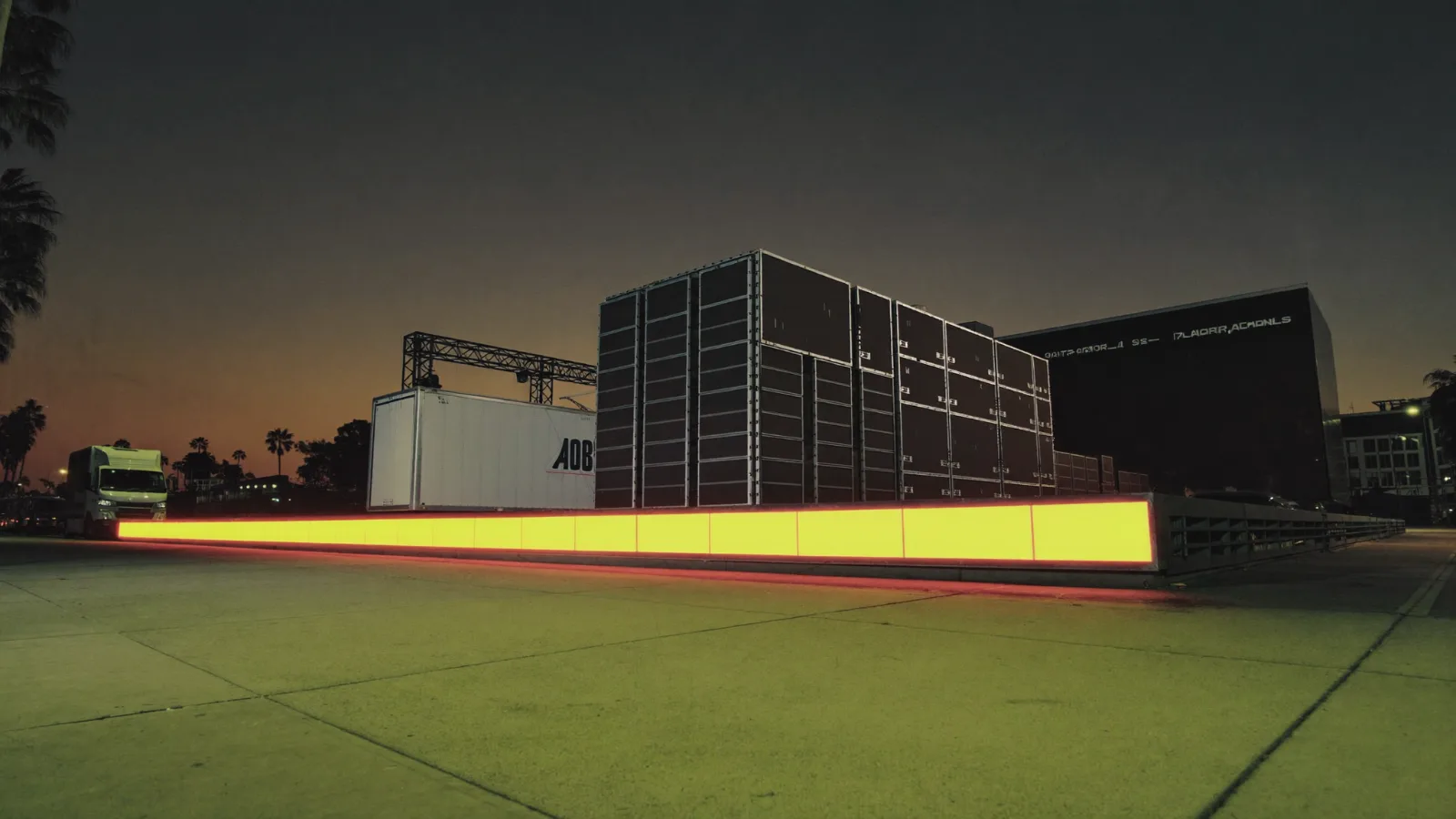
A hero object on a Los Angeles sidewalk, there for one day. Before anyone chooses a finish or a lighting scheme, three questions decide whether it happens: which office lets it sit there, how many days ahead that office needs the application, and what the object has to be so the fire and building desks sign off.
This guide is about the Los Angeles special event permit as it applies to a branded activation. It covers which City offices are involved, what each one publishes on cost and lead time, what the build itself triggers, how to design to fit, and one calendar that runs the permit clocks next to the shop clock. Every fee, deadline and threshold below is what the City's pages said when we read them on November 18, 2026. Those pages carry no dates, so confirm with the issuing office before you file. This is not legal advice.
Which Los Angeles office permits a branded activation?
A branded activation in the City of Los Angeles that uses a street, sidewalk or curb lane starts with a Special Event Permit application to the Bureau of Street Services, due 45 days before the event. The build then adds its own sign-offs: LAFD for the safety plan and tents, LADBS for stages over 30 inches and large canopies, and an LAPD permit for live music or alcohol.
That is the City of Los Angeles only. West Hollywood, Santa Monica, Beverly Hills and unincorporated county land run their own desks, and our Los Angeles pop-up shop guide has the district table. FilmLA words its own guidance the same way: City and unincorporated County only.
| Where the activation sits | Office and permit | Apply at least | What the City publishes on cost |
|---|---|---|---|
| Street, sidewalk or curb lane | Bureau of Street Services, Special Event Permit, through the Streets LA Special Events Portal | 45 days before the event | No fixed fee. Cost is given after review by the affected City departments; final cost comes after the event. $312 penalty if received 21 days or less before; $100 per technical correction |
| Parade, march, procession or assembly in a public place that affects normal traffic | LAPD Special Events Permit Unit; the Board of Police Commissioners decides | 40 days (LAMC 103.111); less time makes a permit less likely | Not stated |
| Tent or canopy over the thresholds, stage over 30 in., grandstand, structure over 12 ft | LADBS Temporary Special Event (TSE) permit, filed online | At least 2 business days before, and only after every other clearance | $137.80 per event |
| Tents (LAFD approval), safety plan, open flame, vehicles in an assembly | LAFD Public Assemblage Unit | No lead time published; the safety plan must be approved before the LADBS filing | Not stated |
| Dances, carnivals, live music or alcohol | LAPD permit, per LADBS | Not stated | Not stated |
| City park | Department of Recreation and Parks, Special Events Office | At least 60 days (Griffith, Elysian and Debs regional parks page) | Not stated on that page |
Sources, all read on November 18, 2026: the Streets LA Special Events Portal, the LADBS Temporary Special Events page, the LAPD Special Events Permit Unit page, the LAFD Public Assemblage page and the Recreation and Parks page.
Two facts sit under the table. The portal says permits cannot be obtained for personal events such as birthdays, funerals or valet parking, and a brand event is not one of those. And FilmLA does not process special event permits at all; for the City it points planners to the LADBS website.
Is a pop-up, a sampling setup or a product activation a special event?
Yes, by FilmLA's definition. Its guidance, published February 29, 2024, lists pop-up stores and product marketing activations among its examples of special events, next to concerts and grand openings. A planned event with filming as one part of it still needs a special event permit, and in most cases no separate film permit. A film permit is for an event staged only to be filmed, such as one with paid background performers and a closed set. A FilmLA article on film permits versus event permits walks through the cases.
If you plan to use the build as a set for a content shoot, that is a separate permit with a separate desk. We do not advise on film permits beyond pointing you to FilmLA.
Sampling needs a careful read. We found no City page that sets a rule for handing out samples from the hand or from a table in Los Angeles, and we are not importing another city's rule. Our reading: a table, a cooler or a banner stand on a sidewalk is a built object in the public way, so it belongs in the conversation with the Bureau of Street Services. Ask the Bureau before you design the setup around a rule you have not seen in writing. The build side of a sampling program, from carts to bars, is covered in our sampling activation builds service.
How does a Los Angeles special event permit work, and what does it cost?
The Streets LA portal lays out the steps. The application must be submitted 45 days before the event, online, and then the paperwork follows:
- Submit the online application form.
- Print and complete the petition form for the area: residential, residential in Spanish, or commercial, depending on where the event sits and what it is.
- Have your insurance broker or agent register with KwikComply and submit the proof of insurance on your behalf.
- Complete the Indemnification and Hold Harmless Agreement, required for all closures.
- Mail the signed petition and hold harmless forms to the Street Services Investigation & Enforcement Division, and write the Application Reference Number on every page.
The permit is not issued until every document is in.
The cost is the part the City does not publish. The portal says the cost is provided once the application has been reviewed by all affected City departments, that additional fees may be incurred, and that the final cost of the event comes after the event. There is no fee schedule to quote, and we will not invent a range. The figures that are published are penalties: $312 if the application arrives 21 days or less before the event, and $100 for any technical correction.
The 45-day clock is longer than the shortest tier in New York, where our New York street permit guide reports, from the city's own pages, that a small street event is filed 14 days out. A brand running both coasts should plan Los Angeles first. Either way, the site plan the offices want comes out of the shop's fabrication drawings, so the design has to be far enough along to draw before the filing date.
What does the build itself trigger at LAFD, LADBS and the police?
The Special Event Permit covers use of the public way. The build adds its own reviews, and each has a threshold the City publishes. This is the table to design against.
| Build element | Office | Threshold as published | Design lever |
|---|---|---|---|
| Tent or canopy | LADBS TSE and LAFD | LADBS: larger than 12 ft in length or width on a commercial property; larger than 450 sq ft on a residential property. LAFD approval for tents of 450 sq ft or more | Keep each canopy under 12 ft in both directions where the concept allows; ask LADBS how it reads the wording for a public-way site |
| Stage or platform | LADBS TSE | More than 30 in. above grade; above that, structures for live loads need approved engineering before inspection | Keep a hero base at or under 30 in. unless people stand on it; if they do, the engineering is part of the drawings |
| Grandstand or bleachers | LADBS TSE | Any | Design seating as furniture, not tiers |
| Structure height | LADBS TSE | Higher than 12 ft | Stack a tall piece in units, or hold the permitted height under 12 ft |
| Event length | LADBS TSE | Not more than 7 days; longer events or non-qualifying structures normally need a building permit or special approval | Plan a run of seven days or fewer, or plan for a building permit |
| Open flame, candles, cooking | LAFD Public Assemblage Unit | LAFD lists a candle permit, special permits for open flames and a special permit for temporary cooking | Decide early whether the piece uses flame or cooking |
| Live music, dance, alcohol | LAPD permit, per LADBS | Required for dances, carnivals, live music or alcohol | Decide early whether the piece makes music |
| Anything in the public way | Bureau of Street Services, Street Use Division | Events in the public right-of-way, such as sidewalk sales, need a Street Use permit | The site plan decides what the Bureau reviews |
A permit application describes your build. Change the build and the application changes.
The order matters. LADBS says a safety plan showing the event layout must be approved by the Los Angeles Fire Department before you file with LADBS, and the approved plan has to be on site for the inspector. You give LADBS the name and phone number of the LAFD officer you spoke with. Some events also answer a City Planning questionnaire to find out whether a planning clearance is needed. The LADBS filing comes last: at least two business days before the event, after every other clearance. Inspections run around the clock except holidays, and the inspector checks structural stability, sanitary facilities, exiting, parking, disabled access and zoning.
Two caveats. First, LADBS puts LAFD approval at tents of 450 sq ft or more, while the LAFD Film Unit page, written for film locations, lists a tent permit above 400 sq ft. We do not present either as settled. Design under the smaller number and confirm with the LAFD Public Assemblage Unit. Second, LAFD publishes forms for special event requirements, plot plans and tents that we could not read, so we quote nothing from them. Follow LAFD's plot plan instructions when you draw the layout.
The LAPD line needs a word of care. LADBS says a permit from the LAPD is required for dances, carnivals, live music or alcohol. The Police Commission's Permit Processing Section issues permits such as carnivals and dance halls, and says it does not handle special events permits. Ask which desk your piece lands on before you plan music.
Materials matter as much as layout. California State Fire Marshal registration for flame-retardant fabrics and graphics is covered in our Los Angeles Convention Center guide. A good site plan starts from the footprint, which is what our spatial design and layout work produces.
Send us the address, the date and the footprint, and we will mark which of these offices the build touches and what the site plan has to show.
What changes in a city park?
The Department of Recreation and Parks page for Griffith Park, Elysian Park and Ernest E. Debs Regional Park, with forms revised July 2026, asks you to contact its Special Events Office at least 60 days before the event. A request inside 60 days is not guaranteed and is considered by availability, location and scale. A request is not a permit, and the page asks you not to advertise the event until the permit is issued. That page covers those regional parks; other Recreation and Parks sites run their own forms, so ask the office for the site you have in mind.
A park permit sits on top of everything above. A canopy, a stage or a generator in a park still meets LADBS, LAFD and the police, per the sources already cited. We found no park fee on the page, so we state none.
Parks also put wind and ground in play. Our weatherproofing guide for outdoor builds covers ballast and wind loads, which matter more when you cannot fix anything to the ground.
How do you design an activation to fit the permit?
Five moves, each tied to a fact above.
- Footprint and clear path. The site plan is what the Bureau of Street Services reviews. Draw the footprint, the sidewalk width left clear and the queue line before you draw the finish.
- Stay under the lines. A deck at or under 30 in., canopies under 12 ft, structures under 12 ft and a run of seven days or fewer keep a whole review off your calendar.
- No fixings in the public way. Get stability from a wide, low base and ballast, engineered before the finish is drawn. We found no Los Angeles rule on fixing into a sidewalk, so confirm with the Bureau.
- Power. Decide between a generator and batteries early. We found no LAFD generator rule, so ask the Public Assemblage Unit rather than assume. We quote no kilowatt limit.
- Built to travel, set up fast. Resolve every joint, wire and finish in the shop so the work on site is placement and leveling. Our shop is in New York, so freight is a calendar line; the worked example below shows where it falls.
Our proof for these moves is method, from New York and Long Island builds. None of them was a Los Angeles job and none ran under a Los Angeles permit.
Ziploc Surprise Seconds was an oversized fridge on a raised platform base with a working door and interior LEDs synced to a prize wheel. Cabinetry, CNC cutting, scenic paint, graphics and lighting were done in our New York shop, and the case study says it loaded on and off a truck and set up on a sidewalk in a single morning. That is the target for a sidewalk piece: everything finished before the truck leaves.
White Claw Sessions at The Surf Lodge put nine mirror-finish letters on a low plinth set on sand, each letter built as its own unit so it could be carried by hand, and the surfboards stood on freestanding mounts. The venue is private and allowed no multi-day install, so the shop resolved the build and the site work was placement and leveling. A private venue is not a City permit. The lesson is the same: a low, freestanding, hand-carried design is easier to describe in a site plan.
When should you apply, and does the build calendar fit?
The two clocks run in parallel. The worked example below is an activation on Thursday, April 22, 2027. Permit lines count calendar days back from the event; shop lines count business days, weekends excluded, because our shop works through the holidays.
| Permit milestone | Date | Basis |
|---|---|---|
| Park request, 60 days out | Sun Feb 21, 2027 (send by Fri Feb 19) | Recreation and Parks regional parks page |
| Special Event Permit application, 45 days out | Mon Mar 8, 2027 | Streets LA portal |
| LAPD Special Events Permit Unit, 40 days out | Sat Mar 13, 2027 (send by Fri Mar 12) | LAMC 103.111, per the LAPD page |
| Penalty fee applies from | Thu Apr 1, 2027 (21 days out) | Streets LA portal |
| LADBS TSE filing, last day | Tue Apr 20, 2027 (2 business days out) | LADBS, after all other clearances |
Now the shop side. Say the crates leave our New York shop on Friday, April 9, 2027. For this example we assume four to five calendar days of transit, which puts them in Los Angeles on Tuesday, April 13 or Wednesday, April 14; confirm the transit time with your freight carrier for your route.
| Shop build length | Design lock |
|---|---|
| 40 business days | Fri Feb 12, 2027 |
| 30 business days | Fri Feb 26, 2027 |
| 15 business days | Fri Mar 19, 2027 |
Lock date is day one of the count, and the departure day is not counted. This is a worked example, not a quote, and each office can change its dates.
Read the two tables together. For a 30-business-day build, the design locks on February 26, before the March 8 filing date, so the footprint and structures are known when the application goes in. For a 15-business-day build the lock falls on March 19, after the filing date, so the site plan has to exist weeks before the build starts. Decide on a stage, a canopy or a generator before the design locks, because those choices set which offices you meet; on a 40-business-day build that is about ten weeks before the event. Builds run 15 to 40 business days, and we promise no duration for a specific scope.
Reviews can also come back with conditions: the LAPD unit says it may suggest another date, route or time. Leave slack in the date.
Before you file, walk the site. Our activation site survey checklist lists what to check on site. The portal also requires proof of insurance through KwikComply, and our certificate of insurance guide covers certificates for event builds, though it is written for New York.
What does the shop hand over for the application?
Each office asks for something else. The Bureau of Street Services asks for the application, petitions, insurance and the hold harmless form. LAFD asks for a safety plan showing the layout. LADBS asks for the contact details of the person who will be present at the inspection, plus the clearances from the other departments.
The shop supplies the technical pieces those packages lean on:
- A dimensioned site plan showing the footprint and the clear path.
- Drawings of each piece with overall heights and platform heights.
- The power or generator size, and where the cables run.
- Flame-resistance certificates for fabrics and graphics, with California State Fire Marshal registration where required.
- The install and strike sequence, with times.
The brand files and holds the permit. Our shop builds to it and supplies the site plan, drawings and material documentation the offices ask for. Where the work needs a California contractor's license or a city permit, we bring in partners for that part. No shop can promise that an office will approve an application, and we do not.
Some sites add rules of their own on top of the City's. Keurig x Nasdaq was an indoor launch with a 12-hour install window and strict load-in procedures. Components were pre-wired, connections were labeled, and an install sequence document came with them. It is not a street permit, but it shows what a short window demands of the drawings, and lighting built into the piece is easier to pre-wire in the shop for the same reason.
Plan your Los Angeles activation
Send us the address or the block, whether it is a street, sidewalk, lot or park, the date and hours, the concept or a sketch, the footprint and height, the power, sound or flame you want, and how many days it runs.
We will tell you which of these offices the build touches, what the site plan has to show, and return a line-item quote within 2 business days. Projects start at $10,000, and most land at $25,000 and up. Start with our brand activation fabrication service, and if the concept is still loose, how to brief a fabrication shop shows what to send.
Frequently Asked Questions
If the activation uses a street, sidewalk or curb lane in the City of Los Angeles, it starts with a Special Event Permit application to the Bureau of Street Services. FilmLA counts pop-up stores and product marketing activations as special events. Neighboring cities run their own desks, so confirm with the issuing office for your address.
The Streets LA portal says the application must be submitted 45 days before the event. An application received 21 days or less before is assessed a $312 penalty, and each technical correction costs $100. City park requests ask for contact at least 60 days ahead. These are the dates as published on November 18, 2026; confirm before you file.
The City publishes no fixed fee for the Special Event Permit. The portal says the cost is provided after all affected City departments review the application, additional fees may follow, and the final cost comes after the event. LADBS separately publishes $137.80 per event for a Temporary Special Event permit when a stage or large canopy is involved.
Possibly. For events of seven days or fewer, LADBS requires a Temporary Special Event permit for a stage or platform more than 30 inches above grade, a canopy larger than 12 feet in length or width on a commercial property, grandstands, and structures higher than 12 feet. The filing costs $137.80 and follows an LAFD-approved safety plan.
The brand files and holds the permit. Our shop builds to it and supplies the site plan, drawings and material documentation the offices ask for. Where the work needs a California contractor's license or a city permit, we bring in partners for that part. No one can promise that an office will approve an application.
Have a build on the calendar?
Send the brief, renders or a napkin sketch. You get a line-item quote within 2 business days.