Jun 25, 2026
Metal Fabrication & Welding for Event Structures
How structural metal gets fabricated for NYC events: steel vs aluminum, welding processes, engineering, finishes, and lead times for activations and booths.
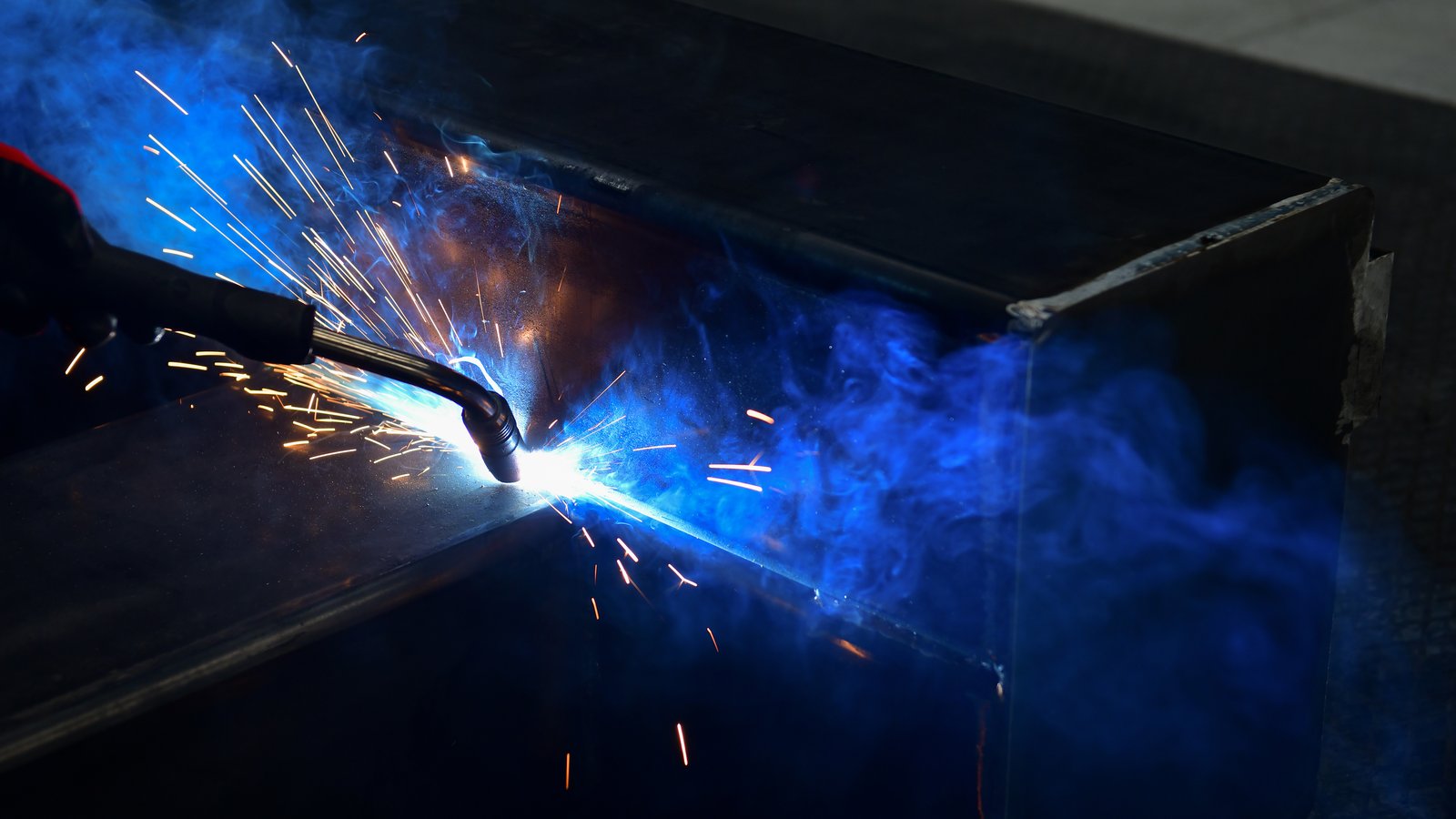
Every spectacular activation has a skeleton most attendees never see. The truss arch a brand hangs its logo from, the cantilevered platform holding a car two feet off the floor, the bar frame that takes a thousand elbows a night, the totem that stands twelve feet tall in a windy plaza — those are welded steel and aluminum, engineered before they’re beautiful. Metal fabrication is the discipline that lets an experiential concept defy gravity safely, and it’s the one that separates a vendor who builds props from a vendor who builds structures. This guide covers how metal gets fabricated for events: the alloys, the welding processes, the engineering, the finishes, and the lead times that govern any serious build in New York City.
Why metal, and when wood won’t do
Sheet goods and lumber do most of the work in event fabrication, but they hit limits fast. Wood can’t span long distances without sagging, can’t carry repeated dynamic load without fatiguing, and can’t be made thin and strong at the same time. The moment a structure has to hold weight overhead, cantilever past its base, take a crowd leaning on it, or stand up to wind and weather outdoors, the conversation moves to metal. A welded steel frame skinned in branded panels gives you the strength of structure with the look of design — which is exactly what a high-traffic brand activation demands when the public is climbing on, pulling at, and photographing every surface.
Metal also wins on reuse. A welded base structure can be reskinned campaign after campaign, amortizing its cost the way modular booth systems do in trade show fabrication. The frame is the expensive, durable investment; the graphics and panels are the disposable, swappable layer. Build the bones in steel once and you own them for years.
Steel vs. aluminum: choosing the alloy
The first decision in any metal build is which metal. Steel and aluminum solve different problems, and a good fabricator picks based on load, weight, and where the piece is going.
Steel: strength and weldability
Mild steel is the workhorse of structural event fabrication. It’s strong, cheap relative to its strength, and forgiving to weld. Square tube and rectangular tube in sizes from one inch up are the standard vocabulary — they stack, bolt, and weld into frames, gates, platforms, and towers. Steel’s weight is a feature when you need ballast and stability, and a liability when you’re carrying pieces up a freight elevator. For anything load-bearing or structural, steel is usually the default.
Aluminum: lightweight and corrosion-resistant
Aluminum extrusion weighs roughly a third of steel for the same volume, which matters enormously for touring activations, hanging structures, and anything that has to be flown overhead on rigging points. It resists corrosion without coating, making it the right call for outdoor and humid environments. The tradeoff is cost and welding complexity — aluminum demands TIG welding and skilled hands, and it has lower fatigue strength than steel. Truss systems, the backbone of trade show overhead structures and stage builds, are almost always aluminum for exactly these reasons.
| Property | Mild Steel | Aluminum |
|---|---|---|
| Strength-to-cost | Excellent | Good |
| Weight | Heavy | Light (~1/3 of steel) |
| Corrosion resistance | Needs coating | Naturally resistant |
| Welding | MIG or stick, forgiving | TIG, skill-intensive |
| Best for | Platforms, frames, ballast | Truss, overhead, touring |
The welding processes that matter on the floor
Welding is where parts become a structure. Three processes cover almost all event metalwork, and knowing the difference helps you read a quote and a timeline.
MIG welding (metal inert gas) is fast, relatively easy, and the production workhorse for steel frames. It lays down strong welds quickly, which keeps labor hours down on big structural runs. TIG welding (tungsten inert gas) is slower, cleaner, and far more precise — it’s what you use on aluminum, on thin material, and anywhere the weld itself will be visible in the finished piece. Stick welding still has a place for heavy steel and field repairs where conditions are rough. The process drives both the look and the labor cost: a structure with hundreds of visible TIG welds is a different quote than one MIG-welded and hidden behind panels.
A weld is only as good as the engineering behind it. The prettiest bead in the world won’t save a frame that was never calculated to carry its load.
Engineering: the part the audience never sees
Any metal structure the public interacts with — or that hangs over their heads — is an engineering problem before it’s a fabrication problem. Load paths have to be calculated: how weight travels from where it’s applied down through the frame to the floor or the rigging points. Platforms need to carry live load (people and gear) plus a safety factor. Overhead elements need rated rigging hardware and documented working load limits. Tall, narrow pieces need bases or ballast sized to resist tipping, and outdoor structures need wind-load calculations that account for the worst gust the run might see. This is the same structural discipline that governs stage and scenic fabrication, where a failure isn’t a cosmetic problem — it’s a safety incident.
In New York, venues and the fire code take this seriously, and so should your fabricator. Convention centers, hotels, and city permits frequently require stamped engineering drawings for elevated platforms, large hanging structures, and anything the public occupies. A shop that builds in NYC regularly already works with structural engineers and knows when a stamp is required. Our build for the Netflix trade show booth at the Meadowlands is an example of a large structural exhibit where the metal had to be engineered to spec before a single panel went on.
From CAD to cut: the fabrication pipeline
Metal fabrication follows a disciplined sequence, and skipping steps is how schedules and budgets blow up. It starts with design and shop drawings — every member, joint, and dimension documented before anything is cut. Increasingly the cutting itself is digital: CNC plasma and laser cutters turn a drawing file into precise steel parts with repeatable accuracy, the same way a CNC router handles sheet goods. Tube and bar get cut to length, notched, and prepped for joining.
Then comes fit-up and welding — clamping parts into a jig, tacking them, checking square, and laying final welds. After welding, the metal is ground, cleaned, and prepped for finish. The last shop stage is a dry-fit: assembling the structure exactly as it will stand on site so problems surface in the warehouse, not during a four-hour load-in window. Keeping all of this inside one event fabrication shop — rather than splitting metal off to a separate subcontractor — is what keeps the bar frame, the scenic walls, and the graphics actually reconciling to the same set of dimensions.
Finishing metal: from raw to branded
Bare welded steel is rarely the final look. How metal gets finished drives both the aesthetic and the durability, and it’s a significant line in any quote.
- Powder coating: the gold standard for durability. The part is electrostatically coated and baked, producing a hard, even, color-matched finish that survives handling and weather. Requires the piece to fit in an oven, which constrains size.
- Wet spray (2K automotive): for pieces too large to powder coat or needing a specific custom color or sheen. Durable, but softer than powder and slower to cure.
- Raw and sealed: clear-coated steel or brushed aluminum for an intentional industrial look — increasingly on-brand for activations that want to show their structure.
- Plating (chrome, brass, black oxide): a premium decorative finish that leaves the shop for an outside plater, adding real lead time.
The finish choice should track the run and the handling. A one-night gala can carry a wet-spray finish that a multi-week, multi-city touring activation would chip; a touring piece earns powder coat. The color and sheen decision is also where metalwork meets experiential design, because a structure’s finish is as much a brand decision as its shape.
Designing for transport and load-in
The most common rookie mistake in metal fabrication is building a structure that can’t get to where it’s going. A welded frame is rigid and heavy, and New York load-in conditions are brutal: tight freight elevators, narrow doorways, loading docks with time limits, and union labor on the clock. The fix is designing in sections from the start — building a large structure as bolt-together modules that ship flat or compact and assemble on site without visible hardware. A good fabricator knows the freight elevator dimensions of the major NYC venues and designs the breakdown around them.
Connection design is the craft here. Hidden bolted gussets, internal sleeves, and indexed pins let a structure break into truckable pieces and go back together looking seamless. This matters as much for a rooftop build as a convention floor — our ONE LOVE Pride activation above New York City had to move structure to a rooftop and reassemble it cleanly in a space with zero margin for oversized pieces. The metal that can’t fit in the elevator is the metal that doesn’t make the show.
Where metal carries the build
Metal shows up in nearly every category of fabrication, usually as the part that makes the impossible look effortless. Overhead hanging signs and halo structures at trade shows are aluminum truss flown on rigging. Elevated platforms and ramps for product reveals — especially automotive — are welded steel rated for the vehicle’s weight. Custom bars and reception desks hide steel frames under their branded skins so they survive the abuse a busy pop-up shop dishes out. Towers, totems, and freestanding logo sculptures are steel armatures dressed in finished panels.
Interactive and immersive installations lean on metal too, because moving parts, kinetic elements, and structures that house technology all need a rigid, engineered chassis — a point our immersive production work returns to constantly. The branded environment we fabricated for Keurig x Nasdaq and the multi-element build for Monday.com at MP Live both relied on steel and aluminum substructure to hold lighting, screens, and scenic in precise, repeatable positions. When the metal is right, everything bolted to it lands where the renders promised.
Lead times and budgeting for metalwork
Metal lead times track engineering, welding hours, and finish — not just size. A simple powder-coated steel frame can move from approved drawings to finished part in roughly two weeks. A large engineered platform with stamped drawings, extensive welding, and a premium finish is more like four to six weeks once you account for material procurement, the welding queue, and finish cure or plating time. The processes that leave the shop — powder coating that needs a large oven, chrome plating, galvanizing — are the schedule killers, because they re-enter someone else’s queue. Build those in first.
On budget, read a metal quote in buckets: material (steel and aluminum priced by weight and section), shop labor (cutting, fit-up, welding, grinding), engineering (drawings and any required stamp), finishing (powder, paint, or plating), and logistics (the rigging hardware and the breakdown design that gets it to site). The biggest hidden cost is almost always engineering and finish, not raw metal. A fabricator who quotes structural metalwork without asking about load, venue, and run length is guessing — and guessing on structure is the one place you never want a vendor to guess. The same scrutiny you’d apply when choosing any fabrication partner for a high-end build, like our work on Café de Colombia at the San Diego Convention Center, applies double when steel is overhead or underfoot.
A briefing checklist for your metal package
Before taking a structural scope to a fabricator, have answers ready for the questions that drive the engineering and the quote:
- Load: what does the structure carry — people, vehicles, screens, lighting — and how much?
- Overhead or grounded: is anything flown or cantilevered? That changes the rigging and the engineering.
- Indoor or outdoor: wind, weather, and corrosion exposure drive both alloy and finish.
- Venue and access: freight elevator and door dimensions, dock time limits, rigging points available.
- Run length: one night, one week, or a touring program — this sets the finish grade.
- Reuse: single use or a frame meant to be reskinned across campaigns?
- Permits: does the venue or city require stamped structural drawings?
Build the bones right
Metal fabrication is the least glamorous and most consequential part of an activation. Done right, it disappears — the structure holds, the overhead element stays overhead, the platform takes the weight, and the audience only ever sees the brand. Done wrong, it’s the failure that ends an event and makes the news. The vendors who get it right treat metal as engineering: the right alloy for the load, the right weld for the joint, drawings stamped when the code demands it, and a breakdown designed for the freight elevator it has to clear. If you’re planning an activation, trade show exhibit, or installation in NYC that needs real structure behind the design, talk to our team about a custom metal fabrication package engineered for your load, your venue, and your schedule.