May 28, 2026
Pop-Up Bar Fabrication: A Builder’s Guide to Beverage Activations
A practical guide to fabricating pop-up bars and beverage activations — formats, materials, engineering, NYC permitting, and budget ranges from PUYB.
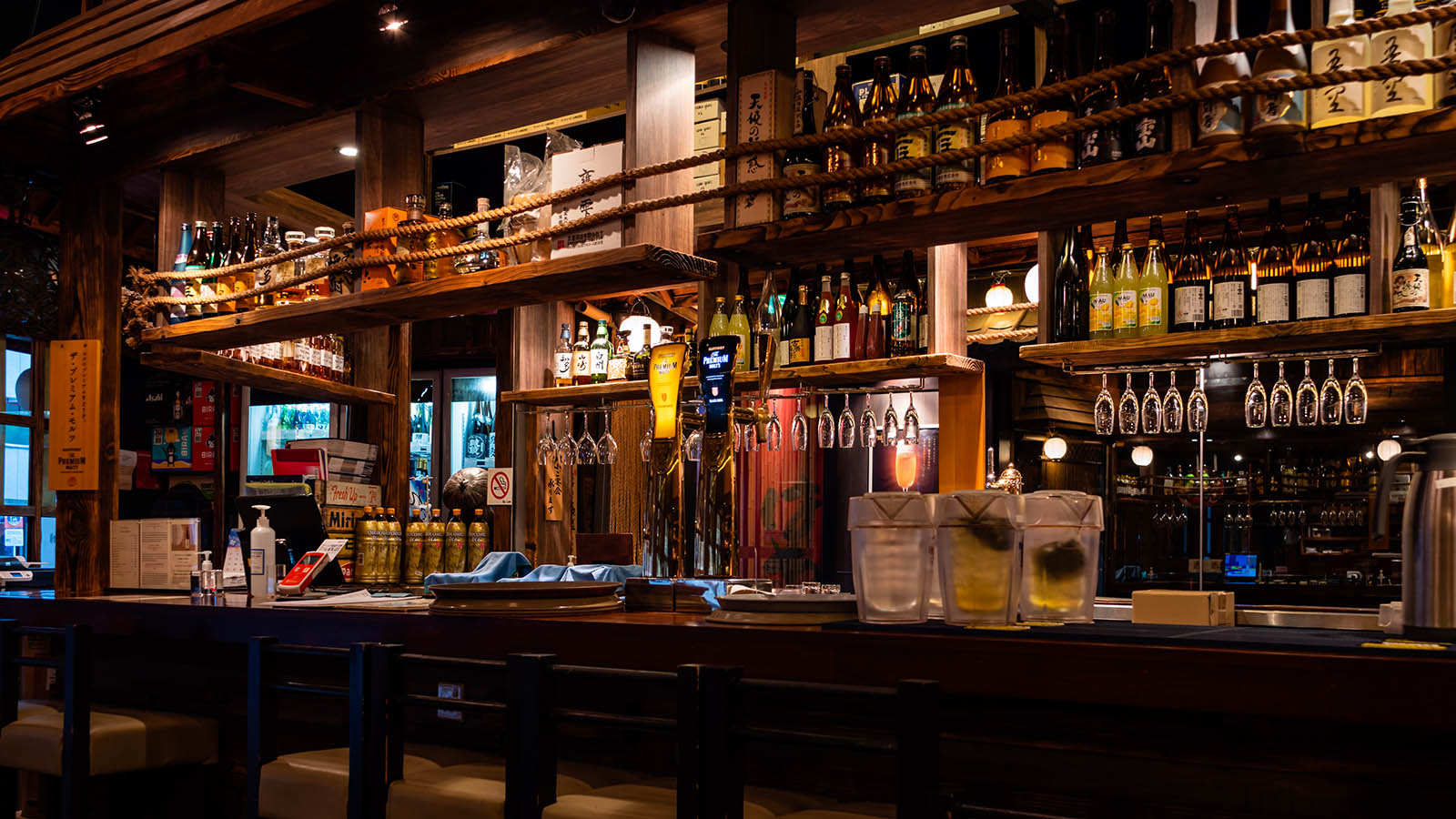
A pop-up bar is not a pop-up shop with cocktails added. It is a serviced environment that has to feed thirty people an hour without dropping a glass, hold up to spills and steam and ice slush on the floor, and somehow still photograph like a campaign. For beverage brands — spirits, RTDs, energy drinks, coffee, NA — it has become one of the highest-leverage formats in experiential marketing, sitting at the intersection of scenic fabrication and live service. People will tweet a clever can pyramid; they will share a photo of themselves holding a branded drink under good light.
This guide walks through how we approach pop-up bar fabrication from the build side: how the brief differs from a retail pop-up, what materials hold up in a service environment, how the bar itself has to be engineered, what NYC permitting actually requires, and what a realistic timeline and budget look like for a four-week activation. It is written for the marketers, brand managers, and event producers who are pricing one of these out for the first time and want to understand what they are actually paying for.
Why Beverage Brands Build Bars Instead of Booths
A trade show booth gets a person to stop walking. A pop-up bar gets them to stand still for fifteen minutes, drink something, take a photo, and tell someone about it. The dwell time difference is the entire reason this format exists. When a brand commits to event fabrication services for a pop-up bar instead of a more conventional activation, they are buying minutes — measurable, repeatable minutes per guest, multiplied by guest count, attached to a branded environment.
That trade is what justifies the higher build cost. A bar requires plumbing or at minimum a graywater plan, refrigeration, ventilation in some cases, ice supply, glassware logistics, and POS infrastructure. None of those line items appear on a step-and-repeat. But they all extend the average guest interaction from forty-five seconds to twelve minutes, and during those twelve minutes the brand owns the room.
The Five Formats of a Pop-Up Bar
Before quoting anything, you have to know which of these formats you are building. Each one has a different fabrication brief, a different budget range, and a different success metric.
1. The Lounge Build
A self-contained branded environment inside a larger venue — a hotel lobby, a fashion week space, a film festival hub. Long-form dwell, soft seating, a hero bar, ambient music, a curated drink menu of two or three SKUs. The aesthetic does most of the work; the bar is the engine that keeps people in the room. Magic Hour at Moxy NYC is the canonical version of this format — see our Magic Hour Mountain Lodge build for how we treated the bar as the architectural anchor of the whole rooftop.
2. The Storefront Takeover
A vacant retail space converted into a bar for a week or a month. NYC has hundreds of these every season — SoHo, NoMad, the Lower East Side. The build is closer to retail buildout than to event fabrication, with permanent-feeling millwork, real lighting infrastructure, and an in-place bar that has to look like it has always been there. The trade is that you are building twice — once to install, once to strike.
3. The Mobile Bar
A roving bar that travels — a customized truck, a glass-box trailer, a wheeled cart at festival scale. The fabrication brief gets harder because everything has to fit through a door or hitch behind an F-250, but the activation gets cheaper per impression because the asset earns its keep across multiple events. We see this most often from RTD brands and energy drinks running summer tours.
4. The Trade Show Bar
A bar integrated into a trade show booth — typically beverage brands at hospitality or retail trade shows, or non-beverage brands using a bar as a traffic driver. This format lives at the intersection of trade show fabrication and beverage service. Engineering tolerances are tighter because you are working inside a 20×20 or 20×30 footprint and the convention center has opinions about water and waste.
5. The Brand House
The most ambitious format. An entire venue branded as the property of one beverage, hosting press, influencers, trade, and consumers over several days. Multiple bars, multiple rooms, a stage, food service, sometimes lodging. This is where immersive production bleeds into pop-up bar fabrication; the bar is one element of many but still has to be the gravitational center of the experience.
The Fabrication Brief: What We Need Before Quoting
A serious pop-up bar quote requires more information than a retail pop-up quote. Vendors who do this work badly will skip these questions and absorb the cost variance later in change orders. We ask up front:
- Guests per hour at peak. A bar that pours twenty cocktails an hour is a single station with a single bartender. A bar that pours two hundred is three stations, two backbars, prep space, and a runner lane.
- Drink complexity. Two-touch cocktails (RTD + garnish) are fast. Built cocktails with three to five ingredients, stirred or shaken, are slow. Espresso drinks are slowest of all.
- Power available. What amperage, what circuits, what receptacles. Cold draft systems and espresso machines together can eat 40A you do not have.
- Water and waste plan. Tied-in plumbing, manifold tanks, or runner-and-bucket. Each one has different code implications and different build dimensions.
- Service style. Self-serve, bartender-served, table service, hand-off through a window, walk-up only. These are wildly different builds.
- Brand assets. Lockup, color codes, font files, product hero shots. Without these, the rendering phase stalls.
- Load-in window. Hours, lift access, freight elevator dimensions, union jurisdiction. NYC venues vary enormously.
- Strike requirements. Some venues require restoration to a documented baseline; some require the build to be carted off in trucks within four hours.
The first conversation with a vendor should cover every one of these. A vendor who quotes without asking them is quoting on assumptions, and those assumptions will surface later as overages.
Materials and Finishes for a Service Environment
A pop-up bar lives or dies on its surfaces. A retail pop-up that scuffs by Sunday looks lived-in; a bar that scuffs by Sunday looks broken. The material choices have to anticipate spills, abrasion, heat, ice, and the constant impact of glassware. We tend to specify out of a relatively short list:
| Surface | Material | Why |
|---|---|---|
| Bar top | Solid surface (Corian / quartz) or sealed plywood with two-part epoxy | Waterproof, easily wiped, repairable |
| Bar front | MDF with high-gloss lacquer, CNC-cut overlays, or printed PVC | Brandable, durable for one to four weeks, replaceable |
| Backbar | Stained ply or powder-coated steel framing | Heavy duty for stacked product, photogenic |
| Floor mats | Black ribbed rubber behind bar | Anti-slip, drainage, ergonomic |
| Front-of-house floor | Vinyl tile, raised platform, or sealed wood | Defines the bar zone and signals brand |
The single biggest mistake we see from less experienced builders is treating the bar top as a graphics surface. A bar top is a working surface. It gets shaken, splashed, and wiped six hundred times in a night. Brand graphics belong on the bar front, the backbar, the menu, the napkins, the glassware, the overhead element — not on the top.
Engineering for Service: Behind and In Front of the Bar
The dimensional standards behind a pop-up bar are not negotiable. They are not “design choices.” They are what allows a bartender to work a six-hour shift without throwing out their back or scalding their hand. Approximate ranges we work from:
- Bar height: 42 inches finished, with a 12-inch service well 36 inches off the floor on the bartender side.
- Bartender alley: Minimum 30 inches clear, ideally 36 inches with two bartenders. Anything less and they collide every five minutes.
- Speed rail: 36 inches off the floor, mounted to the bar front under the rail.
- Ice well: Insulated, drained, large enough to hold a full hotel pan of cubes plus shaker ice.
- Glass storage: Below the bar top, with at least three SKUs of glassware accessible without bending.
- Refrigeration: Undercounter or backbar, sized to half-day capacity at minimum, full-day if you cannot restock mid-service.
- POS terminal: Mounted, angled toward the bartender, with cable routing concealed.
The front of the bar has different rules. Lean depth — the protrusion at the top of the bar where guests rest their forearms — should be at least four inches. The bar front should accommodate a foot rail twelve inches off the floor, even if your venue requires removing it for ADA paths. Counter overhang affects whether guests can step in close or have to lean. Twelve to fourteen inches is the sweet spot.
For brand activations that integrate beverage service into a broader experience — see how we approached the build for our Café de Colombia activation at the San Diego Convention Center — the bar engineering has to play nicely with the rest of the floor plan. Queue management, photo moment placement, and brand wall sightlines all converge on the bar zone.
Permitting and Code: The NYC Reality
If you are pouring alcohol in New York, you are dealing with the State Liquor Authority, not just the venue. A one-day permit (TOP) takes thirty days to issue under normal circumstances. A Special Event Permit takes longer. Vendors who say “we’ll handle the permits” without naming the agency are signaling that they do not actually know what is involved.
For non-alcoholic pop-up bars (coffee, energy drinks, mocktails), you avoid SLA but you may still need a Health Department temporary food service permit if you are dispensing anything other than sealed product. Sealed cans are easy; pour-over coffee, espresso, custom mocktails, and ice service are not. We walk every client through which category they are in before we cost the build.
Venue-side, the requirements stack: certificate of insurance with the right additional insureds, fire marshal sign-off on any open flame or hot surfaces, a strike plan filed in advance, sometimes a structural sign-off if your bar is built taller than seven feet or anchored to anything. PUYB carries the certifications and union relationships to navigate this without bouncing the client into a permitting consultant.
Timeline and Budget: A Four-Week Pop-Up Bar
Pop-up bars compress fabrication timelines harder than almost any other format because the activation date is usually fixed to a press date, a launch, or a venue’s calendar. A typical realistic timeline for a custom build looks like this:
| Week | Activity |
|---|---|
| Week 1 | Brief lock, site survey, concept renders, material spec, initial quote |
| Week 2 | CAD drawings, engineering review, finalized BOM, deposit, long-lead orders placed |
| Week 3 | Shop fabrication, CNC, paint, assembly dry-fit, mock service test in the shop |
| Week 4 | Load-in, on-site assembly, programming, dry run, doors open |
Compressing this further is possible but costs money. The shortest serious turnaround we will quote on a custom pop-up bar is fourteen days, and that requires every approval to be near-instantaneous and the design language to be locked at hello. Anything under fourteen days, we direct toward a modular approach that uses pre-built bar units skinned with brand graphics — faster, cheaper, less custom, and appropriate for a lot of activations.
Budget ranges for NYC pop-up bars, roughly:
- Modular bar with brand skin, single station, one-night activation: $12,000–$25,000 including labor.
- Custom small-format bar, two-week run, single station, lounge build: $40,000–$85,000.
- Custom multi-station bar, four-week run, full storefront takeover: $125,000–$300,000.
- Brand house with multiple bars, several days, press-driven: $400,000–$1.2M.
These are fabrication and on-site labor only. Beverage cost, staffing, talent, paid media, and venue rental are separate. For a full breakdown of activation budgeting, see our experiential design approach, which folds these line items into a single integrated brief.
What We’ve Learned From Beverage Activations We’ve Built
The patterns that recur across the pop-up bars we have fabricated are practical, not theoretical. A few that we apply to every brief:
Photograph the back of the bar, not just the front
When we built the bar element for the Tao Group activation at Moxy Hotel, the back of the bar was the most photographed surface in the room — guests reach in to grab a drink and the lockup behind the bartender is what shows up in every photo. The front of the bar matters for the guest standing at it; the back matters for everyone behind them with a phone.
Design the menu to match the bar’s pour capacity
The fastest way to ruin a pop-up bar is to put a six-ingredient signature cocktail on the menu with one bartender and a thousand guests booked. We routinely push brand teams toward two-touch builds — RTD plus garnish, draft plus glass — when the math requires it. The drink that looks good in a photo and pours in twenty seconds is almost always the winning choice.
Sample stacks should match the dispense rhythm
For our Celsius pop-up, the can pyramid behind the dispense window was sized so a runner could refill it in under thirty seconds. A beautiful display that takes ten minutes to rebuild creates a service hole every time the photo is taken. The fabrication has to anticipate the operational tempo, not just the photograph.
Branded glassware is worth the line item
Disposable cups have improved enormously but a custom-printed rocks glass that the guest can keep generates dwell, photo content, and post-event recall in a way that no cup ever will. For the right format — see how we approached the Delilah x HWood Group hospitality activation — glassware is a fabrication-adjacent decision and should be quoted alongside the bar.
Plan for a quiet hour
Every pop-up bar has a quiet hour: the second one, usually between the press opening and the consumer flood. We build that hour into the schedule so the team can reset glassware, restock ice, replace burned-out bulbs, and clean up the inevitable spilled drink. If you do not plan for it, it will arrive uninvited and turn into chaos. The bar build itself should accommodate it — accessible storage, fast-swap modules, a clear backbar lane.
How a Trade Show Bar Differs From a Lounge Bar
The trade show variant deserves a dedicated note. A trade show bar is not a small lounge bar; it is a different build entirely. The footprint is smaller, the regulatory environment is harsher (most convention centers prohibit external water hookups, require licensed bartenders from a specific roster, and limit your service hours), and the brand has to compete with hundreds of other exhibits.
The build response is to lean into vertical brand presence — high backbar, hanging signage, integrated lighting — and to keep the actual service footprint very tight. The bar zone in a 20×20 booth might be only 8×6 feet. The rest of the booth is queue, conversation, and brand storytelling. The Keurig x Nasdaq activation is a good reference point for how a beverage moment can be integrated into a high-visibility, time-boxed environment without trying to be a full bar.
When a Pop-Up Bar Is the Wrong Format
A short list of cases where we will steer clients toward a different format:
- Pure trial brands. If the entire goal is to put product in hand, a sampling activation costs a third as much and converts the same.
- Sub-300 guest events. A custom bar build is overcapacity for a small private event; a high-quality modular bar will deliver the same brand impression for far less.
- One-night photo activations. If you do not need to serve drinks for hours, you do not need a bar — you need a branded pop-up environment with a beverage tie-in.
- Outdoor activations in unstable weather. A bar in the rain is a logistical nightmare; weather contingency budgets often exceed the cost of moving to an alternative format.
Bring Us the Brief
The brands that get the most out of pop-up bar activations are the ones that come in with a brief — even a rough one — that names the format, the venue type, the guest count, and the date. Everything else, we can spec. The build is the engine, the bar is the gravitational center, and the brand gets the dwell, the photos, and the press the activation was designed to generate.
If you are scoping a beverage activation for NYC or anywhere on the East Coast and want a partner who treats the bar as a working environment first and a brand surface second, talk to our team about brand activation fabrication. Bring the brief; we will bring the build.