Nov 11, 2026 · Brand Activations & Experiential
Sponsorship Activation: Five Footprints and a Season Kit
What a sponsor builds inside the footprint its contract grants: what the rights holder controls, five footprint types and the build behind each, a kit reused across a season, and a dated lock calendar for a 2027 Los Angeles expo.
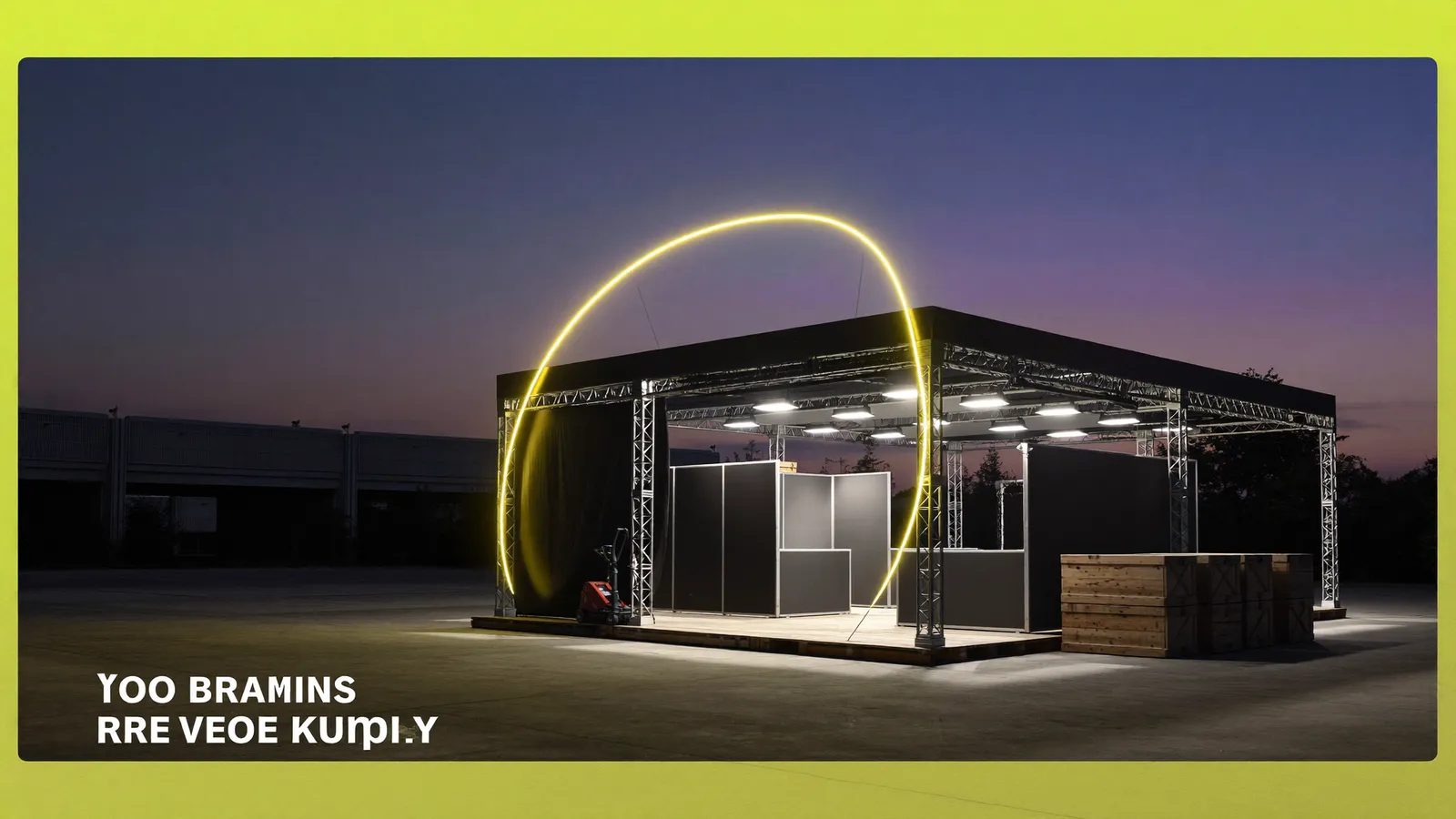
The contract is signed. It grants a footprint, a logo position and a list of rules buried in the property's exhibitor or vendor manual. Most of what gets written about sponsorship activation is strategy: storytelling, engagement, social reach. The question actually sitting on the sponsorship manager's desk is narrower and harder. What do we build inside that footprint, what will the rights holder let us do, and when does the design have to be final?
This guide gives the practical answers: the ten things the rights holder controls, the five footprint types we scope most often and the construction behind each, how one build becomes a kit that serves a season, how a sponsor build goes into a live venue, and a dated lock calendar for a real 2027 Los Angeles expo.
What is a sponsorship activation, and what does the sponsor build?
A sponsorship activation is the physical presence a sponsor builds inside the footprint its contract grants: a booth, a lounge, a hero object, a sampling bar or a signage package. The rights holder sets the rules on size, height, branding, power, insurance and load-in, so the build starts from the contract's activation terms, not from the mood board. Built as a reusable kit, one build can serve a season of events.
The rights fee buys permission: the logo placement, the category, the square footage. Sponsor activation is what the brand does with that permission. In sports sponsorship activation, it is the space fans walk into at the venue or in the fan zone, not the logo on the scoreboard. Stadiums and arenas add their own rules, which our guide to stadium and arena activation rules covers in detail.
Whatever the property, the work is the same in kind. Someone has to turn a contract clause and a site plan into drawings, materials and an install plan. That is experiential design in the practical sense: designing a space that people will walk through, photograph and remember, inside limits somebody else wrote.
What does the rights holder control?
More than most sponsors expect. Before anyone sketches, get these ten items in writing. Every one of them changes the build, and most of them live in documents the sponsor already has but has not read with a builder's eye.
| Ask the rights holder | Why it changes the build | Where to find it |
|---|---|---|
| Footprint size, shape and exact spot on the site plan | Sets the layout and which sides are open to traffic | Activation schedule in the contract; site plan |
| Height limit and anything overhead | Sets the structure, signage height and whether drawings need an engineer | Exhibitor or vendor manual |
| Branding approval and co-branding lockups | Graphics cannot go to print until the property signs off | The property's brand guidelines and approval contact |
| Category exclusivity and nearby partners | Decides which products and logos may show, and where | Contract |
| Ground and fixings: stakes, drilling, tape, ballast | Decides the base design | Manual; venue operations |
| Power: what is supplied, who wires it, generator rules | Sets lighting, screens and cooling | Manual; the official electrician |
| Insurance limits and additional insureds | The certificate is often checked before load-in | Contract; manual |
| Flame certificates for fabric, drape and graphics | Paperwork the venue or fire marshal asks for on site | Manual; local fire code |
| Load-in, show-day access and strike windows | Sets crew size and how much is pre-assembled in the shop | Manual; venue operations |
| Food, sampling and sound | Separate permits or approvals | Manual; the city, for public space |
Ten questions to settle with the rights holder before design starts.
Insurance is an item that can stall a load-in at the gate. Our guide to certificates of insurance for NYC builds explains who has to be named and when the certificate needs to arrive.
A worked example: an outdoor expo in a stadium parking lot
Take the ASICS Los Angeles Marathon Lifestyle Expo, used here as an example, not a project of ours. According to The McCourt Foundation's expo page (checked November 11, 2026), the 2027 expo runs at Dodger Stadium, Lot G, on Friday, March 5 from 10 a.m. to 7 p.m. and Saturday, March 6 from 10 a.m. to 5 p.m. It is outdoors, at the marathon start line, and booth reservations go only through the organizer's official EventHub page.
Those few lines already change the build. An outdoor expo on asphalt is not an indoor hall with a carpeted aisle and house power. Wind, sun, ballast, weather-rated graphics and the power plan all move to the top of the list, and every one of those answers comes from the organizer's exhibitor rules, not from the sponsor's creative brief.
Public parks add the city's rules on top of the property's. In New York City, the NYC Parks special events FAQ (checked November 11, 2026) says a tent needs permission from the Special Events office, cannot be staked into the ground, and is generally not allowed in Manhattan. Parks supplies no electricity or water at events, and it does not accept applications inside 21 days of the event. A street or sidewalk is a different permit and a different office; our SAPO permit guide for NYC street activations sets out who issues what and when to apply. Send us the activation terms and the exhibitor manual, and we will mark up what each rule means for the build before anyone draws.
Which footprint fits your sponsorship?
Five footprints cover most sponsor builds we scope. The right one depends on what the rights include and what the brand needs the space to do: hand out product, host partners, own the photo or put the name in front of every attendee.
| Footprint | Best for | What it is built from | What the rights holder usually reviews |
|---|---|---|---|
| Sponsor booth (framed or fabric-covered space at an expo, fan fest or conference) | Demos, sign-ups, sampling | Aluminum frame, fabric graphics, counter, storage, lighting | Footprint, height, ballast, power |
| Sponsor lounge or hospitality space | Partner and VIP hosting, dwell time | Deck or floor, furniture, bar, back-of-house, lighting | Occupancy, fire, food and drink, flooring |
| Hero object or photo moment | Reach on phones; the shot people post | One fabricated object with its own light and a stable, freestanding base | Location, height, sight lines, co-branding |
| Sampling bar or cart | Product trial at volume | Counter, cold storage, queue line, graphics | Food or health rules, power, queue space |
| Signage and wayfinding across zones | Naming rights, presenting partners, presence across a site | Freestanding signs, totems, floor graphics | Locations, copy approval, fixings, outdoor-rated media |
Sponsorship activation examples by footprint, and the build behind each.
Event booth design for a sponsor is different from a trade show booth in one important way: the sponsor is a guest in someone else's event. A branded booth at a fan fest competes with the property's own branding, the food lines and the stage, so it has to read from farther away and turn over people faster. Lounges are the opposite. They are about dwell time, and the build is mostly floor, furniture and back-of-house. We cover that anatomy in how a hospitality lounge is built.
The signage row is the one sponsors tend to underestimate, because it looks simple. It is not simple when it has to cover a whole site. For the UNGA week signage package at UN Headquarters, an institutional job rather than a sponsorship, the case study describes three zones: plaza, lobby and corridor. Outdoors, freestanding dimensional letters were weighted to stand on their own. Inside, 17 self-standing pillar signs could be spaced, re-sequenced or moved by the client's team during the week. Floor graphics went down on outdoor-rated, slip-resistant media. The whole package was requested and installed within the same week. That is the pattern for any multi-zone sponsor presence: freestanding, movable, one system.
How do you make a sponsor build read as yours, not the property's?
The property owns the backdrop. The sponsor has to own the moment inside it. Four moves do most of the work.
- Design the photo first. Decide where people will stand, what is behind them and where the logo lands in a vertical phone frame. Then build backward from that shot.
- Use the venue's materials and light. Match the setting rather than fight it. A build that looks dropped in reads as an ad; a build that looks native reads as part of the event.
- Bring your own light. Event lighting belongs to the property and changes through the day. A build with its own light reads at dusk and indoors.
- Get the co-branding lockup approved early. The property's mark next to yours is usually the last approval in, so it should be the first one asked for.
White Claw's summer program at The Surf Lodge in Montauk shows all four. It was a brand's program at a partner venue rather than a sponsorship deal, but the problem was the same: make a venue read as the brand without looking out of place. Per the case study, four builds worked as one environment. Nine mirror-finish letters sat on a low plinth on the sand at the edge of Fort Pond, reflecting the water, the sky and the string lights, so the wordmark changed with the light from afternoon to sunset. An oversized freestanding photo frame turned the shoreline into a branded shot. The reclaimed-wood entrance sign was built to match the venue's own material language.
The rights holder sells the footprint. What people remember is what you build inside it.
A photo frame looks like the easiest build on the list and is often the one that fails. It has to be proportioned for a phone camera, stand in wind with no fixings, and hold its finish for the length of the program. That is the core of photo moment fabrication: the object is built around the picture, not the other way around.
How do you build once and reuse the kit across a season?
Most sponsorships run more than one date: a season of home games, a tour of stops, a conference series. Building a one-off for each date wastes money and shop time. The better plan is a core kit (frame, deck, counters, lighting, crates) with a skin that changes per property.
| Element | Stays across the season | Changes per property |
|---|---|---|
| Frame and connections | Yes | Which modules go up |
| Deck or floor | Yes | Finish layer if the site calls for it |
| Counters and storage | Yes | Position in the layout |
| Lighting and power distribution | Fixtures and wiring | Power source and cable runs |
| Graphics | Brand panels | Co-branding lockups, event names, dates |
| Base and ballast | Ballast hardware | Ballast plan for that site's ground and wind |
| Crates | The crates | Packing list by configuration |
What a season kit keeps and what it swaps at each event.
The method is the same one behind reconfigurable modular systems for trade shows. Freestanding parts help too. At The Surf Lodge, each branded surfboard sat on its own freestanding mount so it could be repositioned as the venue's layout changed across the season.
The clearest proof of the kit approach comes from a trade show, not a sponsorship. Thermacell's reconfigurable island at IBS was a 20x30 engineered with a connection system so it could also run as a 20x20 island or a 10x20 inline. The case study says Thermacell deployed the same structure as a 20x20 at its next show "without any additional fabrication costs", and lists it as reused across 3 shows. For a sponsor with five stops of different sizes, that is the whole idea: design for the smallest footprint, add modules for the largest, and pack the crates by configuration.
How does a sponsor build go into a live venue?
Sponsor builds rarely go into an empty hall with a week of move-in. They go into working buildings: a stadium lot on game week, an observation deck open every day, a club that reopens tomorrow night. The build has to arrive in parts sized to the doors and elevators, stand without fixings, go up inside the window the venue gives, and come out clean.
The overnight installation at One World Observatory was commissioned by the observatory's own marketing team, not by a sponsor, but the constraints are the ones sponsors face. Per the case study, the site is 100 floors up with a freight elevator and a finished terrazzo floor that could not be drilled. The giant illuminated sphere was built in sections to fit the elevator, assembled on the floor and lit from inside. It sits on a weighted, freestanding turf island, so nothing touches the building, and the install happened overnight.
Raising Cane's night at Zero Bond shows the same rules in a hospitality setting. The brand hosted a private party at the NoHo members' club during Fanatics Fest week. Per the case study, the draping, an arched red sequin shimmer wall and two illuminated logo signs were all pre-built in our shop, installed with non-permanent rigging and struck the same night. Nothing was fixed to the building.
Four habits make those installs work:
- Measure the freight path (doors, elevator cab, corners) before you build the biggest piece.
- Pre-wire and label everything in the shop, so the crew on site connects rather than builds.
- Write the install sequence down, step by step, with the crew size for each step.
- Plan the strike as carefully as the install: floor protection down first, and a written order for what comes out of the room.
When does the design have to lock?
Our builds typically take 15 to 40 business days in the shop, depending on scope. Count back from the date the build must ship, not from the event date. The shop works through the holidays, so we count holidays as shop days and a late-December lock is a real lock for us. The slow part is usually approvals: the brand's own sign-off and the rights holder's review of drawings and co-branding.
Here is the Los Angeles expo from earlier, worked through. It is a worked example, not a project of ours. Business days exclude weekends only, the lock date counts as day 1, and the ship date is not counted. The example assumes four to five days of freight from New York to Los Angeles, the transit time we plan on, so the build ships on Friday, February 26, 2027. If the organizer sets move-in earlier than Thursday, March 4, move every date back.
| Milestone | 15-business-day build | 30-business-day build | 40-business-day build |
|---|---|---|---|
| Design locked and drawings approved | Fri, Feb 5, 2027 | Fri, Jan 15, 2027 | Fri, Jan 1, 2027 |
| Ship from our NYC shop | Fri, Feb 26, 2027 | Fri, Feb 26, 2027 | Fri, Feb 26, 2027 |
| Expo opens (Dodger Stadium, Lot G) | Fri, Mar 5, 2027 | Fri, Mar 5, 2027 | Fri, Mar 5, 2027 |
Worked example: lock dates for a March 5, 2027 expo opening, computed November 11, 2026. The ship date is fixed, so a shorter build locks later.
Read the right-hand column. A 40-day build for this date locks on New Year's Day. Our shop is open that day, but the people who approve drawings usually are not, so in practice the concept and the rights holder's approvals have to land by Thursday, December 31. Locked means fabrication drawings and site plans approved by everyone who can say no, not a rendering that people like.
In New York, a build on a street, sidewalk, plaza or park adds a city permit with its own clock. The brand or its agency files the permit; we supply the site plan, drawings and material certificates it needs. The fire side has its own paperwork, which our guide to NYC permits and fire code for event builds walks through.
Plan your sponsorship build
The fastest way to a useful quote is to send the documents the rights holder already gave you. Before we draw anything, we want to see:
- the activation terms or schedule from the sponsorship contract
- the site plan with your footprint marked
- the exhibitor or vendor manual
- every event date in the season, with its city
- the property's brand guidelines and co-branding rules
- what the build has to do: sampling, hosting, content, sign-ups or all four
If you are not sure what to include, our note on what to send a fabrication shop lists the rest. From there, we tell you which footprint fits, what the rights holder will want to approve, and where a season kit saves money over one-off builds. We build in our New York shop and assemble there before anything ships, so problems are found on our floor rather than at load-in.
Send the sponsorship's activation terms, the site plan and the dates through our brand activation fabrication page, and you will have a line-item quote within 2 business days. Projects in our shop start at $25,000.
Frequently Asked Questions
Frequently Asked Questions
A sponsorship activation is the physical presence a sponsor builds inside the footprint its contract grants: a booth, a lounge, a hero object, a sampling bar or a signage package. The rights fee buys the permission and the logo position. The activation is what the brand builds with it, inside rules on size, height, branding, power, insurance and load-in set by the rights holder.
Get the footprint and its spot on the site plan, the height limit, branding and co-branding approval rules, category exclusivity, ground and fixing rules, power terms, insurance requirements, flame certificate rules, load-in and strike windows, and any food, sampling or sound approvals. Most of this sits in the contract and the exhibitor or vendor manual. Send both to the fabrication shop before anyone draws.
Yes, if it is designed as a kit. The frame, connections, deck, counters, lighting and crates stay the same across the season. Graphics, co-branding lockups, the ballast plan and the packing list change by property. Design for the smallest footprint, add modules for the largest, and pack crates by configuration, as Thermacell's reconfigurable island at IBS did across 3 shows.
Count back from the date the build must ship, not from the event date. Our builds typically take 15 to 40 business days in the shop, so a build that ships Friday, February 26, 2027 locks between February 5 and January 1. Locked means drawings and site plans approved by everyone who can say no, including the rights holder and the brand.
Have a build on the calendar?
Send the brief, renders or a napkin sketch. You get a line-item quote within 2 business days.