Sep 27, 2026
Trade Show Booth Rental vs Purchase: A 2026 Cost Guide
Rent or buy your trade show booth? How rental and purchase pricing work, hidden storage and labor costs, and how to find your break-even show count.
Every exhibit program eventually hits the same fork in the road. The show calendar is set, the budget is approved, and someone in the room asks the question that decides the next three years of spend: do we rent a booth, or do we build one we own? The answer is rarely obvious from a vendor quote, because rental and purchase pricing are structured to look cheap in different places. Rentals look cheap on day one. Owned exhibits look cheap on show number six.
This guide breaks down how the two models are actually priced, where the hidden line items live, how to run a break-even calculation for your own show count, and when a hybrid program beats both. It is written for marketers, brand managers, and event producers who are comparing proposals from trade show fabrication vendors and want to know which number to trust.
What “Rental” and “Purchase” Actually Mean on a Quote
Before comparing prices, confirm you are comparing the same thing. The word “rental” covers at least three different products, and “purchase” covers two.
The three kinds of booth rental
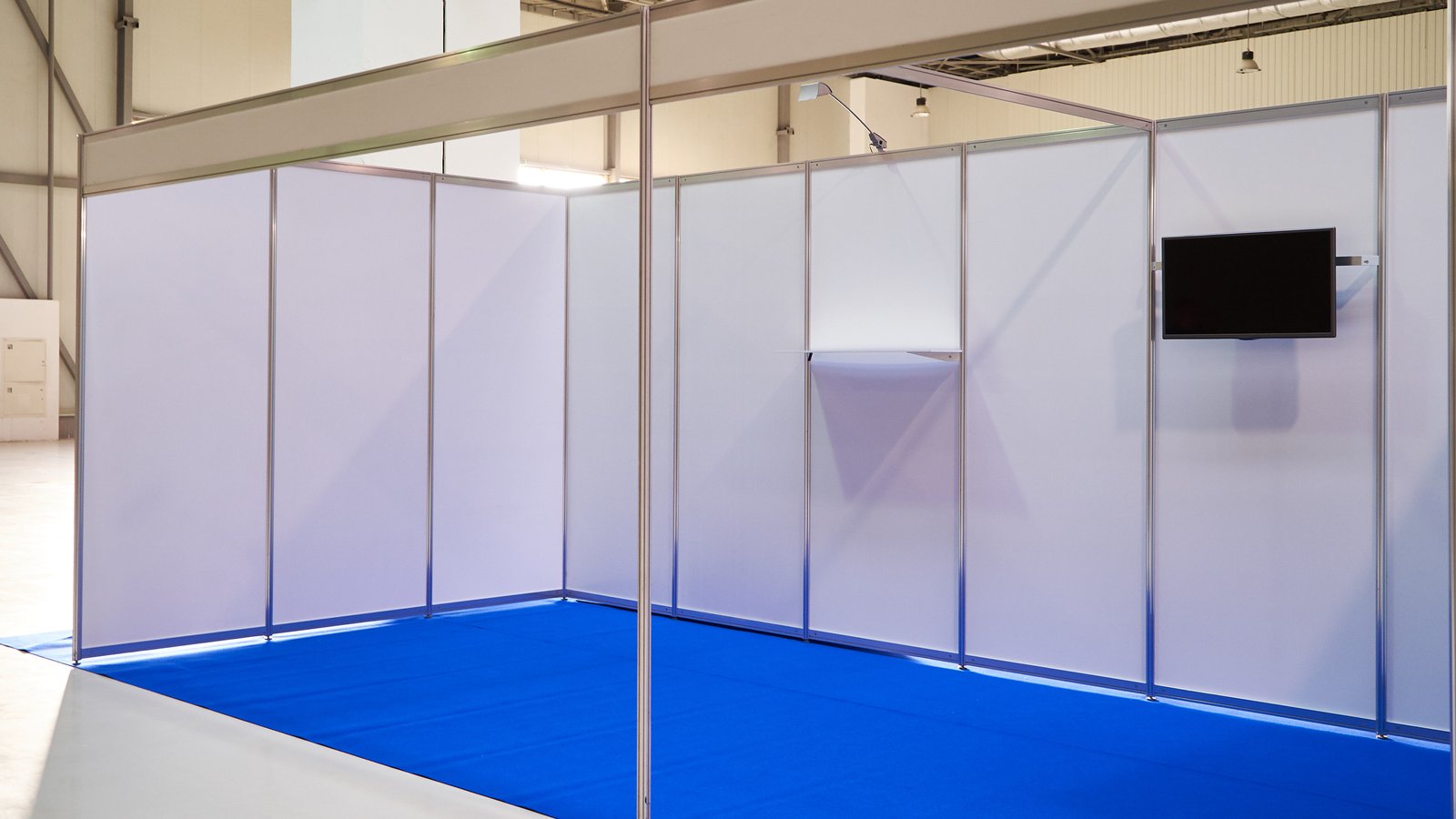
- Shell-scheme or show-supplied rental. Aluminum post-and-panel walls, a fascia, carpet, and a power drop, ordered from the show’s general contractor. Cheapest, fastest, and identical to the booth next to yours.
- Vendor inventory rental. A fabricator pulls modular frames, tension-fabric walls, counters, and lighting from its own rental stock, then prints custom graphics for your show. You pay for graphics once and rent the structure per show.
- Custom-look rental. A hybrid where the vendor builds a mix of inventory hardware and a small number of custom elements (a hero wall, a branded counter, a product plinth) that it retains after the show or sells to you at a reduced rate.
The two kinds of purchase
- Modular purchase. You buy a reconfigurable system — aluminum extrusion, SEG frames, kit counters — that can be reconfigured from a 10×10 to a 20×20 with added components.
- Custom purchase. A one-off exhibit designed around your brand and product: CNC-cut millwork, fabricated steel, integrated AV, custom lighting, and finishes specified to the inch. This is the model most people picture when they say “we built our own booth.”
If one vendor quotes a custom-look rental and another quotes a custom purchase, the numbers are not comparable until you normalize them over the same number of shows.
How Rental Pricing Is Structured
A rental quote typically has four layers. The first is the structure rental fee, usually quoted per show and scaled by footprint. The second is graphics, which you own and pay for once, though they may need reprinting when messaging changes. The third is labor and logistics: shipping, I&D (install and dismantle), and warehousing between shows if the vendor holds your graphics. The fourth is the show-side cost — drayage, electrical, rigging, and floor services — which is identical whether you rent or own.
Industry rule of thumb puts a per-show rental structure fee at roughly 25 to 35 percent of what the equivalent exhibit would cost to buy outright. That ratio is the single most important number in this whole decision, because it tells you how many shows it takes before renting has cost you the price of the booth.
Rental is priced to be cheap per show and expensive per year. Purchase is priced to be expensive per build and cheap per show. The break-even is where those two curves cross.
What rental includes — and what it usually does not
| Line item | Typical rental | Typical purchase |
|---|---|---|
| Structure / hardware | Per-show fee | One-time build cost |
| Custom graphics | Paid once, owned by you | Paid once, owned by you |
| Design and engineering | Minimal; limited to inventory configurations | Full design fee; shop drawings and engineering |
| Storage between shows | Included or not needed | Monthly warehouse fee |
| Refurbishment | Vendor’s problem | Your problem; budget annually |
| Crating | Vendor’s crates | You buy crates or pay per crate |
| Damage on the floor | Damage waiver or deposit | Your repair bill |
| Show-side services (drayage, electrical) | Same | Same |
That last row matters. Drayage and electrical do not change with ownership, so they should be removed from any rent-vs-buy comparison. Many internal budget models inflate the cost of owning by lumping show services into the “exhibit” line.
How Purchase Pricing Is Structured
Buying a booth front-loads cost. You pay design, engineering, fabrication, finishing, AV integration, and crating once. After that, the recurring cost per show drops to shipping, I&D labor, graphics refreshes, and whatever repairs the last show created.
The upfront number depends heavily on materials. A 20×20 island built in tension fabric on aluminum extrusion will cost a fraction of the same footprint in hardwood millwork and fabricated steel. The material specification is where an experiential design team earns its fee: a booth designed with reuse in mind uses durable substrates at the handling points (corners, counter edges, flooring transitions) and lighter, cheaper materials where nobody touches.
The costs owners forget to budget
- Storage. Warehouse fees are charged by the crate or the pallet position, every month, whether or not you exhibit. A booth that ships in six crates accrues storage twelve months a year.
- Refurbishment. Laminate chips, fabric stains, and scuffed flooring add up. Plan on a refurbishment pass every two to four shows.
- Asset management. Someone has to inventory components, track what came back damaged, and schedule repairs. If your vendor does not include this, it lands on your team.
- Obsolescence. A rebrand, a new product line, or a shift from 20×20 islands to 10×20 inlines can strand an owned exhibit years before it wears out.
None of these are reasons not to buy. They are reasons to model the full life-cycle cost before you sign.
Running the Break-Even Math
The simplest honest model compares cumulative cost over the life of the program. Use your own numbers, but the structure looks like this.
- Take the all-in purchase cost (design, fabrication, graphics, crates).
- Add annual storage and a refurbishment reserve for each year you expect to use the exhibit.
- Add per-show logistics and I&D for the owned booth.
- Separately, take the per-show rental fee, plus graphics, plus per-show logistics and I&D for the rental.
- Plot both cumulative totals by show number. The show where the owned line drops below the rental line is your break-even.
With a per-show rental fee at 30 percent of purchase price, the break-even usually lands somewhere between the fourth and sixth show, once storage and refurbishment are included. If you exhibit two or three times a year and expect to keep the same footprint and messaging for three years, owning tends to win. If you exhibit once or twice a year, or your footprint changes every season, renting tends to win.
A worked example
| Scenario (20×20 island, 3-year horizon) | Rent | Buy |
|---|---|---|
| Upfront build or first-show fee | 30% of build cost | 100% of build cost |
| Shows per year | 3 | 3 |
| Per-show structure fee | 30% of build cost | 0 |
| Storage (per year) | 0 | 4–6% of build cost |
| Refurbishment reserve (per year) | 0 | 5–8% of build cost |
| Total structure cost after 9 shows | ~270% of build cost | ~130–140% of build cost |
The example is deliberately simplified — it ignores graphics, which are roughly equal in both models, and show services, which are identical. What it shows is how quickly a per-show fee compounds. Nine shows at 30 percent is almost three booths’ worth of spend, and at the end of it you own nothing.
When Renting Is the Right Call
Renting is not the budget option; it is the flexible option. It wins in specific, predictable situations.
- First-year exhibitors. If you do not yet know which shows convert, renting lets you test footprints and layouts without committing capital.
- Irregular footprints. A 10×10 at one show, a 20×30 at another, and a tabletop at a regional event is a rental program, not a purchase.
- Fly-in shows far from your storage. Shipping an owned exhibit cross-country can cost more than renting locally.
- Pending rebrand. If brand guidelines are changing in the next twelve months, do not build permanent structure around the old ones.
- One-off launches. A single product reveal is often better treated as a short-run build than as a trade show asset.
For one-off moments with a heavier scenic or storytelling component, a rental structure often pairs well with a short-life custom element built through our event fabrication services — you rent the frame and build only the part that carries the brand.
When Buying Is the Right Call
Ownership wins when the program is stable and the brand experience depends on things rental inventory cannot deliver.
- Three or more shows a year on a consistent footprint. This is the clearest buy signal.
- Product-driven exhibits. Custom plinths, demo stations, integrated screens, and product lighting are hard to reproduce from rental stock.
- Brand differentiation matters. In a hall full of tension-fabric boxes, millwork, fabricated metal, and architectural lighting are what make a booth read as premium from 60 feet away.
- Multi-show programs. A modular owned system can be configured as a 20×20 island at the flagship show and a 10×20 inline at regional events.
Our Netflix trade show booth at the Meadowlands is a good reference for what a custom build looks like when the exhibit has to carry the brand on its own. For a program where the booth itself is the product showcase, see the IBS trade show build.
The Hybrid Model Most Programs Should Consider
The best-run exhibit programs rarely pick one model outright. They own the parts that carry the brand and rent the parts that do not. In practice that means buying:
- A signature hero element — a feature wall, a sculptural backdrop, or a branded bar — built to survive dozens of installs.
- Custom counters and product displays that are specific to what you sell.
- A modular graphic system in your brand’s proportions.
And renting:
- Generic structure, such as back walls, storage closets, and meeting-room framing.
- Furniture, which ages fast and is easy to source locally.
- Flooring and large AV packages at shows where local suppliers are cheaper than shipping.
This approach keeps the brand-specific investment in the build while letting the footprint flex. It is also the easiest model to extend beyond the trade show floor: the same hero wall and counters can anchor a brand activation or a conference lobby install between shows, which spreads the build cost across more touchpoints. The Café de Colombia installation at the San Diego Convention Center shows how a convention-floor build can be designed to deliver a full hospitality experience rather than a static exhibit.
Own the part people photograph. Rent the part nobody notices.
Hidden Costs That Flip the Decision
Most rent-vs-buy decisions are made on the structure line alone, and most of them are made wrong for that reason. These are the variables that change the answer.
Shipping weight and crate count
Every crate is charged for freight, drayage, and storage. A custom build engineered to pack into four crates instead of seven can save more over three years than the difference in fabrication cost. Ask your vendor for the packed crate count and weight before you approve the design, not after.
Install labor hours
A booth that takes two carpenters eight hours to install is cheaper to own than one that takes a crew of four twelve hours — at every show, for the life of the exhibit. In union venues like the Javits Center, where labor rules and minimum calls apply, install complexity is a real cost line. Design for tool-light assembly: keyed connections, labeled components, and pre-wired lighting.
Graphics refresh cadence
If messaging changes every show, graphics become the dominant recurring cost in both models. A tension-fabric system where graphics swap in minutes keeps that cost low whether you rent or own the frames.
Scenic and immersive add-ons
Booths are increasingly expected to do more than display product. Projection, sound, and interactive elements move the build toward immersive production, and those systems are usually rented per show from AV vendors even when the structure is owned. Budget them separately so they do not distort the structure comparison.
Questions to Ask Before You Sign Either Quote
Whichever direction you lean, these questions expose most of the hidden cost in a proposal.
- What is the per-show structure fee as a percentage of the purchase price for the same design?
- How many crates does the exhibit ship in, and what is the total packed weight?
- How many labor hours does install and dismantle take, and with what crew size?
- Who owns the graphics files and the physical graphics after each show?
- What does storage cost per month, and is it charged per crate or per pallet position?
- What is included in post-show inspection and refurbishment?
- Can components be reconfigured for a smaller or larger footprint, and what does the reconfiguration kit cost?
- If we buy, can the exhibit be repurposed for non-trade-show events such as stages, lobbies, or pop-ups?
The last question matters more than most buyers expect. An exhibit designed with stage and scenic fabrication techniques — flats, platforms, and modular scenic units — can be redeployed as a conference stage backdrop or an event set, which is often the cheapest way to lower the per-use cost of an owned build. Our work on Monday.com MP Live is a useful reference for event environments where scenic and exhibit thinking overlap.
A Simple Decision Framework
If you want a one-page answer to bring into a budget meeting, use this.
| Your situation | Recommended model |
|---|---|
| 1–2 shows per year, footprint varies | Rent |
| First year exhibiting, unproven show list | Rent |
| 3+ shows per year, consistent footprint, 3-year horizon | Buy (modular or custom) |
| Product demos or custom displays are central to the booth | Buy the custom elements; rent the rest |
| Rebrand in the next 12 months | Rent until guidelines are locked |
| Program spans trade shows, activations, and corporate events | Hybrid; own hero elements designed for reuse |
For a real-world example of an exhibit used as part of a wider brand moment, see the Keurig x Nasdaq project, where a branded environment was built for a high-visibility, short-window event rather than a multi-year show cycle.
Get a Rent vs. Buy Comparison From PUYB
The fastest way to settle the debate is to price the same design both ways. Pop Up Your Brand designs and builds exhibits in-house in the NYC metro area, which means we can quote a rental configuration, a modular purchase, and a custom build side by side — with crate counts, install labor hours, and storage costs listed per line — so your break-even is calculated on real numbers, not rules of thumb.
Send us your show calendar, your target footprints, and your three-year horizon, and our trade show fabrication team will return a side-by-side comparison with a recommendation you can take straight into a budget meeting.