Jun 04, 2026 · Event Fabrication & Materials
Conference Stage Fabrication: A 2026 Build Guide for Keynotes
A producer-focused 2026 build guide to conference stage fabrication — deck, scenic, LED interface, rigging loads, budgets, and timelines.
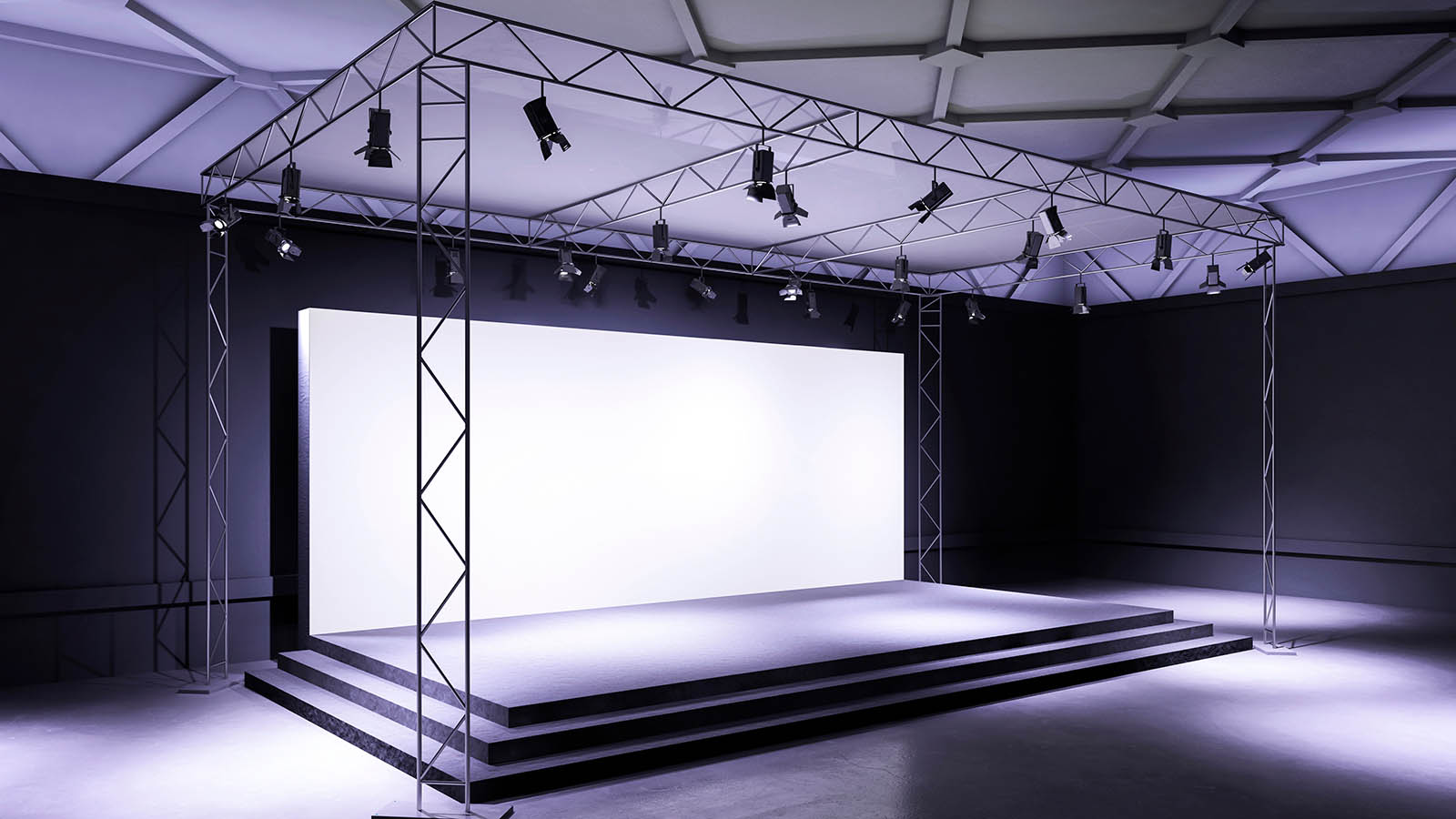
A conference stage is the first thing the room reads. Before the CEO opens her mouth, before the brand video rolls, before a single speaker walks on, the architecture of the stage has already told the audience how serious the moment is. For a corporate keynote at Javits, the Glasshouse, Spring Studios, or the Marriott Marquis ballroom, that architecture is a fabricated set — deck, cyc, LED, scenic returns, branded headers — built to spec and load-in window, then struck before the next event takes the room.
This is a builder’s guide to how those stages come together in 2026. It is written for producers, brand event leads, and corporate communications directors who have signed an SOW with an agency or AV partner and now need to understand what their stage and scenic fabrication vendor is quoting, why timelines look the way they do, and where the budget actually goes. The goal is not to make you the fabricator — it is to make you the producer who can read a fabrication drawing, ask the right questions, and catch a problem before it ships to the venue.
What “Conference Stage” Actually Means in 2026
Twenty years ago a conference stage was a riser, a podium, a pipe-and-drape backdrop, and a confidence monitor. In 2026 it is a fully designed scenic environment, often closer to a broadcast set than a hotel ballroom platform. Most corporate keynotes now carry a hero LED wall flanked by scenic returns, a deck with multiple elevation changes, integrated lighting positions hidden inside the scenic, and at least one branded header or logo wall sized for both in-room sightlines and broadcast framing.
The shift is driven by two forces. First, almost every corporate event is now simultaneously a live show and a content shoot. The keynote is recorded, cut up, and pushed to YouTube and LinkedIn within hours. The set has to read on a phone screen as well as it reads from the back of the room. Second, attendees have been trained by Apple, Salesforce, and the major SaaS launch events to expect production value. A flat backdrop and a lectern looks cheap by comparison, even when the content is good.
That means the scope of “stage fabrication” has expanded. A fabricator is no longer just cutting flats and skinning them. They are building modular scenic that integrates with rented AV, accommodates fast rehearsal changes, lands within a venue’s specific rigging and load capacities, and meets the brand’s visual system. The cost and the timeline have both moved with it. A six-figure conference set is now a normal line item in the production budget for a 500-person enterprise event.
Brief First — The Inputs Every Fabricator Needs Before Quoting
The single most expensive thing a producer can do is ask a fabricator for a price before the brief is complete. Estimates built on partial information move only one direction — up — and the corrections come out of contingency that you wanted to keep for the venue surprises. Before requesting a quote, gather these inputs and hand them over in one packet.
- Venue and room. Address, room name, floor plan with measurements, ceiling height, rigging points and capacities, freight elevator dimensions, loading dock access, and the in-house union rules.
- Audience and format. Seated capacity, theater or rounds, whether there is a center aisle, broadcast camera positions, and confidence monitor placement.
- Show flow. Number of speakers, panels, demos, performances, set changes during the show, and any audience activation moments that touch the stage.
- AV scope. The AV partner, the LED wall dimensions and pixel pitch, projector or LED brief, the lighting designer’s plot, and the front-of-house and monitor positions.
- Branding. Brand guidelines, hero logo treatments, color callouts in Pantone or RGB, headline copy, and any executive-approved hero imagery.
- Budget and timeline. The total fabrication budget, the load-in date and window, rehearsal date, show date, and strike window.
A vendor who can build to the standards described in this guide will also push back on a brief that is missing pieces. That is a good sign. Fixed-fee quotes generated against unknowns are the most common source of change orders later.
Stage Architecture: Deck, Risers, Cyc Walls, and Set Pieces
A conference stage breaks into three layers — the deck the speaker walks on, the upstage scenic the audience reads behind them, and the wings or returns that frame the picture from the seats. Each layer has its own fabrication and engineering logic, and each one fails in a different way when it is value-engineered too aggressively.
The deck is usually built from staging components (Stagedex, Bil-Jax, or custom platforms) skirted with hard scenic facia. For a serious keynote, expect a primary speaker deck at twenty-four to thirty-six inches, an upstage riser for the LED wall and scenic, and possibly a lower demo riser between them. Multi-elevation decks read better on broadcast and give the lighting designer flexibility, but every elevation change adds steps, handrails (if mandated by the AHJ), and integration time between platforms and scenic.
The cyc wall — the upstage scenic surface — is where most of the design dollar lives. In 2026 the dominant approach is a hero LED wall with scenic returns on either side, but the returns themselves carry weight. Returns can be skinned in printed graphics, slatted wood, brushed aluminum, fabric stretch frames, or routed signage with backlit logos. The choice cascades through the whole job — printed scenic is fast and cheap; routed and backlit is slower and more expensive but holds up on broadcast in a way that printed scenic almost never does. The same logic applies to experiential design across the rest of the build — the more sculptural the surface, the longer the timeline and the higher the perceived production value.
Set pieces — lecterns, branded podiums, side furniture, freestanding logo monoliths — are the third layer. They are usually fabricated as discrete units with internal frames, skinned in the same material language as the cyc, and rolled on or off during set changes. Casters, leveling feet, and integrated cable pass-throughs are not optional. A wobbling podium ruins a keynote photo in a way no audience member forgets.
LED Walls, Projection, and the Scenic-AV Interface
The single most common source of friction between scenic fabricators and AV partners is the LED wall interface. A 2.6mm LED wall does not arrive as a single panel — it ships as a stack of cabinets, each 500mm square, that have to be hung from scenic structure or set on a ground-supported chassis. The fabricator and the AV vendor have to agree on which side owns the structure, how the cabinets land flush with the scenic returns, how the seams are masked, and where service access lives behind the wall.
The standard 2026 setup is a ground-supported LED chassis built by the AV vendor, with the fabricator providing scenic returns that lap over the cabinet edges and a header that hides the top frame. The cabinets sit slightly proud of the scenic plane and the returns are routed back behind the LED face to hide the gap. If the brief calls for a curved or angled LED hero, the scenic returns have to be engineered to match — and that engineering happens at the drawing stage, not on the loading dock. Get the AV vendor and the fabricator on the same call early, and trade CAD files before fabrication starts.
Projection still has a place, especially for wide ambient washes, IMAG side screens, or content that wants to break out of the LED rectangle. When projection is part of the brief, the fabricator has to think about throw distance, surface reflectivity, and where to hide the projector positions. The same room logic that drives immersive production design applies — surface, light, and content have to be solved together, not bolted on at the end.
Lighting, Truss, and Rigging Loads
A modern keynote stage carries more lighting than most producers realize until they read the plot. Key light on the speaker, fill from the front of house, backlight from upstage truss, side wash from booms, and accent fixtures inside the scenic itself. Each fixture has a load, each truss has a span and a working load limit, and each rigging point in the venue has a published capacity that cannot be argued with.
The fabricator’s job at this stage is twofold. First, design scenic that does not block the lighting positions the LD needs — no upstage header that eats the wash from a backlight truss, no return that shadows the speaker’s face. Second, design scenic that can carry integrated lighting where the LD wants it, with cable pathways already routed and gel frames or fixture mounts pre-built. A scenic header with hidden LED strip lights inside the reveal looks like a six-figure broadcast set; the same header retrofitted with strip lights after fabrication looks like a science fair.
Rigging loads are where the venue’s house rigger and the AV vendor’s rigging supervisor have the final word. A producer’s job is to make sure those two people have seen the scenic drawings before fabrication starts. If a scenic header is meant to fly from house points, the load has to be calculated, the rigging plan stamped, and the venue’s insurance requirements satisfied — usually a certificate of insurance naming the venue as additional insured, with specific limits.
Branded Set Pieces and Sponsor Integration
A conference stage is also a branding surface. The CEO’s keynote will be cut into clips, the photographer’s hero shot will live on the corporate LinkedIn page, and every sponsor in the program book wants their logo readable on broadcast. Brand integration is a fabrication problem first and a graphics problem second — the surface, the framing, and the lighting all decide whether a logo reads on camera or disappears into a hot spot.
The best practice in 2026 is to fabricate two tiers of branded surface. The hero tier — the upstage header, the lectern face, and any sponsored centerpiece — should be routed and dimensional, with internal lighting where the brand mark allows it. The secondary tier — side scenic, demo riser facia, and breakout set pieces — can be printed scenic on tension fabric or direct print on Sintra. The hero tier is what the camera frames; the secondary tier is what the audience reads from their seat. Both matter. Mixing them is what makes the room feel finished.
Sponsorship activation extends this logic outside the room. A keynote that anchors a larger conference will usually be surrounded by sponsor footprints in the foyer, lounges, and demo halls — fabrication territory that overlaps with brand activations and event fabrication. Treating those footprints as part of the same design system as the stage is what separates a conference that looks designed from a conference that looks assembled.
Build, Load-In, and Rehearsal Timeline
A reasonable timeline for a six-figure corporate keynote stage looks like this. Six to eight weeks before the show, the fabricator receives the approved design and the brief packet. Weeks one and two are engineering and shop drawings, sent to the producer for sign-off. Weeks three through five are fabrication — milling, routing, welding, painting, graphics application. Week six is a shop preview, where the stage is dry-fit in the fabricator’s facility and the producer walks it.
Load-in is typically the day before or two days before the show, depending on venue access. The fabricator’s crew lands first to set deck and scenic, the AV vendor follows with LED and lighting, and the show calling team comes in for the run-through after both are done. A keynote with multiple speakers and pre-recorded content usually needs a full day of tech rehearsal — not a half day — so the run-of-show can be cued against the actual stage, not a mock-up.
This is also where Keurig’s activation at Nasdaq and Monday.com’s MP Live are useful references — both used the same producer-fabricator-AV cadence on tight venue windows, and both shipped clean because the brief was locked and the AV-scenic interface was solved on paper before anyone went to the shop floor.
Budget Anchors and Cost Drivers
Conference stage fabrication budgets in 2026 spread across a wide range, but a few anchors are useful. A clean ballroom keynote stage with a 20-foot LED wall, scenic returns, branded lectern, and basic side scenic typically lands between $80,000 and $180,000 for fabrication only — excluding AV, lighting, rigging, and trucking. A flagship corporate event with a 40-foot hero LED, multi-level deck, routed and backlit scenic, and a full sponsor activation lobby pushes $300,000 to $700,000 on the fabrication side. The variance is driven less by square footage than by surface choice and rigging complexity.
The three biggest cost drivers, in order, are: routed and dimensional scenic versus printed flat scenic, custom rigging engineering versus ground-supported chassis, and the number of distinct branded set pieces in the show. Cutting one routed header back to printed flat can save five figures. Adding a flown logo monolith to the brief can add five figures and a week of engineering. Producers who track the budget by surface choice — not by overall square footage — make better trade-offs at the value-engineering meeting.
For producers who want a clearer cost baseline before approaching vendors, the event fabrication cost guide walks through the same logic for non-stage projects, and the same trade-offs apply.
Common Failures — and How Producers Avoid Them
The mistakes that derail conference stage builds are predictable. A short list, drawn from talking to producers after the show:
- Scope creep on branded surfaces. The brand team adds a logo wall in week four. The fabricator either misses the load-in window or charges a rush premium. Lock branding at week one.
- AV-scenic seam errors. The LED chassis arrives a half inch wider than the scenic returns assumed. The on-site fix is a strip of black gaffer tape and a producer with a headache. Trade CAD between vendors before fabrication.
- Underestimating rigging load. The flown logo header gets value-engineered to a heavier material in week five. The house rigger flags it in load-in. The producer cuts the piece. Calculate loads on the approved material, not the placeholder.
- Skipping the shop preview. Producers who skip the dry-fit save a day in their calendar and pay for it in load-in surprises. Walk the shop.
- Missing the strike window. The next event takes the room at 6am. The fabricator’s crew is sized for a six-hour strike. The venue charges overtime. Size strike crews for the actual window, not the optimistic one.
Every one of these is avoidable with a complete brief and an early three-way conversation between producer, AV vendor, and fabricator. The shows that ship cleanly are the ones where that conversation happened in week one — not the ones where everyone hoped it would sort itself out in week five.
Working With a Stage Fabrication Partner
The right fabrication partner is the one who pushes back on the brief, brings drawings to the AV kickoff, and tells you what they will not do. A vendor who quotes any scope at any price, on any timeline, without a brief in hand is not a partner — they are a placeholder that you will replace later, usually under pressure. Look for the vendor who asks for the venue rigging plot before they quote and walks you through their shop before they ship anything to the loading dock.
Pop Up Your Brand builds conference stages, corporate keynotes, and broadcast-style activation sets out of our Manhattan and Hicksville facilities, with the same in-house fabrication team that builds trade show booths and large-format convention activations. The work the team brought to Netflix at the Meadowlands is the same modular discipline we bring to a ballroom keynote — engineered first, drawn before cut, dry-fit before shipped. If a corporate keynote is on your 2026 calendar and you are about to send the SOW to a fabrication vendor, request a quote and bring your venue floor plan and AV scope when you do. The earlier the brief is complete, the cleaner the show.
Conference Stage Fabrication — FAQ
The fabricated set behind a keynote: the deck and risers, cyc walls, scenic returns, branded headers, lectern and set pieces, and the structural interface for LED walls, projection and rigging. The AV, lighting and truss are usually supplied by an AV partner; the fabricator builds the architecture those systems mount to and the finishes the camera sees.
Six to eight weeks from approved design for a six-figure corporate stage: engineering and shop drawings in weeks one and two, fabrication — milling, routing, welding, paint, graphics — in weeks three through five, and a shop preview in week six where the stage is dry-fit and the producer walks it. Load-in is typically the day before rehearsal.
A clean ballroom keynote stage with a 20-foot LED wall, scenic returns, branded lectern and basic side scenic typically lands between $80,000 and $180,000 for fabrication only, excluding AV, lighting, rigging and trucking. A flagship event with a 40-foot hero LED, multi-level deck, routed and backlit scenic and a sponsor activation lobby runs $300,000 to $700,000 on the fabrication side.
The brief packet: venue and room drawings with ceiling height and rigging points, the LED or projection spec from the AV partner, run-of-show and camera positions, brand guidelines, load-in and rehearsal windows, and the sponsor integration list. Quotes produced without those inputs are guesses that get revised after the fact.
Planning a build like this? Get a quote in 48 hours.
Send us the brief, the renders, or a napkin sketch. Line-item pricing from the team that will actually build it.
Request a Quote