Sep 29, 2026
Dimensional Signage & 3D Logo Walls: Event Fabrication Guide
Dimensional signage for events: letter types, materials, halo vs face-lit LEDs, mounting, NYC budget ranges and lead times for logo walls and 3D letters.
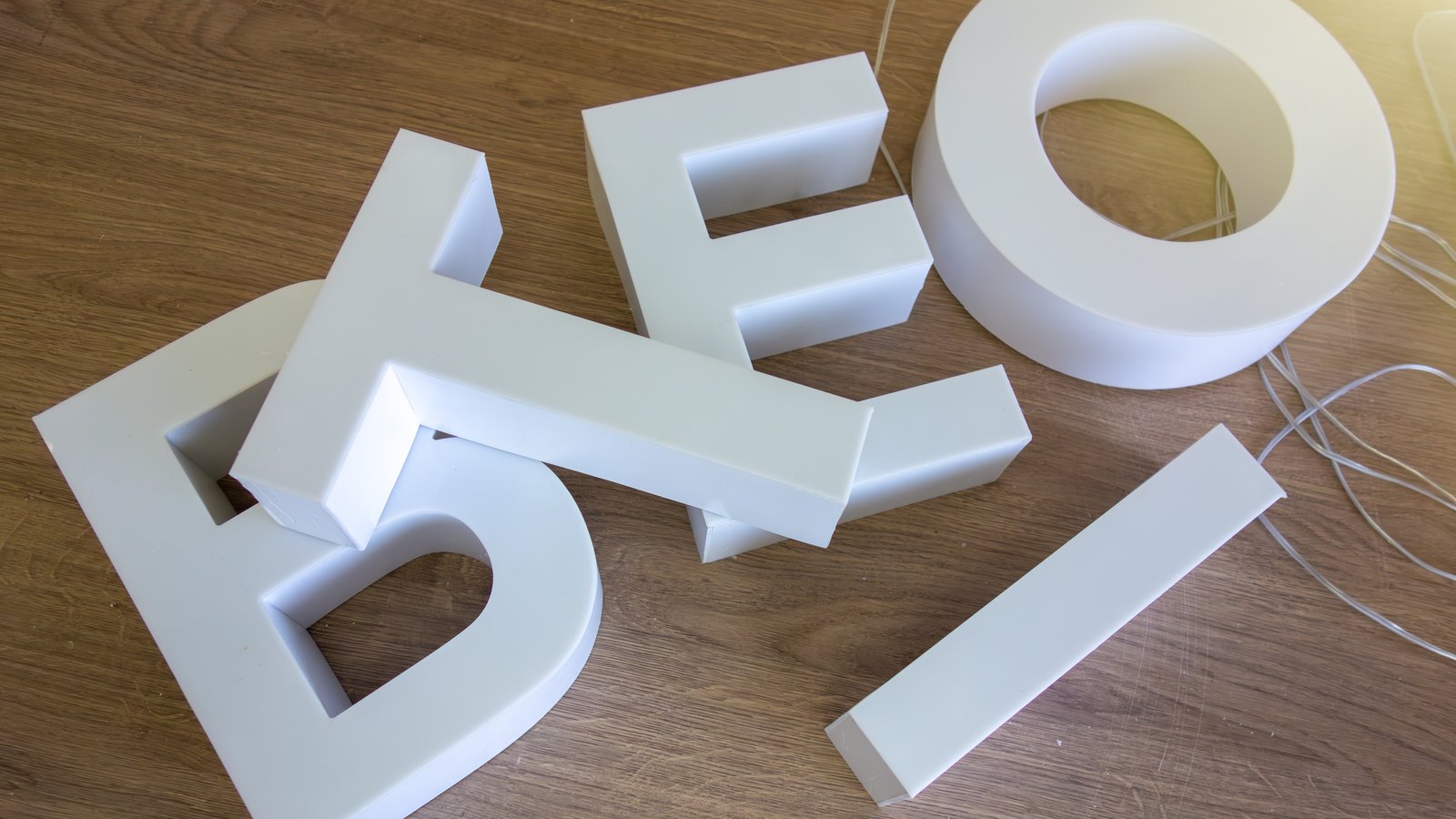
A flat logo printed on a backdrop tells people where they are. A dimensional logo — letters with real depth, real edges and light coming off them — tells people the brand showed up. That difference is why dimensional signage has become the anchor element of so many brand activations, trade show booths and pop-up storefronts. It is also one of the most under-specified line items in event RFPs. Briefs say “3D logo wall” and leave the vendor to guess at depth, material, finish, illumination and how the thing is supposed to hang.
This guide is the spec sheet we wish every brief came with. It covers the letter types we build, the materials that actually hold up on a show floor, how illumination changes cost and lead time, how to mount letters on walls that were never designed to carry them, and what a realistic budget and schedule look like for event-grade dimensional signage in NYC.
What Counts as Dimensional Signage
Dimensional signage is any sign where the graphic has physical depth — the letters or logo stand off a surface rather than being printed on it. In the event world it breaks into five families, and each one has a different price, weight and install profile.
- Flat-cut letters. Letters routed from a single sheet — acrylic, PVC, aluminum composite, MDF or plywood — usually 1/4″ to 1″ thick. The workhorse of the category.
- Fabricated channel letters. Letters built as hollow boxes: a face, a return (the side wall) and a back. Returns typically run 2″ to 5″ deep. Built to carry LEDs.
- Stacked or layered letters. Two or more flat-cut layers laminated together to build depth or create a stepped, beveled edge without the cost of true fabrication.
- Sculpted or carved letters. EPS foam or high-density urethane carved by CNC, hard-coated and painted. Used when the logo needs to be oversized, rounded or organic.
- Logo walls and monuments. The structure behind the letters — a hard wall, a freestanding monument or a truss-hung header — engineered to carry the signage.
Most event builds combine at least two families. A typical trade show logo wall is a hard-skinned wall with flat-cut acrylic letters on standoffs and one fabricated, illuminated hero mark. On the event fabrication services side, the letters and the wall that carries them are one scope — pricing them separately is how change orders start.
Materials: What Each One Is Good For
Material choice drives almost everything downstream: weight, finish options, how well the edges read under show lighting and whether the piece survives a second use. Here is how the common options compare on an event build.
| Material | Typical thickness | Weight | Best for | Watch out for |
|---|---|---|---|---|
| Cast acrylic | 1/4″–1″ | Medium | Polished edges, backlit faces, color-matched finishes | Scratches in transit; must be crated face-protected |
| PVC (expanded) | 1/2″–1″ | Light | Painted letters, budget builds, one-time use | Soft edges; bows over large spans without backing |
| Aluminum composite (ACM) | 1/8″–1/4″ | Light | Metallic finishes, outdoor, fabricated returns | Visible core on raw edges unless capped or returned |
| Aluminum plate | 1/8″–1/2″ | Heavy | Premium brushed or anodized looks, permanent pieces | Weight and cost; slow to cut in volume |
| Baltic birch / MDF | 1/2″–1 1/2″ | Medium-heavy | Painted or natural-wood looks, stacked letters | Moisture and chipping; MDF needs full sealing |
| EPS / HDU foam | 2″–24″+ | Very light | Oversized, sculpted or rounded letters | Needs hard coat for durability; dents without it |
Two rules of thumb from our shop. First, if the logo will be touched — at a photo moment, a check-in counter, anywhere guests lean — skip PVC and foam without hard coat. Second, if the piece is going on tour or into storage for reuse, pay for cast acrylic or aluminum up front. The material premium is usually smaller than the cost of rebuilding damaged letters before the second show.
Finishes and Color Matching
Brand teams care about color accuracy more on dimensional letters than almost anywhere else, because the logo is the thing that ends up in photos. The reliable options are automotive-grade paint matched to a Pantone or PMS reference, vinyl-wrapped faces for exact print matches, and colored cast acrylic for backlit faces. Ask your vendor for a physical color drawdown or a finished sample letter before full production — a 6″ test letter costs little and avoids a reprint.
Metallics deserve special mention. Chrome and mirror finishes photograph beautifully but show every fingerprint and scratch; brushed metallic reads premium and forgives handling. Gold and rose-gold paints vary wildly between suppliers, so always approve a physical sample.
Illumination Options and What They Cost
Lighting is the single biggest cost multiplier in dimensional signage. An unlit flat-cut logo and an illuminated channel-letter logo of the same size can differ by a factor of three to five in price. Here is what each approach delivers.
Face-Lit Channel Letters
LED modules sit inside the channel, and light passes through a translucent acrylic face. The whole face glows evenly. This is the classic storefront look and the brightest option. It needs enough return depth — usually 3″ minimum — to diffuse the LEDs and avoid hot spots.
Halo-Lit (Reverse-Lit) Letters
The face and returns are opaque, the back is open, and LEDs wash light onto the wall behind the letter. The result is a glowing outline that reads as high-end and architectural. Halo lighting requires the letters to stand off the wall on spacers, typically 1″ to 2″, and it depends on the wall surface being light enough and smooth enough to bounce the light evenly.
Edge-Lit and Neon-Style
Edge-lit acrylic uses LEDs along the edge of a panel to make engraved or routed detail glow. LED neon flex — silicone-jacketed strip that mimics glass neon — is bent into script or line logos and mounted on a clear acrylic backer. LED flex is safer, lighter and more durable than glass neon for events, and it survives shipping far better. It also pairs naturally with the kind of controlled, dark environments we build for immersive production, where a single glowing line can carry a whole room.
For the Magic Hour Mountain Lodge at Moxy NYC, warm, low-level light was part of the concept — a reminder that illumination should be specified against the room’s lighting plan, not in isolation. A face-lit letter that looks right under convention-hall floods can blow out in a moody rooftop bar.
Power and Control
Every illuminated letter needs a low-voltage power supply, and those supplies need a home: inside the wall, behind a header or in a service chase. Plan for access — if a driver fails on day two of a show, someone has to reach it without dismantling the logo. For multi-letter signs, we pre-wire to a single plug-in point and label every run. Dimming, color change (RGB or tunable white) and DMX control are all available but add cost and a programming step; specify them only if the activation actually uses them.
Trade Show Logo Walls and Headers
On a show floor, dimensional signage does its most important job: pulling eyes from across an aisle. That changes the design math. Letter height needs to be sized for sightlines of 50 to 100 feet, which usually means a primary mark of 24″ or taller, mounted high on a back wall or hung from a header. Across our trade show fabrication work, the most common mistake we see is a beautiful logo mounted at eye level, where it disappears behind the first row of visitors.
Show rules matter too. Most venues cap hanging-sign height and require rigging through the venue’s approved contractor; many limit back-wall heights on inline booths; and illuminated elements need to meet the show’s electrical rules. Check the exhibitor manual before design lock, not after. For the Netflix trade show booth at the Meadowlands, signage placement had to balance brand visibility against a tight footprint — a problem solved in layout, not in letter size.
Size the logo for the far aisle, not the near one. Anyone standing in your booth already knows whose booth it is.
Reusable Signage for Show Programs
If you run a multi-show calendar, design the letters as a kit. That means mounting systems that attach and detach without damaging the wall skin, letters sized to fit standard crates, and a labeled layout template so a different install crew in a different city can hang the logo straight. The added engineering typically pays back by the second show.
Pop-Ups, Retail and Storefront Signage
Temporary retail has its own signage constraints. Landlords often restrict exterior signage, mall management may require pre-approved drawings and certificates of insurance, and NYC storefront signs can trigger permit requirements depending on size, illumination and projection from the building. Interior dimensional signage avoids most of this, which is why so many pop-ups lead with a statement logo wall just inside the glass, visible from the sidewalk.
The pop-up context also changes how the logo is used. It is the backdrop for customer photos, so it needs to be positioned with clear sightlines and good front light. It is often the primary wayfinding cue, so it needs to be legible from the entrance. When we approach pop-up shop design, the logo wall is usually drawn early because it anchors the flow of the whole space. The Primark holiday pop-up is a good example of signage working as both brand statement and seasonal set piece.
Hospitality, Lounges and Brand Takeovers
Hotel takeovers, bar activations and VIP lounges ask signage to behave differently. Guests are close, lighting is low and the finish is inspected at arm’s length. Here the right choices are usually halo-lit letters for glow without glare, natural materials such as wood or brushed metal that sit comfortably in a designed interior, and mounting that can go up and come down without damaging the venue’s walls.
Venue protection is non-negotiable in hospitality. We use French cleats on temporary backer panels, freestanding weighted monuments and tension systems rather than direct fastening wherever possible. Work like the Tao Group activation at the Moxy Hotel and Delilah x h.wood Group shows how branded elements can land in premium hospitality environments without fighting the room.
Mounting, Structure and Install
A dimensional logo is only as good as what it is attached to. Most event walls are 1/4″ or 1/2″ skins over a stud or truss frame — not enough to carry heavy letters on their own. Mounting has to be planned in shop drawings, with backing added where the letters land.
Common Mounting Methods
- Stud mounts / standoffs. Threaded studs set into the back of each letter, inserted into drilled holes. Clean and precise; needs a paper or CNC-cut template for accurate hole placement.
- VHB tape and structural adhesive. Fast and invisible for light flat-cut letters on smooth surfaces. Not appropriate for heavy, illuminated or overhead pieces.
- Rail or raceway mounts. Letters mounted to a common rail that carries wiring. Faster to install and easier to remove; the rail is visible unless painted to match or hidden in a header.
- Backer panels. Letters pre-mounted in the shop to a single panel that hangs on cleats. The fastest install method and the best option for reusable signage.
- Suspended signs. Letters or monuments hung from truss or ceiling points. Requires engineered rigging points, secondary safety cables and approval from the venue’s rigging contractor.
For stage headers and keynote backdrops, weight and rigging dominate every decision. That is squarely in stage and scenic fabrication territory, where the logo often becomes part of the set. On Monday.com MP Live, stage branding had to read cleanly on camera as well as in the room — a different standard than a trade show header.
Install Time
A backer-panel logo wall can be hung in under an hour. Stud-mounted individual letters take longer: templating, drilling, dry-fitting and leveling usually run 2 to 4 hours for a 10-foot logo with a two-person crew. Illuminated letters add wiring and test time. On union venues in NYC, those hours are billed at venue labor rates with minimum calls, so pre-assembly in the shop is almost always the cheaper route.
Budget Ranges and Lead Times
Pricing varies with size, material, finish and illumination, but the ranges below reflect typical NYC event-grade work. Use them for early budgeting, not as a quote.
| Sign type | Example size | Typical budget range | Typical lead time |
|---|---|---|---|
| Flat-cut PVC or acrylic, painted | 8′ wide logo, 1/2″ thick | $1,500–$4,000 | 5–8 business days |
| Stacked or layered letters | 8′ wide logo, 2″ build-up | $3,000–$7,000 | 7–10 business days |
| Halo-lit fabricated letters | 8′ wide logo, 3″ returns | $8,000–$18,000 | 12–18 business days |
| Face-lit channel letters | 8′ wide logo, 4″ returns | $9,000–$20,000 | 12–18 business days |
| Carved foam oversized letters | 6′ tall letters | $4,000–$12,000 | 8–14 business days |
| Logo wall with integrated signage | 10′ x 20′ wall | $15,000–$45,000+ | 15–25 business days |
Where budget goes further: a strong flat-cut logo on standoffs, lit by a pair of well-aimed fixtures, can look nearly as premium as internal illumination at a fraction of the price. Where it does not: faking channel letters with thin materials and tape-on LED strip. It photographs badly and fails fast. The Celsius pop-up shows how bold brand color and clean dimensional graphics can carry a space without over-engineering every element.
What Drives Lead Time
- Artwork readiness. Vector files with outlined fonts save a day or more. Low-resolution PNG logos have to be redrawn.
- Approvals. Shop drawings, color samples and a lighting test each need a client sign-off. Build in 1 to 2 business days per round.
- Illumination. LED layout, power supplies and testing add 3 to 5 business days over unlit work.
- Finishing. Multi-coat automotive paint needs cure time. Rush finishing is where quality slips first.
- Install window. Venue load-in slots and union labor calls are fixed. Work backward from them.
How to Spec Dimensional Signage in Your Brief
A good signage brief gets you accurate, comparable quotes on the first round. Include the following, even if some answers are “recommend.”
- Vector artwork with fonts outlined and brand color references (PMS or paint code).
- Overall size or the wall it needs to fit, and the viewing distance that matters most.
- Letter depth or style preference: flat-cut, stacked, fabricated or sculpted.
- Illumination: none, face-lit, halo-lit, edge-lit or neon-style, plus any dimming or color-change needs.
- Mounting surface: hard wall, fabric wall, glass, truss or venue wall, and any venue restrictions.
- Use life: one event, a season or a multi-year program with storage.
- Venue and dates: load-in, show days and strike, plus the venue’s labor and rigging rules.
- Photo and content use: whether the logo is a photo moment, a camera backdrop or both.
With those answers, a fabricator can quote material, fabrication, finishing, illumination, crating, delivery and install as separate lines — which is exactly what you need to compare vendors and value-engineer without guessing.
Build It Once, Build It Right
Dimensional signage is a small line in most event budgets and a large share of what people remember. Get the material, lighting and mounting right, and the logo carries the brand in every photo, stream and walk-by. Get it wrong, and it becomes the thing guests notice for the wrong reasons.
Pop Up Your Brand builds dimensional letters, logo walls and illuminated brand marks in-house, alongside the booths, sets and storefronts they belong to. If you have a logo wall, header or storefront sign on your calendar, start with our experiential design team — send artwork, dimensions and dates, and we will come back with material recommendations, a line-item quote and a schedule in business days.