Nov 13, 2026 · Trade Shows & Exhibits
How to Choose a Trade Show Booth Builder
Nine checks that separate a trade show booth builder you can rely on from one you will be chasing in week ten: who fabricates, show rules, pre-assembly, reuse, drawings, crating, install and the quote.
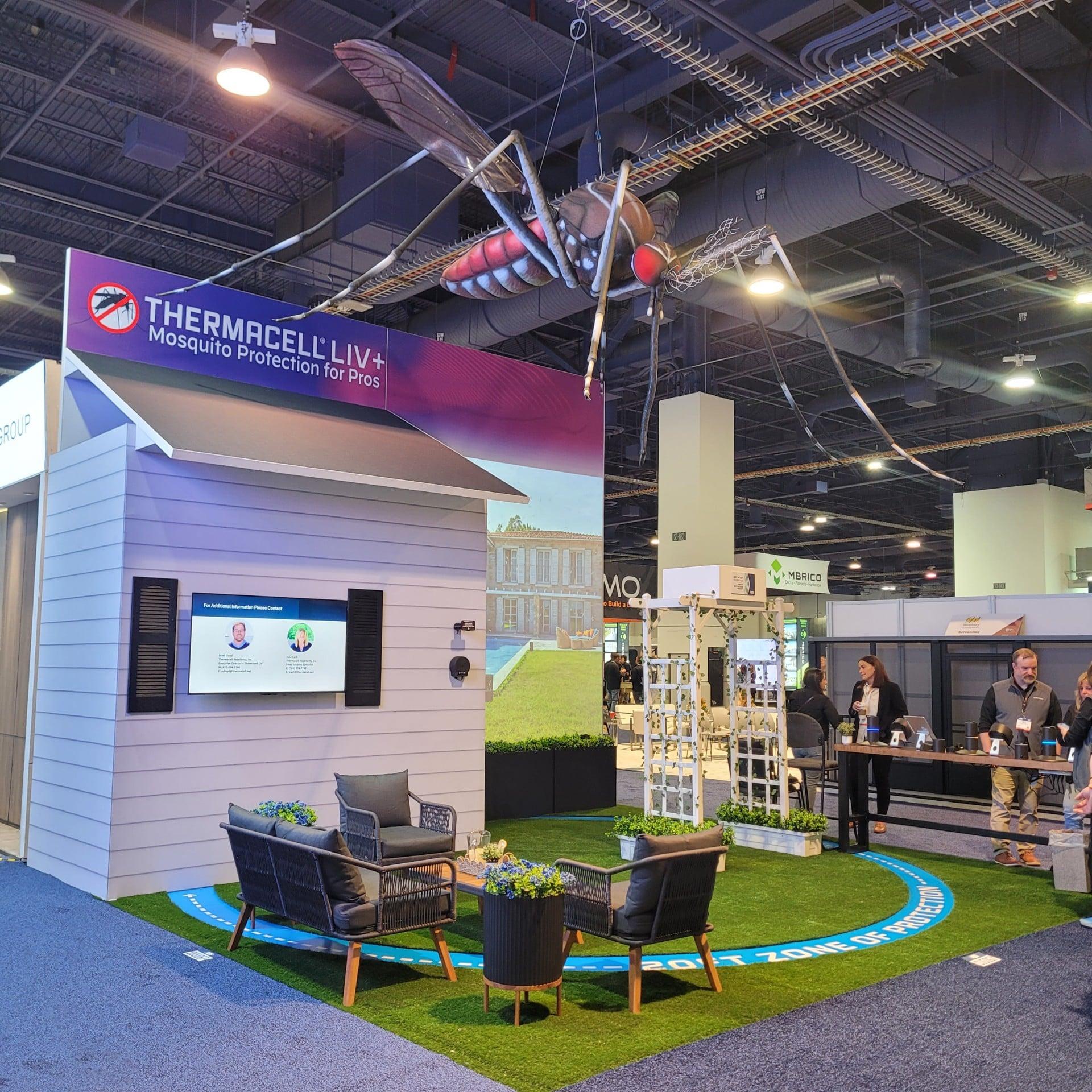
Two booth builders can show you the same rendering and deliver very different show days. One arrives with labeled crates, a crew that knows the hall and a booth that was already stood up once in the shop. The other arrives with parts that have never met each other, and you find out on the show floor, paying show labor by the hour while they work it out.
The difference is almost never visible in the design. It is in how the company builds, ships and installs. This guide gives you nine checks, in the order a project runs, with the answer you want to hear for each. We build custom booths in our New York shop, so the examples are ours, but the checks apply to any builder you are considering.
What does a trade show booth builder do?
A trade show booth builder designs, fabricates, ships and installs the structure you exhibit in. A full-scope builder handles design and renderings, shop drawings, fabrication, graphics, lighting, crating, and supervision of installation and dismantle at the show.
That scope is wider than most first-time buyers expect, and no two companies cover it the same way. Some design and then send fabrication to another shop. Some fabricate but leave install to whoever the show provides. Before you compare prices, write down which of these each builder does with its own people:
- Design and 3D renderings
- Shop drawings and engineering
- Carpentry, metalwork and finishing
- Printed graphics and lighting
- Crating and freight coordination
- Installation and dismantle supervision
- Refurbishment between shows
Every item a builder hands off is a place where the schedule can slip without the builder controlling it.
The four types of booth builder
There are four kinds of company that will sell you a trade show booth: a custom exhibit house or fabricator, a portable and modular display dealer, the show's general contractor, and a design agency that subcontracts the build. They suit different budgets and different goals.
| Type | What you get | Fits when | Watch for |
|---|---|---|---|
| Custom exhibit house or fabricator | A booth designed and built for your brand, in the builder's own shop | The booth has to stand apart, hold product or demos, or serve several shows | Minimum project size; lead time |
| Portable and modular display dealer | A catalog frame system with printed graphics | The budget is small and the goal is presence, not distinction | Looks like the neighboring booths; limited structure |
| The show's general contractor | A turnkey package ordered through the exhibitor manual | One show, simple needs, no time | Standard components; little brand control |
| Design agency with outsourced build | Strong concept work; fabrication by a third party | The booth is part of a larger campaign | Who is accountable when the build is late |
We are the first kind, and projects in our shop start at $25,000. If your budget for the booth itself is well under that, a portable system is the right purchase and a custom builder should tell you so. Our comparison of custom and modular trade show booths covers that decision in detail.
Does the builder fabricate in its own shop?
Ask where the booth is physically built and by whose employees. A builder with carpentry, metal, paint, print and lighting under one roof controls the schedule. A builder that sends each trade out controls a spreadsheet.
In-house trades matter most when something changes, and something always changes. A logo revision in week six touches graphics, the lightbox that holds them and sometimes the frame behind it. In one shop that is a conversation across the floor. Across three vendors it is three change orders and three new delivery dates.
Questions that get a straight answer:
- Can I visit the shop while my booth is in production?
- Which trades are your own staff, and which are subcontracted?
- Who cuts panels and who welds frames?
- Who prints the graphics, and who checks color against the painted surfaces?
For structure, look for real metalwork and precise cutting. A hanging-sign frame or a cantilevered canopy needs metal fabrication and welding, and repeatable panels with clean joints come from CNC cutting. A shop that has both will show them to you without being asked.
Does the builder know the show's rules?
A booth that breaks the display rules gets changed on the show floor, at your expense. Your builder should design to the rules from the first sketch and should ask for the exhibitor manual before quoting.
Most U.S. shows base their rules on the IAEE Guidelines for Display Rules and Regulations, then modify them. The commonly adopted baseline:
- Inline booths: 8 ft maximum height in the rear half of the booth and 4 ft in the front 5 ft, so you do not block the neighbors. No hanging signs.
- Island booths: maximum heights typically between 16 and 20 ft, set by the show.
- Hanging signs: drawings submitted for approval, commonly at least 60 days before installation, and hung only by the show's official rigging contractor.
- Multi-story booths: prior approval from show management, with engineering.
The exhibitor manual overrides all of it. Each show sets its own heights, deadlines and approval steps, and the manual is the only document that counts.
Two more rules trip up exhibitors who hire outside builders. First, a builder that is not the show's official contractor is an exhibitor-appointed contractor. Shows require written notice and an insurance certificate from that company before a deadline, and the deadline is in the exhibitor manual. Second, fabrics and decorative materials need flame certificates, usually to NFPA 701, and the fire marshal can ask for them on the floor.
Union jurisdiction is the third area. At union venues, the hall decides who may unload freight, who may erect the booth and who may connect power. Our guide to NYC union labor rules explains how that works at the Javits Center.
A good builder asks for the exhibitor manual before it sends a quote. A builder that never asks is going to learn the rules on your show floor.
Will the booth be pre-assembled before it ships?
Yes should be the only acceptable answer. Pre-assembly means the whole booth is built, wired and lit in the shop, checked against the drawings, then taken apart and crated. Problems found in the shop cost shop time. Problems found at the show cost show labor, at show rates, against a move-in deadline.
Ask to see photos of your booth standing in the shop before it ships, or go and look at it. Check four things while it is up:
- Every graphic is installed and color-matched to its neighbors.
- Every light and screen is powered and working.
- Doors, drawers and storage open and lock.
- Each part is labeled, and the labels match an install drawing.
The Thermacell booth we built for the International Builders' Show is the model. The 20x30 island for Thermacell was fully pre-assembled in our New York shop, disassembled into labeled crates and shipped to Las Vegas. Our install crew flew in and worked with local union labor to complete the build inside the allocated 8-hour window. That window would not have been possible with parts meeting for the first time.
Is the booth engineered for more than one show?
A custom booth is a capital purchase, and the cost per show falls each time it is used. Ask what the booth is built to survive and whether it can change size.
Reuse is an engineering decision made at the start, not a hope at the end. It shows up in three places:
- Connections. Panels join with hardware meant to be assembled and taken apart many times, not screws driven into the same holes.
- Finishes. Laminates and coatings that survive crating, and graphic panels that swap without rebuilding the wall behind them.
- Footprint. A connection system that lets a 20x20 island become a 10x20 inline, or a 10x10 corner, for a smaller show.
Our booths are engineered for three to five years of show use, and a well-built custom booth typically goes four to eight shows before it needs major refurbishment. The Thermacell island above was reused across three shows and deployed as a 20x20 at the next one with no additional fabrication cost.
If you exhibit several times a year in different booth sizes, ask about modular booth systems built on custom components. Ask also what happens between shows. We do not store booths, so line up storage with a logistics provider before the first show ends.
What drawings and approvals should you get?
You should approve two sets of documents before anything is cut: renderings that show what the booth looks like, and shop drawings that show how it is built. A builder that goes from rendering to fabrication without shop drawings is asking you to approve a picture.
Shop drawings carry what a rendering cannot: dimensions in inches, materials, how panels join, where power enters, what each crate holds and how much it weighs. They are also what show management reviews for hanging signs and tall structures. Our fabrication drawings service exists for this step.
Drawings are also what make a short schedule possible. The Netflix booth at the Meadowlands went from design to install in two weeks, against a normal four to six. It worked because the CAD package was locked at kickoff, an engineering review happened on day one, and shop drawings were matched to the design by day three. Every trade then built in parallel from the same set.
Ask each builder for a sample drawing package from a past booth. You are looking for labeled parts, a power plan and an install sequence.
How does the builder crate, ship and track weight?
Crating decides what you pay the show to move your booth. Material handling, also called drayage, is billed by weight, so a builder that tracks crate weights during design is managing a real cost for you.
The Exhibitor Advocate's 2025 survey put the national average base rate for material handling at $2.28 per pound, up 9.5 percent on the year and 21.3 percent since 2022. At that rate a 3,000 lb shipment is $6,840 before any surcharge, and the same booth built lighter costs less at every show it attends.
Source: The Exhibitor Advocate, 2025 Annual Survey of Exhibition Rates, press release of May 12, 2026. The survey covers 224 public exhibitor manuals and rate forms in 23 U.S. cities and was independently audited.
What to ask:
- Do you build custom crates, and are they labeled to match the install drawing?
- What is the estimated shipping weight, and when will I have the final number?
- Do you ship to the advance warehouse or direct to the show, and why?
- Who books the freight carrier and who files the material handling form?
Late freight and missed warehouse dates add fees. Our guide to drayage, crating and logistics explains each charge and how to keep it down.
Who supervises installation on the show floor?
The people who built the booth should be on the floor when it goes up. Ask whether the builder sends its own supervisor or crew, or hands the crates to show labor with a drawing.
At union venues, show labor does much of the physical work regardless. The question is who directs it. A supervisor who assembled the booth in the shop knows the sequence, knows which crate opens first and solves problems in minutes. Hourly labor reading an unfamiliar drawing does not.
The Café de Colombia booth shows what supervision buys. The 40x20 build for Café de Colombia had a working coffee service bar, two tasting zones and a concealed back-of-house. It was crated in New York, shipped across the country to the San Diego Convention Center and stood up in a single load-in day, then ran three days of live service.
Ask the same questions about the end of the show. Dismantle is where booths get damaged, because everyone is leaving at once. A builder that plans the strike, repacks into the same labeled crates and reports on condition is protecting your next show.
How should the quote be structured?
A booth quote should list each line separately and state plainly what is not included. A single number tells you nothing about what you are buying or what a change will cost.
Our 2027 planning ranges for design, fabrication and graphics:
| Booth size | Planning range |
|---|---|
| 10x10 inline | $25,000 to $40,000 |
| 10x20 inline | $30,000 to $50,000 |
| 20x20 island | $60,000 to $100,000 |
| 20x30 island | $90,000 to $150,000 |
| Double-deck | Quoted per project |
Booth space, show services, shipping and installation are extra, and they are billed by different parties. A quote should name each of those as excluded, so you can budget for them.
Compare quotes on the same basis:
- Scope. The same booth, the same finishes, the same graphics.
- Design. Included, or billed separately, and how many revision rounds.
- Pre-assembly. Stated, not assumed.
- Crates. Included or extra.
- Install and dismantle. Supervisor days, travel and what the show's labor will cost on top.
- Payment terms and change orders. When deposits are due and how changes are priced.
Our custom trade show booth cost guide breaks down what sits inside each range, and our custom exhibit design page covers how the design phase runs.
Score each builder, then ask for a line-item quote
Use the nine checks as a scorecard when you talk to builders. One weak answer is a conversation. Three is a different builder.
| Check | The answer you want |
|---|---|
| Who fabricates | Our own shop, our own staff; visit any time |
| Show rules | We need the exhibitor manual before we quote |
| Appointed-contractor paperwork | We file notice and insurance by the manual's deadline |
| Pre-assembly | Full build in the shop, with photos, before crating |
| Reuse | Built for multiple shows; reconfigures to a smaller footprint |
| Drawings | Renderings and shop drawings, both approved before fabrication |
| Crating and weight | Custom labeled crates; weights tracked from design |
| Install | Our supervisor on the floor for install and dismantle |
| Quote | Line by line, with exclusions written out |
When you are ready to compare numbers, send us the show name and dates, your booth number and size, what the booth has to do, and a budget range. If you have the exhibitor manual, send that too. We return a line-item quote within 2 business days.
Every booth is pre-assembled in our NYC shop before it ships, and projects in our shop start at $25,000. Plan to start 12 to 16 weeks before your show, or six months out for a large island or a multi-show program.
See how we work on our trade show fabrication page, or send the brief and we will tell you what your booth size runs.
Frequently Asked Questions
Frequently Asked Questions
Look for a builder that fabricates in its own shop, knows the show's display rules, pre-assembles the booth before it ships, engineers it for more than one show, issues shop drawings for approval, crates and labels for the freight process, supervises installation on the show floor and quotes each line separately.
An exhibit house designs and builds your booth and works for you. The show's general contractor is appointed by the show organizer and runs the hall: material handling, carpet, furniture, electrical orders and labor. You pay both, for different things, and a custom builder works inside the general contractor's rules.
An exhibitor-appointed contractor is a company other than the show's official contractor that an exhibitor brings in to install and dismantle its booth. Shows require written notice and an insurance certificate by a deadline printed in the exhibitor manual. Miss it and your builder's crew may not be allowed to work on the floor.
Our 2027 planning ranges are $25,000 to $40,000 for a 10x10, $30,000 to $50,000 for a 10x20, $60,000 to $100,000 for a 20x20 island and $90,000 to $150,000 for a 20x30 island. Those cover design, fabrication and graphics. Space, show services, shipping and installation are extra.
Start 12 to 16 weeks before the show, which is 60 to 80 business days. Large islands and multi-show programs should start six months out or more. Fabrication itself takes 15 to 40 business days, and the rest of the time goes to design, approvals and show paperwork.
Have a build on the calendar?
Send the brief, renders or a napkin sketch. You get a line-item quote within 2 business days.