Oct 27, 2026 · Trade Shows & Exhibits
Toy Fair 2027 Booth Build: A Javits Plan for Toy Exhibitors
A builder's plan for a Toy Fair 2027 booth at Javits: the 20% open product display rule, product walls, buyer appointment rooms, demo zones, show approval and a dated calendar back from February 20.
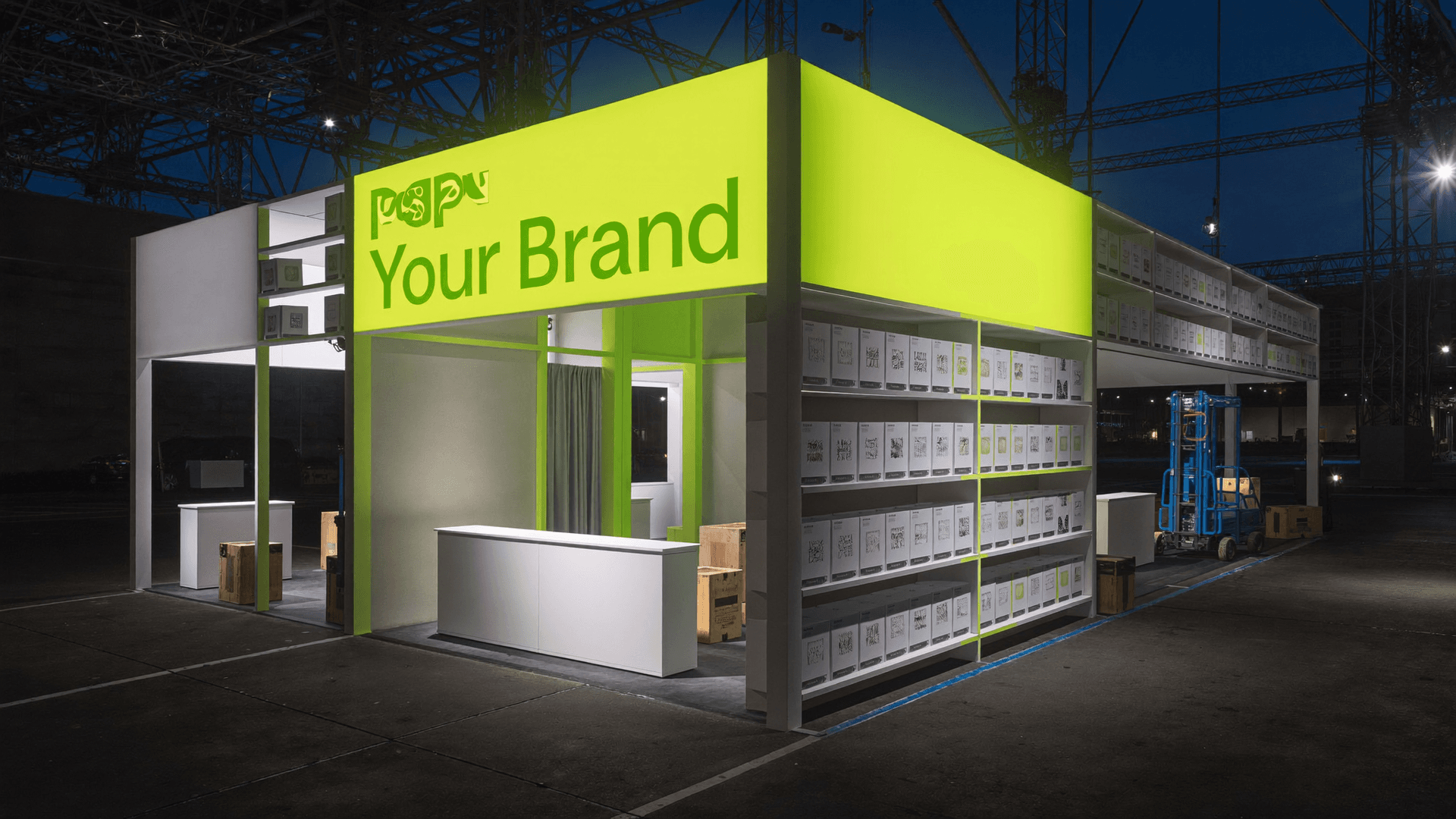
Toy Fair 2027 opens Saturday, February 20 at the Javits Center in New York, 116 days out from October 27, 2026. For a toy company, most of those weeks belong to Q4: holiday reorders, Thanksgiving, Christmas, then NRF filling the same building in January. A toy fair booth that is still a sketch on Thanksgiving is a booth built in a hurry.
A toy fair booth is also not a generic trade show booth. The show requires open product display on the aisle, show management approves every design, and the buyers who walk in came to see the line and write orders. This is the build plan for a toy exhibitor at Toy Fair 2027: the rules, the product wall, the buyer room, the demo zone, and the calendar that gets the booth to move-in on time.
What does Toy Fair 2027 ask of your booth?
Toy Fair 2027 runs February 20 to 23 at the Javits Center in New York. It is trade-only, retailers can write orders on the floor, and every booth design needs show management approval. That combination shapes the build more than the footprint does.
The Toy Association FAQ lists the audience as manufacturers, retailers, global press, sales representatives, licensors, inventors and designers. It says the show welcomes more than 1,000 members of the global press, and that order writing happens at each buyer's discretion. Is Toy Fair open to the public? No. Consumers cannot attend, and no one under 18 is admitted except approved press content creators and approved Kid Demonstrators working inside an exhibitor booth.
So a booth at this toy trade show has three jobs:
- Show the line on the aisle. Buyers walk fast and decide in seconds whether to stop.
- Host buyer appointments. The order gets written at a table, not at the shelf.
- Give press and creators something to film. A clean hero product moment, lit for a phone.
Every decision below comes back to those three jobs. If you start with custom exhibit design for toy brands, the brief should name all three, plus a check-in point at the front of the booth. A custom reception counter with lockable storage under the top does that job and holds line sheets and badge scanners.
How open does a toy fair booth have to be?
At least 20% of your aisle-facing exhibit square footage has to be visible product display. That is Toy Fair's Visual Merchandising Initiative, and it applies to each booth space an exhibitor contracts. Walls are still allowed. The trick is deciding which part of the booth is public and which part is not.
The Toy Fair Exhibitor Tools page (checked October 2026) says "all exhibitors must dedicate at least 20% of their aisle-facing exhibit square footage to visible product display." It also says the initiative "does NOT mean no walls," and that storefront designs, demonstration areas, and low or plexi walls all meet the guideline. Confirm the exact method for measuring aisle-facing square footage in the 2027 Exhibitor Kit or with your account executive before you size anything.
Here is the tension. Toy companies hold unreleased product back for buyer appointments, and the show prohibits photographing a booth without the exhibitor's permission for a reason. The booths that work split the footprint: a public display zone on the aisle, and a controlled appointment zone behind it.
| Approach | How it reads from the aisle | Privacy behind it | Build notes |
|---|---|---|---|
| Storefront facade with display windows | Reads as a shop; product framed like a window display | High | Lit vitrines and shelves set into the facade; graphics carry the brand above eye level |
| Low perimeter walls with product on top | Very open; the whole booth is visible | Low | Best for lines that are already public; tops need to hold boxed product |
| Acrylic walls or vitrines | Product visible but not touchable | Medium | Scratch-resistant panels, dust control, and access doors for restocking |
| Open demo zone on the aisle | Highest engagement; people stop to watch | Low | Durable surfaces, power at each station, and a staff member on it all day |
Most toy booths combine two of these: a storefront or vitrine face on the busiest aisle and a demo zone on the second face. The facade carries storefront and shelf graphics, and the vitrines follow the same rules we use for acrylic walls and vitrines at any event: edge-polished panels, hidden fasteners, and a cleaning plan for four days of fingerprints.
How do you build a product wall that holds a toy line?
Plan the wall by SKU count, package format and hierarchy, then build shelving for weight and change. A buyer should read the line in under a minute: hero items at eye level, the range grouped by category or price tier the way they shop, and nothing they have to hunt for.
The trade show product display questions we ask first:
- How many SKUs, and in what format? Boxed, blister-carded and out-of-box product need different shelf depths and different lighting.
- What is the hero? One or two items get a lit niche or plinth. The rest of the range supports them.
- How heavy is the line? Boxed product adds up fast. Trade show shelving has to be engineered for the load, not picked from a catalog.
- What changes after design lock? Packaging and line lists often move in January. Adjustable shelf standards and swap-ready shelf strips absorb that without a rebuild.
- What walks away? Small, high-value samples get tethered or sit behind acrylic.
Hall lighting is flat and cool, and packaging color dies under it. Lit shelving and LED integration fix that: LED tape in routed shelf channels, spot lighting on hero niches, and drivers mounted where a technician can reach them during the show.
The same product wall engineering went into Primark's gift wall with built-in shelving and integrated spot lighting. That was a 2,400 sq ft holiday retail pop-up, not a trade show. But the problem is the same: a lot of product, shopped quickly, on fixtures that go up fast. The case study puts it plainly:
"The fixtures were built to retail standards (weight-bearing shelves, durable finishes, stable bases) but engineered for rapid assembly — the entire pop-up installed overnight."
Primark Holiday Pop-Up case study, Pop Up Your Brand
Where do buyer meetings happen in a toy fair booth?
Buyer meetings belong in an appointment room behind the open display zone, never on the busiest aisle face. The 20% rule needs that frontage for product, and buyers talking terms do not want an audience. The room is where orders are written, so it gets designed like a workspace.
A working appointment room for a toy line usually needs:
- A table for four to six people, with room to set samples out
- A screen for the line presentation and pricing
- A lockable sample cabinet for unreleased product
- Power and data at the table
- A door or a heavy curtain
- Acoustic separation from the demo zone, which will be loud
Then plan storage, because toy booths run out of storage before they run out of display. Catalogs, line sheets, backup samples, giveaways, staff bags and coats all need a home that is not the floor. Spatial design and layout work settles this early: where the public zone ends, how buyers move from the aisle to the room without crossing the demo line, and how many square feet storage takes.
The model we point to is Thermacell's island with a semi-private meeting room at the International Builders Show. The 20x30 booth combined open demonstration areas, product shelving, a semi-private meeting room and a branded storage room. The case study notes the meeting room "enabled deeper sales conversations with key accounts" while the demo areas kept the aisle busy. Different industry, same split.
How do demo tables and play zones survive four days?
Build demo surfaces like retail counters, not like display props. Four show days, February 20 to 23, of hands, drinks and product tests will wreck a painted MDF top. Use durable, wipeable laminates or solid surface, eased edges and rounded corners, cable management under the top, and power at every station that runs an electronic toy. For counter height, the 2010 ADA Standards (section 904.4) call for a portion of a sales or service counter at least 36 inches long and no more than 36 inches high. It is a sensible reference for a demo counter too: keep one stretch at 36 inches or lower.
- Charging and batteries. Plan a charging drawer and battery storage per station. Dead demos stop traffic.
- Kid Demonstrators. The Toy Association can approve demonstrators aged 5 to 17 to work inside an exhibitor booth. If you plan one, add a lower demo surface or a step so a child is not working at adult counter height, keep sightlines open for buyers, and check the Exhibitor Kit for supervision rules.
- Surface and floor. If product goes on the floor, the floor becomes a demo surface. Specify flooring that cleans up and does not snag wheels.
- Phone cameras. With nearly 1,000 reporters and content creators expected, per the Exhibitor Tools page, the demo zone needs even, front-facing light and a clean backdrop behind the hero product.
Lighting for phones is its own discipline; our trade show booth lighting guide covers color rendering and placement. The proof on our side is the Celsius build lit for phone cameras: lighting angles were optimized for smartphone cameras, the build was pre-assembled in our NYC shop, and the same crew that built it installed it in three days.
What does space cost, and what do the booth awards reward?
As of October 2026, the Toy Association FAQ lists raw space at Toy Fair at $40 per square foot before any member discount. A tabletop is $2,100 for members and $2,800 for non-members. A first-time exhibitor package is $4,000 and includes a 10x10 space and a one-year Toy Association membership. Those are show space fees only, not build costs.
The build is a separate budget line. Custom booth projects in our shop start at $25,000, and we return line-item quotes within 48 hours. An inline 10x10 and an inline 10x20 each have one open aisle face, so our 10x20 inline booth guide covers the same single-aisle limits a first-time 10x10 works within. Island exhibitors should read the 20x20 island layout guide for designing four open sides.
The show also judges booths. The Exhibit Design Reimagination Awards, in their fourth year according to the show as of October 2026, are open to every exhibiting company with no entry form and no fee. A panel of media professionals, trade show experts and toy industry veterans evaluates booths on the show floor for aesthetics, functionality and innovation, with booth-size breakouts. See the current categories through the Exhibitor Tools page linked above.
Our read, as a builder: judging functionality as attendees experience it favors the same moves the 20% open product display rule pushes: an open aisle face, product people can reach, and somewhere to sit down and talk.
When do you have to decide what? The Toy Fair 2027 calendar
Count back from February 20. From Tuesday, October 27, 2026 to Friday, February 12, 2027 there are about 72 working days. That is our math: it excludes Thanksgiving and the day after, Christmas Eve and Day, New Year's Eve and Day, and MLK Day. Move-in dates are not public yet, so February 12 stands in for the week before move-in.
| Date | What happens | Source |
|---|---|---|
| Late October | Brief your fabrication shop; pull the Exhibitor Kit sections as they post | Our recommendation |
| Thu, Nov 12 | Freshman Class Toolkit live webinar for first-time exhibitors | Exhibitor Tools page |
| Fri, Nov 20 | Design lock, before Thanksgiving week | Our recommendation |
| Wed, Dec 2 | "Moving In and Out of the Show" session on the Target Move-In Schedule | Exhibitor Tools page |
| Dec 24 to Jan 1 | Holiday weeks; count them as lost production days | Our calendar math |
| Wed, Jan 6 | PR Bootcamp live webinar | Exhibitor Tools page |
| Jan 10 to 12 | NRF 2027 at Javits; freight and labor are in demand in the same building | NRF |
| Wed, Jan 13 | Toy Fair Checklist live webinar | Exhibitor Tools page |
| Wed, Jan 20 | Freshman Class Orientation live webinar | Exhibitor Tools page |
| February (date not yet published) | Move-in under the Target Move-In System | Exhibitor Tools page |
| Sat, Feb 20 to Tue, Feb 23 | Show days: Sat 10 a.m. to 6 p.m.; Sun and Mon 9 a.m. to 6 p.m.; Tue 9 a.m. to 4 p.m. | Toy Association FAQ |
The one date the show has not published is the design submission deadline: the Exhibitor Tools page says submission details follow exhibitor applications. Ask your account executive for it now and put show approval in the schedule before shop fabrication starts. A design that comes back with changes after the steel is cut costs days you do not have.
January at Javits is crowded. Our NRF 2027 Javits countdown covers that show's build, and it explains why the weeks after New Year's are not spare capacity for a February booth.
Compressed timelines are possible when the design is locked. In the two-week Netflix booth build, a 22x22 custom booth went from drawings to install in two weeks because the design was locked at kickoff and dry-fit in our NYC shop first. As the case study puts it, "Onsite was an assembly operation, not a problem-solving one." That works for a locked design. It does not work for a booth still being decided in January.
If your Toy Fair design will not be locked by November 20, send us your floor plan now, not in January.
What paperwork and freight steps are specific to Toy Fair?
Show management reviews and approves every booth design, which sets the drawing submission. T3 Expo handles all material handling, which sets the freight path. The booth regulations and utility deadlines live in the Exhibitor Kit, which the show is still publishing.
- Design approval. The show's submission requirements arrive after exhibitor applications. Our practice is to send a complete set up front: a plan view with the aisle-facing product display zone dimensioned and its share of the frontage stated, elevations with overall heights, and any overhead element drawn with its weight. Our fabrication drawings for show approval double as that set, so the approved drawing and the shop drawing are the same document. We treat approval as a gate: custom elements do not go into production until the show signs off.
- T3 Expo. The Exhibitor Tools page names T3 Expo as Toy Fair's only official show contractor. It manages unloading, delivery to the booth and empty container retrieval.
- Two shipping paths. Advance shipping to T3 Expo's warehouse, which the show calls the cost-saving option, or direct shipping to the show, which requires following the Target Move-In System. For a custom build, we plan crates and the ship date around whichever path you choose.
- The Exhibitor Kit. The show lists four sections: Exhibit Planning; Freight Handling, Move-In and Out; T3 Expo Services; and Service and Utility Ordering. It says links to T3 Expo and the Javits Center arrive when the full kit launches in the fall. Read Exhibit Planning for the booth regulations before design lock, and Service and Utility Ordering for ordering deadlines as soon as it posts.
- Contractor and insurance paperwork. Once the kit posts, confirm the show's requirements for exhibitor-appointed contractors (EACs) and insurance, and match the certificate to them. Our guide to COI requirements for NYC venues covers certificate wording and endorsements.
Should a toy fair booth be custom, hybrid or modular?
For a brand that returns every February, a hybrid is our usual recommendation: an aluminum frame that comes back each year, with custom product walls and a custom facade built for the current line. The Toy Association lists February show dates for every year from 2028 to 2032, and the show is held at Javits. Same building, same month: that is the case for a reusable structure.
| Build type | Best for | Product wall | Privacy zone | Reuse |
|---|---|---|---|---|
| Custom | Flagship brands, storefront facades, character-scale dimensional pieces | Fully integrated, lit, built to the line | Built-in rooms with doors | Good with storage and refurbishment |
| Hybrid | Brands returning every year with a changing line | Custom shelving on a reusable frame | Framed room, refinished per year | Strong; the frame returns, the skin changes |
| Modular | First-timers and linear booths | Swap-in shelving and graphics | Limited; curtain or panel enclosure | Very strong; graphics refresh each year |
Reconfiguration matters if you also show at other toy and licensing events. The example we point to is from a builders' show, not a toy show: the Thermacell booth from IBS, mentioned above, was engineered with a connection system so the 20x30 island could be reconfigured as a 20x20 or a 10x20 inline, and the case study lists it as reused across three shows. The same connection-system approach applies to a toy booth that moves between a Javits island and smaller regional footprints. For the general trade-offs, read our breakdown of custom vs modular booths. For first-time exhibitors, modular booth systems with custom graphics are a practical way into a 10x10 that can grow into a larger footprint later.
Plan the storage and refresh cycle on day one, so the booth comes out of the crate on a known schedule each February with new graphics and shelf strips printed for the new line.
Get your Toy Fair 2027 booth quoted
We design and build trade show booths in NYC, from 10x10 inline to large island exhibits, with pre-assembly in our shop and a crew that installs what it built. Initial concepts and a line-item quote come back within 48 hours of receiving your show details. To get there fast, send us:
- Your booth number and footprint from the 2027 floor plan, and which sides face aisles
- Your SKU count and package formats
- How many buyer appointments you run per day
- Demo plans, including any Kid Demonstrator
- Whether the structure should return in 2028
- Renders, a past booth, or brand guidelines
If you have never sent a fabrication brief, our guide on how to brief a fabrication shop lists what gets you an accurate number the first time. Then start with our custom trade show fabrication team, or call (800) 670-0462, and request a quote for your Toy Fair booth while there is still time to hit our recommended November 20 design lock. From Monday, November 23 to Friday, February 12 there are about 53 business days, by our count with the holidays taken out, for engineering, fabrication, shop pre-assembly and crating. If you ship to the advance warehouse, its receiving deadline in the kit comes off the end of that window.