Oct 24, 2026 · Trade Shows & Exhibits
NRF 2027 Booth Build: A Javits Countdown for Exhibitors
NRF 2027 opens January 10 at Javits. Here is the week-by-week NRF booth build countdown from 11 weeks out: design lock, shop build around the holidays, EAC and COI paperwork, and freight.
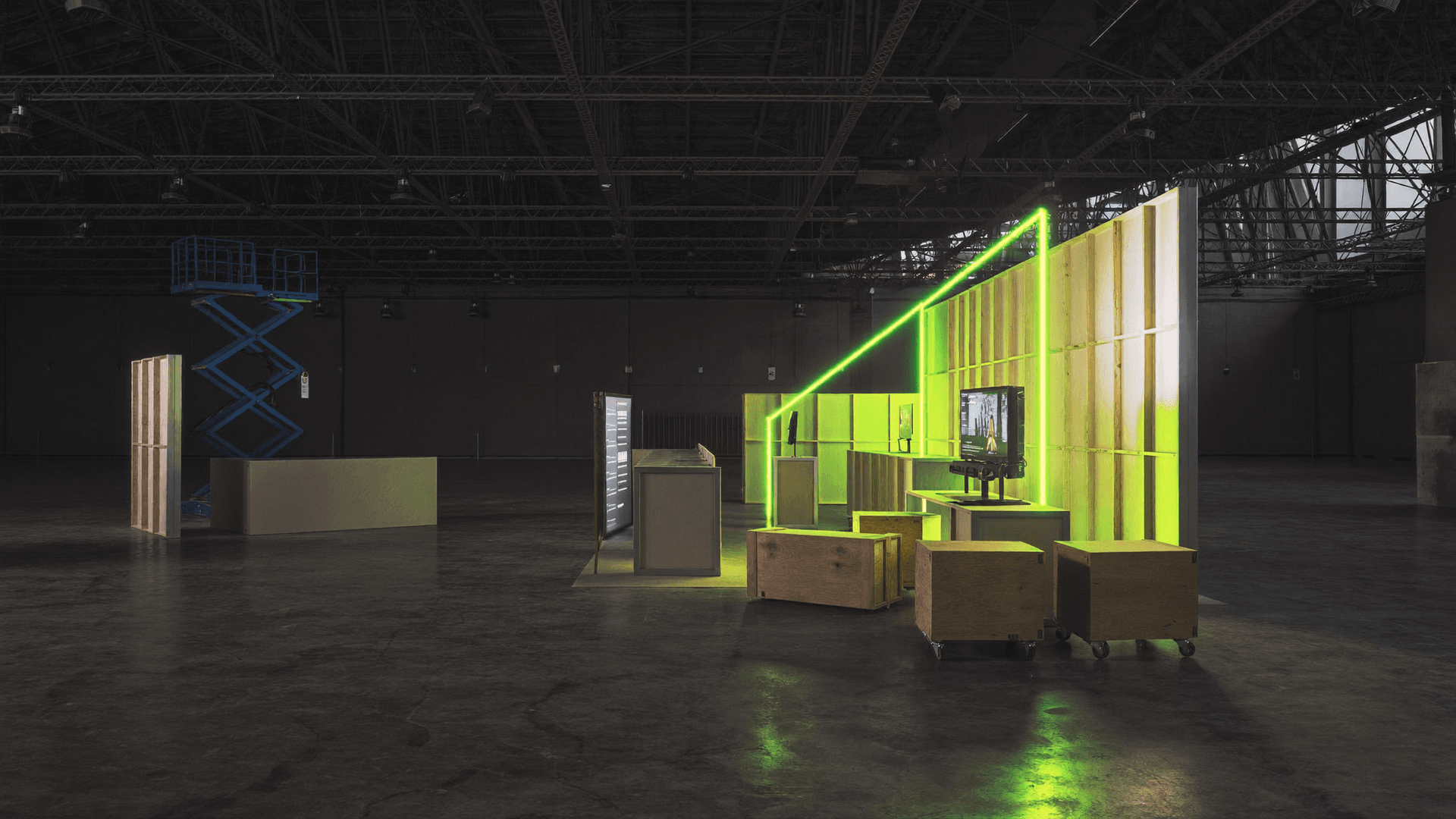
NRF 2027: Retail's Big Show opens January 10 at the Javits Center. Count from the last week of October and that looks like 11 weeks. Take out Thanksgiving, Christmas and New Year's and it is roughly 49 working days between now and move-in, for design, drawings, build and freight combined. That is enough for a custom NRF booth, but only if the design locks by mid-November. The booths that open clean in January are the ones locked before Thanksgiving.
This is the week-by-week build plan we would hand a retail-tech exhibitor today, written from our Midtown Manhattan shop minutes from Javits. It covers what has to happen each week, what to pull from the exhibitor manual, which paperwork stops booths at the dock, and how the holidays bend the schedule. Show dates are from NRF's official show site (January 10 to 12, 2027), checked October 23, 2026.
Is 11 weeks enough for a custom NRF booth?
Yes, if design locks by mid-November. A custom or hybrid NRF booth needs about four to six weeks of shop time once drawings are approved, the range in both our Netflix case study and our trade show prep guide, and the holidays leave roughly 49 working days between Monday, October 26 and Friday, January 8. The build itself is not the risk. The calendar is.
The 49 is our own count: weekdays from October 26, 2026 to January 8, 2027, minus Thanksgiving and the Friday after, Christmas Eve and Day, and New Year's Eve and Day, assuming the shop closes on those six days. January 8 stands in for move-in, because NRF publishes the real move-in window only inside its exhibitor portal. Check your date and adjust.
The critical path never changes: design lock, then fabrication drawings, then shop build and dry fit, then crating, then freight. Our fastest reference point is the two-week Netflix booth build, a 22x22 that went from drawings to install in 14 days with every trade running in parallel. That case study says plainly that a booth at that scope normally runs four to six weeks, and that two weeks only worked because the CAD package arrived with every dimension locked. Plan for the normal case.
| Weeks out (Sunday) | Milestone | Owner |
|---|---|---|
| 11 (Oct 25) | Pull the exhibitor manual; confirm footprint on the 2027 floor plan; brief the shop | You |
| 10 (Nov 1) | Concept and renders; custom, modular or hybrid decision; screen sizes, product loads and power locations confirmed | You and the shop |
| 9 (Nov 8) | Design lock by Friday, November 13 | You |
| 8 (Nov 15) | Fabrication drawings issued; CNC and structure start | Shop |
| 7 (Nov 22) | Structure and millwork in the shop (short Thanksgiving week) | Shop |
| 6 (Nov 29) | Metal, paint and LED in parallel; final artwork due; EAC, COI and freight forms filed by Friday, December 4 | Shop, you |
| 5 (Dec 6) | Graphics print; electrical, rigging and hanging-sign orders confirmed | Shop, you |
| 4 (Dec 13) | Dry fit and client walkthrough in the shop | Shop, you |
| 3 (Dec 20) | Punch list closed; crates packed before Christmas Eve | Shop |
| 2 (Dec 27) | Freight booked and confirmed; hand-carry kit built | Shop |
| 1 (Jan 3) | Freight to marshaling; install crew scheduled; move-in on your manual date | Shop |
Weeks 11 and 10: what has to happen right now?
The two weeks from October 26 to November 6 are the decisions window. Three things have to happen in them: get the rules out of the exhibitor manual, confirm exactly what space you have, and get a shop working on concepts. Nothing physical gets built yet, but every day lost here comes straight out of shop time in December. If you also exhibit at Toy Fair in February, our Toy Fair 2027 booth build plan for Javits runs the same kind of countdown for toy exhibitors.
NRF keeps the exhibitor service manual and the deadline calendar in its login-gated Exhibitor Resource Center, and its exhibitor page links both the Resource Center and the 2027 floor plan (checked October 23, 2026). NRF does not publish move-in dates, height rules or the EAC deadline openly, so every number in this plan that depends on them is a placeholder until you have the manual. Confirm your booth number, footprint and booth type (inline, corner, peninsula or island), because each type carries different height and sightline rules.
What to pull from the manual first
- The official general service contractor and its order deadlines
- Move-in and move-out dates and times for your booth type
- The exhibitor-appointed contractor (EAC) notice deadline
- Certificate of insurance requirements and the exact names to list as additional insureds
- Advance warehouse and direct-to-show freight dates
- Height limits by booth type, hanging-sign rules and the rigging order deadline
- Electrical order deadline and the discount cutoff
- Any rules on structures that need drawings submitted for review
Then brief the shop. A good brief has the footprint, booth type, the products you are demonstrating, how many screens, how many meeting seats and a budget range. If you are starting from a blank page, our custom exhibit design team can take you from footprint to renders in this window, so the build decision is made on drawings, not guesses.
Week 9: what does design lock mean, and why November 13?
Design lock is the point after which any change costs shop time you do not have. For an NRF booth it means five things are fixed: overall dimensions, materials and finishes, screen sizes and mounting, product wall loads, and power and data locations. Locking by Friday, November 13 gives you 15 working days from October 26 to get there, and keeps Thanksgiving week for building, not redrawing.
Each of those five items changes the drawing set. A screen that grows from 55 to 65 inches changes the wall pocket, the blocking behind it and the cable path. A product wall carrying hardware instead of packaging needs heavier shelving and different fasteners. A power drop moved four feet means rerouting inside a finished wall. Once our fabrication drawings are issued, every trade cuts from them at the same time, so a late change ripples through millwork, metal and electrical at once.
Retail-tech booths: counters, screens and cables
Browse NRF's exhibitor directory by product category (we did on October 23, 2026) and you see a floor heavy on software, payments, data, loyalty and store hardware. For those exhibitors the booth is a demo machine. That means demo counters with integrated screens, payment terminals and scanners, and a cable plan that hides every cord. Before lock, answer three questions: what each screen weighs, where each power drop lands, and whether demo hardware needs network cabling to the counter. The answers decide whether a counter is a simple millwork box or an engineered piece with internal raceways. Our guide to custom trade show counters covers materials, specs and costs.
Weeks 8 to 5: how does the shop build fit around Thanksgiving?
From mid-November to early December the booth gets built, and Thanksgiving on Thursday, November 26 cuts that week to three days. A shop handles this by running trades in parallel rather than in sequence: millwork, metal, paint, print and LED all start from the same drawing set the week after lock, so a short week costs two days, not a phase.
Here is how the four weeks usually break down in our shop:
- Week of Nov 16: CNC cutting and structure; steel for any hanging sign or canopy goes to the welding bench.
- Week of Nov 23: three working days of millwork assembly and primer. Nobody waits on paint during the holiday.
- Week of Nov 30: finish paint, laminate and solid surface on counters; LED strip and fixtures mounted and tested on the bench.
- Week of Dec 7: graphics printed and fitted; AV mounts installed; everything staged for dry fit.
Graphics go last because artwork approvals always run late. SEG fabric and direct-print panels come off our in-house large format printing line in days, which is why we hold the print slot until the week of December 7 and set final artwork due around November 30. Lighting is the opposite: it gets wired into walls during the build, not added at the end. Our LED and screen integration work happens on the bench so every circuit is tested before a panel is closed.
Then the dry fit. The whole booth goes up in the shop, you walk it, and we fix what you see. That is what makes January load-in an assembly job. If your design will not lock by November 13, send us what you have now, and we will tell you what is still buildable for January 10.
Which paperwork stops an NRF booth at the dock?
A finished booth can still sit at the dock if the paperwork is late. File the EAC notice, the certificate of insurance and the freight forms by Friday, December 4, and confirm your service orders the same week. December 4 clears a 30-day EAC notice for a January 10 opening (around December 11). If your manual asks for 45 days, the deadline moves to around November 26, Thanksgiving Day, so file by November 25.
- EAC notice. If your booth builder is not the official contractor, you must name them as an exhibitor-appointed contractor by the show's deadline. Our NYC convention center load-in guide notes these are usually due 30 days out, sometimes 45.
- Certificate of insurance. The COI must name the entities the manual lists, in the exact wording it uses. Javits is run by the New York Convention Center Operating Corporation. Amended additional-insured language takes days, not hours: our guide to COI requirements for NYC venues puts it at three to five business days. Confirm the details with your broker and the NRF exhibitor manual.
- Method-of-shipment and freight forms. Advance warehouse or direct-to-show, and the carrier, go on the show's forms before the cutoff.
- Electrical, rigging and hanging-sign orders. Order these early, with a confirmed install window. A hanging sign without a rigging order arrives at the dock and sits there.
Weeks 3 to 1: how does the booth get onto the Javits floor?
The booth leaves the shop in crates, goes either to the advance warehouse or direct to the show, and reaches the floor through Javits' marshaling system on a scheduled time slot. Close the crates before Christmas Eve. Between December 24 and January 1, the shop and the carriers lose four weekdays to holidays, all of them Thursdays and Fridays.
Javits describes its own freight setup on its campus and spaces page: 74 covered loading docks and a four-level truck marshaling facility. Its freight page says the marshaling building holds more than 200 trucks, that freight is scheduled in advance, and that the show's general contractor assigns staging, marshaling and dock space. In practice your truck gets a window, and missing it means waiting for the next opening.
Advance warehouse versus direct-to-show is a cost and risk trade. Our guide to drayage and crating walks through the math, so we will not repeat it here. Two habits matter more than the choice:
- Crate in install order. Structure and flooring on top of the manifest, graphics and finish pieces last. Every crate labeled with its booth number and contents.
- Build a hand-carry kit. Critical graphics files, spare fasteners, the key AV adapters and a printed drawing set travel with the crew, not the freight.
January in New York means weather can close a road or delay a truck. Build one weather day into the freight schedule. This is also where shop distance matters: when a part is missing at Javits, a Midtown shop is a short trip across town, not a flight.
Can one booth do CES and NRF in the same week?
Not the same physical booth. CES 2027 runs January 6 to 9 in Las Vegas, according to the CES site (checked October 23, 2026), and NRF opens January 10 in New York. Strike in Las Vegas and move-in at Javits overlap, so a single structure cannot do both. One design system can.
We see three workable plans for exhibitors running both shows:
- Two builds from one design. A modular core built twice, with duplicated hero elements and shared graphics files. Highest cost, identical brand read in both halls.
- A smaller footprint at one show. The full island at the priority show, a scaled inline at the other, built from the same parts library.
- Two different booths, one graphics package. Cheapest, and fine when the audiences barely overlap.
The design-once approach is how we built Thermacell's reconfigurable island at IBS: a 20x30 island at the Las Vegas Convention Center, with a connection system that lets the same structure run as a 20x20 island or a 10x20 inline. It was reused across three shows. Our CES fabrication guide covers the Las Vegas side.
Custom, modular or hybrid: which NRF booth fits an 11-week runway?
For a first NRF, or a booth that needs replacing this season, hybrid is usually the right call: a custom hero element and demo counters on a modular frame. It gives you the standout piece on a floor that NRF's Retail Expo Pass page puts at more than 1,000 exhibitors, while the frame keeps shop time and freight weight down. Fully custom still works if you lock on time.
| Build type | Shop time | Freight weight | Reuse across the season | Stands out on the floor |
|---|---|---|---|---|
| Custom | About 4 to 6 weeks | Highest | Low unless designed for it | Highest |
| Modular | Shortest | Lowest | Highest | Lowest without custom pieces |
| Hybrid | Between the two | Medium | High for the frame | High where it counts |
The four-to-six-week figure is the normal range our Netflix case study gives for a booth of that scope (that build was compressed to two weeks because the design arrived locked), and the range in our trade show prep guide. The other cells are relative, not quoted numbers, because shop time and weight depend on the design. For the full trade-off, read our comparison of custom vs modular booths. If reuse across a spring show schedule matters, our modular booth systems are built to travel and reconfigure.
Has this shop built trade show booths to a fixed date?
Yes. Two of our convention-floor case studies were fixed-date builds, done end to end out of our NYC shop, dry fit before they shipped, and opened on schedule. That is the same method this countdown is built on: lock early, build every trade in parallel, dry fit, then crate in install order.
The Netflix booth was a 22x22 at the Meadowlands with flush-mount screens set to bezel depth, a brand-spec LED logo and custom lighting, delivered two weeks from drawings to install for more than 2,000 attendees. The Café de Colombia convention build was an 800-square-foot coffee bar and tasting space at the San Diego Convention Center: a 14-day turnaround, crated cross-country from New York and stood up in a single load-in day.
Onsite was an assembly operation, not a problem-solving one.
Pop Up Your Brand, Netflix Meadowlands case study
Start your NRF 2027 booth quote
The countdown above works if the brief lands this week. Send us four things: your booth number or footprint from the 2027 floor plan, the booth type, any render or sketch you have, and whether CES is part of the plan. We come back with a line-item quote within 48 hours and a build schedule pinned to your move-in date.
Send it through the quote form on our custom trade show fabrication page or call (800) 670-0462. That page lists what we build in-house (CNC, welded steel, scenic paint, print, lighting and AV), our size range from 10x10 inlines to 50x50 islands, and the 48-hour quote turnaround. For the parts of the show that are not the booth, such as staffing and lead capture, our 12-week trade show prep guide picks up where this one stops.