Oct 07, 2026 · Trade Shows & Exhibits
Trade Show Booth Repair and Refurbishment: Fix, Rebuild or Retire
What a fabrication shop can repair on a trade show booth between shows, what should be refurbished or rebuilt instead, and how to make the call when the crates come back rather than the week before freight.
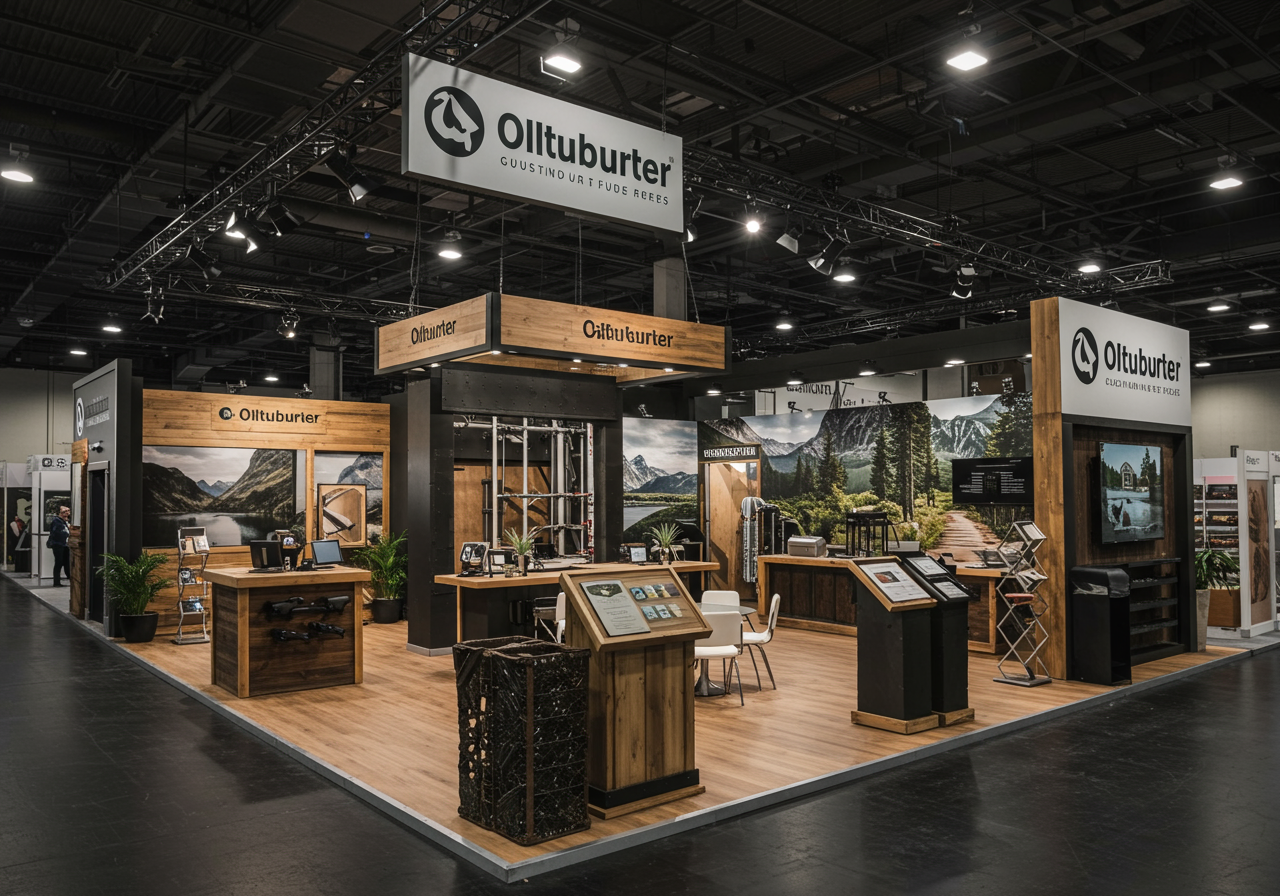
Most trade show booth repair work is cosmetic and entirely routine: graphics, finishes, hardware and lighting absorb the damage while the structure underneath survives intact. The decision that matters is whether a booth gets patched, properly refurbished, or retired — and that call should be made when the crates come back from a show, not three weeks before the next one.
At Pop Up Your Brand we open returning crates in our Midtown Manhattan shop, photograph what came back and write a condition list before anything goes to storage. That one habit is the difference between a booth that runs five shows and a booth that quietly becomes unusable on a receiving dock somewhere, with no time left to fix it.
What Actually Breaks Between Shows
Booth damage is predictable because the forces are predictable. A crate is lifted by forklift, rolled across expansion joints, stacked, stored in a warehouse with no climate control, and then handled by a crew who did not build it. Damage concentrates at edges, at fasteners and at anything that moves.
Graphics go first. Direct-print panels scuff along their bottom four inches where carts and shoes hit them, and the scuff reads as a grey haze under show lighting even when the panel is structurally perfect. Tension fabric takes a different kind of damage: the silicone bead that holds the graphic in the extrusion channel tears at the corners where install crews pull hardest, and once the bead is torn the panel will never again sit flat.
Laminate and veneer edges chip. Millwork panels are usually skinned with a substrate that is strong in the field and fragile at the corner, so the corner is what you lose. Painted scenic surfaces mark rather than chip; a scuff in a matte finish shows every time, which is why our paint team keeps the mix formula for a build on file rather than trying to match a color by eye a year later.
Hardware fails quietly and causes the most trouble on site. Cleats get bent, cam locks seize, panel-to-panel alignment pins shear off, leveling feet strip their threads, and hinge screws pull out of the substrate because someone over-torqued them at strike. None of that is visible in a crate. All of it stops an install.
Then there is the integrated equipment. Flush-mount television pockets get knocked out of square, LED drivers die in storage, dimmer channels fail, and cabling that was dressed cleanly at the factory comes back as a knot in the bottom of a crate. Electrical and lighting components are the single most common reason a booth that looks fine fails its first power-up.
Inspect the Crate Before You Inspect the Booth
The crate is the diagnostic report. A crushed corner, a sprung lid, a missing latch or crumpled dunnage tells you exactly where the booth took a hit and in which direction, and that points you at the panels worth unpacking first. Crates that come back with their foam blocks loose in the bottom have been letting panels move in transit for the entire trip; whatever is inside has been grinding against itself for days.
Weigh the crates against their outbound weights if the numbers were recorded. A crate that comes back light is missing hardware, and missing hardware is the most under-reported category of booth damage there is. Bags of fasteners walk off at strike constantly. Replacing a bag of alignment pins is trivial in the shop and genuinely difficult at a marshaling yard the morning of load-in.
Crate condition also sets the real schedule. A booth with sound crates can be inspected, repaired and re-crated in a short window. A booth whose crates have failed needs new crates built, and crate fabrication is a carpentry job with its own lead time that nobody plans for. The crating and drayage logistics behind a touring exhibit is where most inter-show damage is actually created, and it is where the cheapest fixes live.
What a Shop Can Repair, and What It Cannot
Almost every surface and every component on a booth is repairable or replaceable, which is why most trade show booth repair is a finishing and hardware job rather than a structural one. The structure is the exception: once a frame or a load-bearing panel has lost its integrity, you are rebuilding that element, not fixing it. Here is how the common components divide up.
| Component | Routine repair | Replacement territory |
|---|---|---|
| Direct-print graphic panels | Clean, touch in, re-print a single panel to match | Faded or color-shifted across the set — re-print all of it |
| Tension fabric graphics | Re-sew a torn silicone bead, launder, re-tension | Stretched out of square or stained through the weave |
| Millwork and laminate | Fill, re-edge, re-laminate a face, patch and blend | Swollen or delaminated substrate from water exposure |
| Painted scenic surfaces | Spot repair, re-coat a face, re-match from the filed formula | Surface movement under the coating — strip and re-skin |
| Steel frame and canopy | Re-weld, straighten, re-coat, replace a member | Rarely — steel is almost always worth saving |
| Hardware and connections | Replace pins, cleats, locks, feet, hinges wholesale | Replace as a matter of course; keep a spares kit |
| LED, drivers and wiring | Replace drivers and fixtures, re-dress cabling | When the fixture type is discontinued and cannot be matched |
The two true write-offs are water and substrate movement. Sheet goods that have taken on moisture in a warehouse swell, delaminate and will not hold a fastener or a finish again, and no amount of filler changes that — the panel has stopped being flat and will telegraph every defect through whatever you put on top of it. The other is a panel that has been patched repeatedly: each repair adds material and removes stiffness, and eventually the face reads as a repair from across the aisle, which is the only test that matters on a show floor.
Fire-rating is the quiet constraint on all of it. Scenic materials on a show floor carry flame-spread requirements, and a repair that introduces an unrated filler, fabric or coating into a rated assembly can fail inspection even though the original build passed. Repairs get specified to the same standard as the original, documented the same way, and the certificates travel with the booth.
Refurbishment: Changing the Booth Without Rebuilding It
Refurbishment is the middle path, and it is where the value is. The structure, the frame, the connection system and the engineering stay; the surfaces, the graphics, the lighting and the configuration change. A booth refurbished this way can carry a completely new brand expression on a chassis that has already proven it ships, stands and strikes.
Re-skinning is the most common version. The frame and the panel substrate stay, and the faces get new graphics, new laminate or new paint. Our paint team can take a build from a matte architectural finish to a metallic or patina treatment without touching the structure, which is a fraction of the shop time of a new wall system. Scenic painting and specialty finishes is usually the cheapest lever available for making an existing booth look new.
Reconfiguration is the more valuable version, and it depends entirely on how the booth was engineered in the first place. The custom island exhibit we built for Thermacell for the International Builders’ Show in Las Vegas was designed around a reconfigurable connection system, with CNC-cut dimensional wall panels, backlit fabric graphics on tension frames and a welded steel canopy carrying the hanging sign. Thermacell redeployed the same structure as a smaller island at its next show — not a repaired booth, a re-planned one. You can read how that island exhibit was engineered for redeployment on the project page.
That kind of flexibility is a design decision made years before it pays off. A booth built as one fixed footprint with bespoke connections at every joint can be repaired but never re-planned, and it becomes obsolete the moment the exhibitor buys a different space. Modular booth systems and panelized custom builds exist precisely to keep that option open.
When a Rebuild Beats a Repair
There are five honest triggers for retiring a booth rather than fixing it, and only one of them is about damage.
- Substrate failure across the set. Water, repeated patching or a warehouse year with no climate control. When several panels have moved, the whole set reads wrong.
- Obsolete integrations. Flush-mount pockets are cut to an exact bezel depth, and screens change. A booth built around a screen generation that no longer exists needs new panels, not new screens.
- A footprint change. A booth engineered for one island configuration cannot credibly become a different shape through repair.
- A brand system change. A full rebrand touches every surface, every graphic and usually the lighting color temperature. At that point you are paying refurbishment cost for a chassis you did not choose.
- Show rules. Height limits, hanging-sign weight limits and fire code change, and a structure that no longer complies cannot be made to comply by patching it.
The cost logic behind a trade show booth repair is straightforward even without numbers. Repair labor is largely non-recoverable: it buys a return to the booth’s original condition and nothing more. Rebuild labor buys a new asset with a new service life and a new configuration. When the repair list approaches the shop time of a re-skin, refurbish. When the refurbishment list touches the structure, the connections or the engineering, rebuild — and rebuild it to be repairable.
Build for Repair the First Time
Repairability is designed in, and it costs almost nothing at the drawing stage. The booth we fabricated for Netflix at the Meadowlands Complex was built to an already-approved CAD package in two weeks, and the choices that made it fast are the same ones that make a booth serviceable: modular millwork wall panels, internal cabling channels so wiring is accessible without demolishing a panel, flush-mount television pockets cut to a known depth, and a full dry fit in our NYC shop before anything crated. The panelized construction on that Netflix booth means any single damaged panel can be replaced without disturbing its neighbours.
Four details do most of the work. Panelize so damage is local rather than systemic. Standardize hardware across the build so one spares kit covers every connection. Label every panel and every crate to match the shop drawings, so the crew that unpacks it knows what it is holding. And keep the drawings, the paint formulas, the graphic files and the fixture specifications filed against the project, because a repair without the original specification is a guess.
The last piece is the spares kit itself: extra alignment pins, cleats, cam locks, leveling feet, touch-up paint decanted and labeled, a spare driver for each lighting type and one spare graphic for the panel most likely to be damaged. It travels with the booth. It is the cheapest insurance in exhibit fabrication and it is routinely omitted.
Getting the Booth Into the Shop on Time
Schedule the inspection for the week the crates come back, while the show is fresh and the damage is documented. A condition report written then is worth more than any inspection done later, because the install crew still remembers what arrived broken and what broke on site.
Trade show booth repair runs on the same lead-time logic as a new build: book shop time against the next show date and work backwards. Graphics reprints need art approval before anything can be printed, and art approval is almost always the long pole — not the printing. New millwork panels need material ordered, cut, finished and cured. Specialty finishes need cure time that cannot be compressed. Custom or discontinued lighting needs sourcing time. A booth arriving at the shop two weeks before it ships leaves room for exactly one of those, which is why refurbishment work is best scheduled in the off-season between show cycles rather than in the run-up to a date.
The booth should also leave the shop the way a new build does: dry fit, powered up, inspected against a punch list and re-crated by the people who repaired it. Our shop preview and punch-list process applies to a repaired booth exactly as it does to a first build, because a repair nobody verified under power is not a repair. How the booth is stored between those cycles matters just as much; the storage and reuse strategy for an exhibit program determines how much repair work there will be next time.
Pop Up Your Brand builds, repairs and refurbishes exhibits in-house in Midtown Manhattan, which means the crew who inspects a returning crate can be the crew who built what is inside it. If you have a booth in storage and a show on the calendar, send us the crate photos and the show dates and we will tell you honestly whether it wants a repair, a refurbishment or a replacement. Our trade show booth fabrication team would rather have that conversation in the off-season than the week before freight.
Frequently Asked Questions
Can a damaged trade show booth be repaired between shows?
In most cases, yes. Graphics, laminate edges, paint finishes, hardware and lighting are all repairable or replaceable, and a steel frame is almost always worth saving. The exceptions are panels whose substrate has swollen or delaminated from moisture, and panels already patched several times, because each repair adds material and removes stiffness until the face reads as a repair from across the aisle.
How far ahead of a show should a booth go into the shop for refurbishment?
Inspect the booth the week its crates come back from the previous show, then book shop time against the next show date and work backwards. Graphics reprints wait on art approval, new millwork needs material ordered and finished, specialty finishes need cure time, and discontinued lighting needs sourcing. Arriving two weeks before freight leaves room for only one of those.
When is it better to rebuild a trade show booth than repair it?
Rebuild when the substrate has failed across several panels, when flush-mount screen pockets no longer match current equipment, when the exhibitor has bought a different footprint, when a rebrand touches every surface, or when show rules on height or hanging-sign weight have changed. A structure that no longer complies cannot be made to comply by patching it.
What belongs in a trade show booth spares kit?
Extra alignment pins, cleats, cam locks and leveling feet, touch-up paint decanted and labeled, a spare driver for each lighting type, and one spare graphic for the panel most likely to be damaged. It travels with the booth in its own crate. Missing hardware is the most under-reported category of booth damage and the easiest to solve in advance.
Does repairing a booth affect its fire rating?
It can. Scenic materials on a show floor carry flame-spread requirements, and a repair that introduces an unrated filler, fabric or coating into a rated assembly can fail inspection even though the original build passed. Repairs should be specified to the same standard as the original, documented the same way, and the certificates should travel with the booth.
Frequently Asked Questions
In most cases, yes. Graphics, laminate edges, paint finishes, hardware and lighting are all repairable or replaceable, and a steel frame is almost always worth saving. The exceptions are panels whose substrate has swollen or delaminated from moisture, and panels already patched several times, because each repair adds material and removes stiffness until the face reads as a repair from across the aisle.
Inspect the booth the week its crates come back from the previous show, then book shop time against the next show date and work backwards. Graphics reprints wait on art approval, new millwork needs material ordered and finished, specialty finishes need cure time, and discontinued lighting needs sourcing. Arriving two weeks before freight leaves room for only one of those.
Rebuild when the substrate has failed across several panels, when flush-mount screen pockets no longer match current equipment, when the exhibitor has bought a different footprint, when a rebrand touches every surface, or when show rules on height or hanging-sign weight have changed. A structure that no longer complies cannot be made to comply by patching it.
Extra alignment pins, cleats, cam locks and leveling feet, touch-up paint decanted and labeled, a spare driver for each lighting type, and one spare graphic for the panel most likely to be damaged. It travels with the booth in its own crate. Missing hardware is the most under-reported category of booth damage and the easiest to solve in advance.
It can. Scenic materials on a show floor carry flame-spread requirements, and a repair that introduces an unrated filler, fabric or coating into a rated assembly can fail inspection even though the original build passed. Repairs should be specified to the same standard as the original, documented the same way, and the certificates should travel with the booth.