Sep 11, 2026
Event Strike & Load-Out: An NYC Teardown Guide
Strike is where event budgets break. A practical NYC teardown guide: design for disassembly, load-out scheduling, crew rules, freight and damage audits.
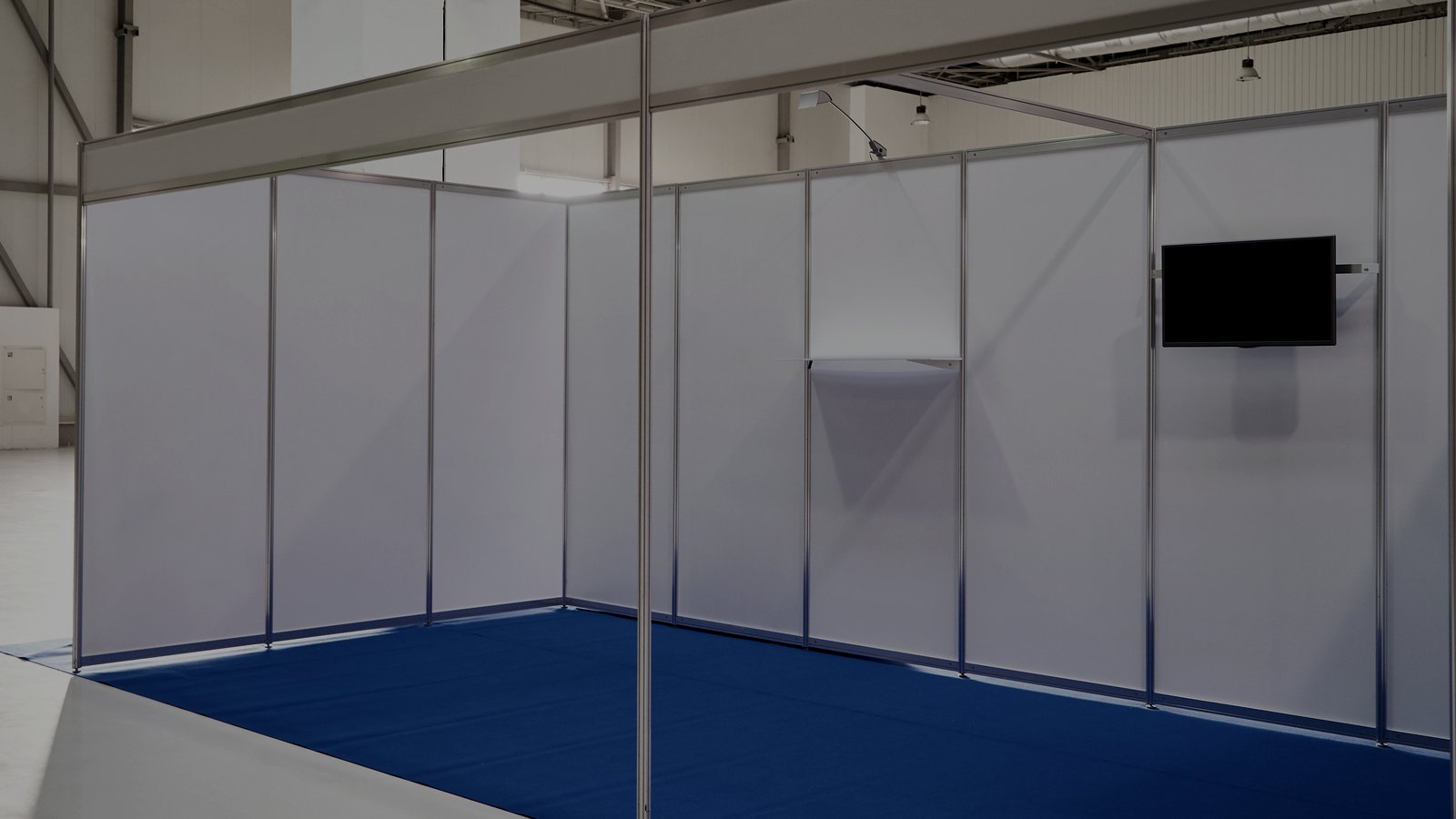
Every producer has a load-in plan. Almost nobody has a strike plan. The build gets a Gantt chart, a rigging plot, a labor call, and three rounds of client review — and then the teardown gets a line in the run-of-show that says “Strike: 11:00 PM – 3:00 AM.” Four hours, no detail, no owner. That single line is where a profitable activation quietly turns into a break-even one.
Strike is the phase where damage happens, where overtime accrues in half-hour increments, where a $40,000 scenic package becomes landfill because nobody assigned a truck to it, and where a venue decides whether to charge you for floor repair. It is also, done correctly, the phase that makes the next build cheaper. This guide covers how to plan, staff, sequence, and document a teardown for events in New York City and beyond — from the shop drawing stage through the post-strike audit. If you only read one section, read the one on design for disassembly, because strike cost is determined months before the first crate ships. For the front half of the same problem, see our NYC convention center load-in guide.
Why Strike Is Where Budgets Actually Break
Load-in has a forgiving structure: it happens on a published schedule, with a crew that has been briefed, in a venue that wants you to succeed, with time built in for problems. Strike has none of that. It starts late, it starts tired, the venue wants the room empty by a hard deadline, and the crew is frequently a different crew than the one that built it — often a house labor call who has never seen your drawings.
The financial exposure sits in five places, and they compound:
- Overtime and double-time labor. In union houses, strike hours frequently land in premium windows. A four-hour strike that runs to seven does not cost 75 percent more; it can cost double, because the extra hours are the expensive ones.
- Venue penalty clauses. Most NYC venue contracts specify a move-out deadline with hourly holdover charges. Exceeding it by 90 minutes at a mid-size Manhattan venue routinely runs four figures.
- Damage to reusable assets. A scenic wall that was engineered for eight builds gets three because it was pried apart with a flat bar at 2:00 AM instead of unbolted.
- Disposal and dumpster fees. Material you did not plan to keep still has to leave the building, and in Manhattan it leaves in a container you paid for.
- Freight inefficiency. A 26-foot box truck that leaves half empty because the load order was improvised is a second trip you did not budget.
A strike plan is not a courtesy to the crew. It is a line-item hedge against the four most expensive hours of the project.
None of these are exotic risks. They are the default outcome when strike is treated as the absence of work rather than as work. The fix is to plan the teardown with the same specificity you bring to the build — which means starting in the shop, not on site.
The Strike Plan Starts at Shop Drawing Stage
The single highest-leverage decision in teardown cost is made when someone draws the connection detail. A panel joined with glue and brad nails installs faster and strikes never — it comes apart in pieces. The same panel joined with threaded inserts and 1/4-20 socket cap screws takes twelve extra minutes to build and comes apart, intact, in ninety seconds. Multiply that across forty panels and the math is not close.
Design for Disassembly
Design for disassembly (DfD) is a set of habits, not a certification. In practice, on experiential design and fabrication work, it looks like this:
- Mechanical fasteners over adhesives at every joint that needs to survive a strike. Threaded inserts in plywood, machine screws in metal, cam locks in casework.
- Consistent hardware across the package. If the whole build uses 1/4-20 socket caps and a 3/16 hex, the strike kit is one driver bit. If it uses six fastener types, half the crew is standing around waiting for the right tool.
- Panel sizes that clear the exit path. A 10'x4' wall section that will not turn the corner into the freight elevator gets cut in half on site with a reciprocating saw. That panel is now scrap.
- Sub-assembly breaks that match crate sizes. Every module should have an obvious, drawn, pre-measured home in a specific crate. If it does not, it becomes loose freight.
- Lift points and grab locations identified. Two people can carry an awkward 120-pound module safely if they know where to hold it. If they do not, they grab the edge and the edge fails.
- Cable and AV terminations that unplug. Hardwired runs get cut. Connectorized runs get coiled and reused.
This is the same engineering discipline that governs structural loading and rigging on the build side — the difference is that DfD pays out on the back end, which is why it is so easy to value-engineer away in a budget review. Resist that. A client who is running the same booth across four cities is buying eight strikes, not one, and the fastener line item is the cheapest insurance on the job.
Label Everything at the Shop, Not on Site
Labels applied under fluorescent light in a clean shop are legible. Labels applied at 1:00 AM with a Sharpie on gaffer tape are not. Every module, panel, crate, and cable should carry a permanent label applied before it ships, and the label should say three things: the project code, the module ID that matches the drawing, and the crate it returns to.
The format that holds up in the field is short and brutal: PUYB-1142 / W-07 / CRATE 3. That is the wall panel seven, project 1142, goes in crate three. A crew member who has never seen the build can execute that. On the Netflix booth build at the Meadowlands, that convention meant the teardown crew could reverse the build without a single call to the project manager.
Building the Load-Out Schedule
A strike schedule is a reverse build schedule with different constraints. The sequence is dictated by physics and by the venue, in that order: anything overhead comes down before anything under it moves, anything powered gets de-energized before it is touched, and the freight path has to be cleared from the dock inward, not from the booth outward.
Here is a realistic teardown sequence for a mid-size activation — roughly 800 to 1,200 square feet with AV, lighting, and custom scenic — in a Manhattan venue with a 4:00 AM hard out.
| Window | Phase | Crew | Notes |
|---|---|---|---|
| T−0:30 | Pre-strike walk | PM + venue rep | Photograph every surface. Document pre-existing damage before anyone touches anything. |
| T+0:00 | Guest clear + soft goods | 2 | Drape, linens, signage, merchandising. Fast, low-risk, clears sightlines for the real work. |
| T+0:20 | AV and electrical de-energize | 2 + house electrician | Power down, lock out, coil and label cable. Nothing gets pulled hot. |
| T+0:45 | Overhead: lighting, rigging, banners | 3 + rigger | Lift required. Floor below must be clear. Longest single-point-of-failure window. |
| T+1:45 | Scenic and structural disassembly | 4 | Unbolt in reverse build order. Modules staged, not stacked. |
| T+2:45 | Crate pack and manifest check | 3 | Each module into its labeled crate. Manifest signed, not assumed. |
| T+3:15 | Freight to dock, load truck | 4 + driver | Load order is heaviest and last-out-first-in. Deck the truck properly. |
| T+3:45 | Floor sweep, disposal, venue sign-off | 2 + PM | Tape residue removed, dumpster loaded, walkthrough with venue rep, signature obtained. |
Two things about that table matter more than the specific times. First, every phase has a named crew count — a schedule without headcount is a wish. Second, the pre-strike walk and the venue sign-off are both on the clock. They are the two phases producers most often cut, and they are the two that protect you from a damage claim you cannot dispute.
The 20 Percent Rule
Whatever the strike takes in a clean rehearsal, add twenty percent for the real thing. Elevators get shared with two other exhibitors. The dock is backed up. A panel that came in on a hand truck has to go out on a pallet jack because the hand truck is on the other side of the building. Twenty percent is not padding; it is the observed difference between planned and actual on almost every job that does not have a dedicated strike PM.
Crew, Labor Rules, and NYC Venue Realities
New York has the tightest labor and access constraints of any US market, and they are not uniform — the rules at a Midtown hotel ballroom, the Javits Center, a Brooklyn warehouse, and a Chelsea gallery are four different sets of rules. Get the specifics in writing during contracting, not during strike.
What to confirm before you build the labor call:
- Who is allowed to touch what. In many houses, electrical connections, rigging, and forklift operation are house-labor jurisdictions. Your crew can unbolt scenic; your crew may not be permitted to unplug a distro.
- Minimum call lengths. A four-hour minimum on a two-hour strike means you are paying for four. Sometimes the answer is to schedule more work into that window rather than shrink it.
- Break rules. Mandatory breaks at fixed intervals will fragment a tight schedule if you have not planned around them.
- Dock and elevator reservations. In Manhattan, freight elevator time is the actual constraint on most strikes, not labor. Reserve it, in writing, with a specific window.
- Noise and curfew restrictions. Residential-adjacent venues frequently prohibit impact tools after a certain hour. That kills a reciprocating-saw plan and makes the DfD decision retroactively critical.
- Certificate of insurance requirements for every entity on the strike crew, including freight.
For brand activation work in non-traditional venues — a rooftop, a retail space, a private residence — the constraint set is different but no less real. There is no house crew, no dock, and often no freight elevator at all. The Magic Hour Mountain Lodge installation at Moxy NYC is a good illustration of why access dimensions belong in the drawing set: everything had to arrive and leave through a path that was fixed long before the design was.
The Strike Kit
A strike kit is not a toolbox. It is a specified, pre-packed, project-matched case that ships with the build and does not get raided during load-in. Build it once, keep it sealed, and open it at strike.
Tools
- Two impact drivers plus two spare charged batteries per driver — batteries die at hour three, not hour one
- The exact driver bits the build uses, in triplicate, including one magnetic extension
- Ratchet set and the specific socket sizes on the drawings
- Two pry bars and a dead blow mallet (for the things that were supposed to unbolt)
- Utility knives with fresh blades, plus a blade disposal container
- Cordless reciprocating saw — last resort, but you want it on the truck
- Tape measure, level, and a marker set
- Headlamps, because house lights go to work light and then go off entirely
Consumables and Protection
- Moving blankets — more than you think, at least one per finished panel face
- Shrink wrap, ratchet straps, and load bars
- Corner protectors for any painted or laminated edge
- Gaffer tape, and a citrus-based adhesive remover for floor residue
- Contractor bags and a labeled bin for hardware — loose fasteners are how a reusable build becomes a one-off
- Nitrile and cut-resistant gloves, sized
- A printed manifest and a clipboard, because phone batteries also die at hour three
The hardware bin deserves emphasis. On a modular trade show booth package, the fasteners are a specified part of the assembly. Lose them and the next build starts with a hardware store run and non-matching screws. One labeled, closed container per crate, packed as the modules come apart, solves it permanently. Our guide to booth storage and reuse strategy goes deeper on what long-term asset custody looks like.
Triage: Return, Recycle, or Retire
Not everything on the floor should get on the truck. Trucking a damaged scenic wall back to a warehouse means paying freight and storage for something that will be thrown out in eleven months anyway. Make the call on site, with the PM present, using a simple three-bucket triage.
| Bucket | Criteria | Action |
|---|---|---|
| Return | Structurally sound, finish intact or economically refinishable, and there is a known next use | Crate, manifest, truck to storage |
| Recycle / divert | Not reusable as-is, but material has a stream: clean lumber, metal, corrugate, acrylic offcuts | Sort on site into separate containers; mixed loads cost more and divert less |
| Retire | Water damage, structural failure, one-off client-branded graphics with no second life | Dispose, and photograph before disposal for the client record |
Client-branded graphics are the honest edge case. A printed panel with a campaign lockup on it has exactly one life, and pretending otherwise fills a warehouse. The better answer is upstream: design the substrate to be reusable and the graphic to be a replaceable applied layer, which is what sustainable fabrication practice actually means in production terms. Strip the graphic, keep the frame.
Sorting on site takes longer than throwing everything in one container, and it is almost always cheaper. Mixed construction debris is billed at a premium in New York; clean, separated metal and cardboard are often revenue-neutral or better. Budget the thirty extra minutes.
Freight and Return Logistics
The load order is the strike order in reverse, and it should be drawn before the truck arrives. Heaviest crates on the deck, over the axles, strapped to the walls. Panels on edge in blankets, never flat-stacked with hardware on top. Light and fragile last, secured against the load bar so it cannot shift on the FDR.
Three logistics failures account for most strike freight problems:
- Truck size guessed rather than calculated. Calculate cubic volume from the crate list, add thirty percent for inefficiency, then pick the vehicle. A 16-foot box truck that needs to be a 26-footer is a second trip and a second driver.
- No named receiver at the destination. A truck arriving at a warehouse at 6:00 AM with nobody to sign for it sits, and detention is billed by the hour.
- Manifest signed at the shop, not at the dock. Count the crates onto the truck and count them off it. A crate that was never loaded is far easier to find at midnight than three weeks later.
For show freight specifically, the general contractor's material handling rules govern and the costs are not intuitive. Outbound drayage, empty crate return, and the marshalling yard queue all carry charges that dwarf the trucking itself. We break the structure down in our guide to trade show drayage and crating logistics. The Café de Colombia build at the San Diego Convention Center is a useful reference for how much of a multi-city program's cost lives in the freight lane rather than the fabrication.
Damage Documentation and the Post-Strike Audit
The pre-strike walk photographs the venue. The post-strike audit photographs your assets. Both exist to answer questions that get asked weeks later, when nobody remembers.
What to Document at the Venue
- Wide shots of every wall, floor area, and ceiling grid your build touched — before strike begins
- Close-ups of any pre-existing damage, with something in frame for scale
- The floor after cleanup, from the same angles as the pre-strike shots
- A dated, signed venue walkthrough sheet with the house rep's name on it
What to Document for the Asset Record
- Condition photo of each returned module as it goes into its crate
- A short defect list per module: chipped laminate, cracked bracket, stripped insert
- The hardware count against the drawing's bill of materials
- Any field modification made during strike — if a panel got cut, the drawing set needs to know
That defect list is the input to refurbishment. Without it, the next build starts with a discovery phase in the shop: unpack forty modules, find out what is broken, and re-quote. With it, repairs are scoped and priced the week after the show, when the asset is worth the most and the client is most willing to approve the spend. On stage and scenic packages that tour, this record is the difference between a predictable refurb line and a surprise.
If you cannot answer “what condition did this come back in?” three weeks after the show, you do not own a reusable asset. You own inventory.
Common Strike Failures and How to Engineer Them Out
| Failure | Root cause | Upstream fix |
|---|---|---|
| Modules destroyed during teardown | Glued or nailed joints, no disassembly sequence | Mechanical fasteners, numbered reverse-build sequence on the drawings |
| Strike runs into holdover charges | No headcount per phase, no 20 percent buffer | Phase-by-phase schedule with named crew counts and a buffer |
| Hardware lost | Fasteners dropped into a shared bucket or onto the floor | One labeled hardware container per crate, packed as modules come apart |
| Freight second trip | Truck sized by eye | Cubic volume calculated from the crate list plus 30 percent |
| Venue damage claim | No pre-strike photo record | Timestamped pre- and post-strike walk with venue rep signature |
| Crew cannot find the disassembly order | Labels applied on site or not at all | Permanent shop-applied labels: project / module ID / crate |
| Reusable build arrives unusable next show | No defect list, no refurb scope | Condition photos and per-module defect list at pack-out |
Every fix in the right-hand column costs money in the shop and saves more on site. That is the whole argument. Strike efficiency is a fabrication decision that happens to get executed by a labor crew at 2:00 AM.
Strike Planning for Pop-Ups and Long-Run Installations
Short-run activations and multi-week retail installs invert some of the assumptions above. A pop-up shop that runs six weeks in a Soho storefront has a de-install, not a strike: there is time, there is daylight, and there is usually a landlord with a restoration clause that specifies exactly what condition the space returns in. Read that clause during design, because it governs how you attach to walls and floors.
The pattern that works for long-run installations:
- Free-standing over fixed wherever the design permits. Anything anchored to base building is a restoration obligation.
- Reversible attachment methods when fixing is unavoidable — French cleats and known anchor locations rather than construction adhesive.
- A documented restoration scope agreed with the landlord before install, including who patches and paints.
- De-install scheduled as a real project phase with its own budget line and its own PM, not as a tail on the install contract.
Seasonal and outdoor activations add weather exposure to the equation. Hardware that sat in salt air or three weeks of rain will not come apart the way it went together; plan for penetrating oil, replacement fasteners, and longer wrench time. The White Claw Sessions build at The Surf Lodge in Montauk is a reminder that a coastal de-install is a different job than the same structure struck from an indoor ballroom.
Bring Your Fabricator Into the Teardown Conversation
The producers who run clean strikes have one habit in common: they ask the fabricator how the build comes apart before they approve how it goes together. That question, asked at the shop drawing review, changes fastener selection, panel sizing, crate design, and labeling convention — all of which are nearly free at that stage and expensive to retrofit later.
At Pop Up Your Brand we build strike into the drawing set. Every module carries a shop-applied label, every crate has a drawn packing plan, hardware is consistent across the package, and the reverse-build sequence ships with the job. It is not a premium service; it is what a reusable build requires in order to actually be reusable across a second, third, and fourth activation.
If you are scoping a build that will strike more than once — a touring booth, a multi-city activation, a seasonal retail program — talk to us about the teardown before you finalize the design. Start with our event fabrication services overview, or send the drawings and the venue contract and we will tell you what the strike is going to cost you before you sign it.